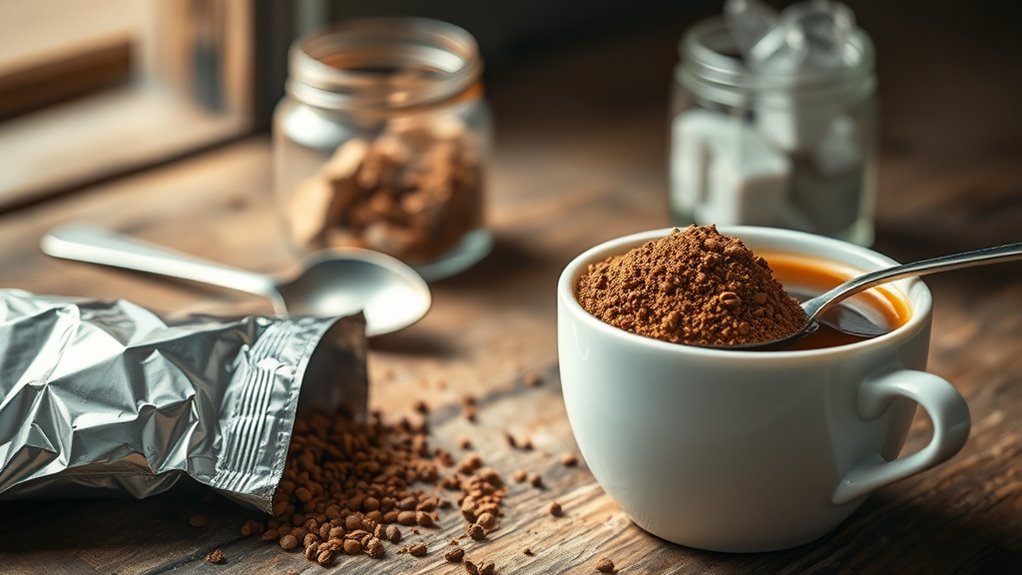

Instant coffee is made by carefully roasting, grinding, and extracting flavors from green beans, then concentrating and drying the liquid—mainly through spray or freeze drying. Modern techniques preserve aroma and flavor better than ever, tackling past criticisms about taste loss. While cheaper processes used to compromise quality, innovations now produce richer, fresher flavors with less environmental impact. Curious how these advancements work? Keep exploring to discover the truth behind your favorite quick brew.
Key Takeaways
- Instant coffee is made from brewed, concentrated coffee that is dried using spray or freeze-drying methods to create powder or granules.
- Modern processing techniques, including aroma preservation and controlled extraction, enhance flavor and reduce the typical bitterness associated with instant coffee.
- Freeze drying preserves more natural flavors and aromas but is more expensive, while spray drying is faster and cost-effective but may slightly reduce flavor quality.
- Concerns about instant coffee often stem from processing methods and additives, but many brands now focus on natural ingredients and flavor retention.
- Advances in sustainable practices and innovative extraction technologies aim to make instant coffee production more eco-friendly and healthier for consumers.
Top picks for "truth about instant"
Open Amazon search results for this keyword.
As an affiliate, we earn on qualifying purchases.
From Green Beans to Roasted Coffee
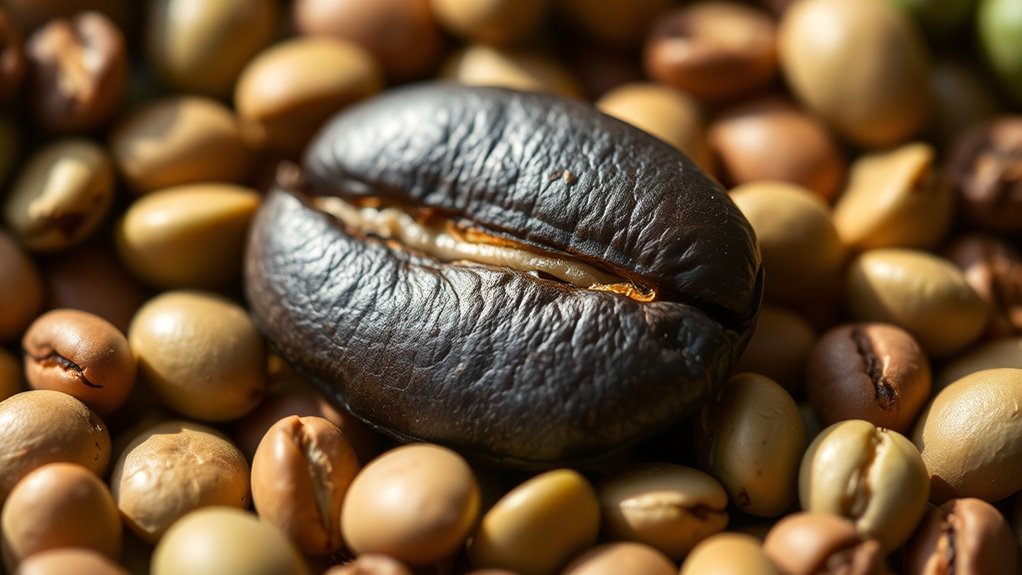
The journey from green coffee beans to roasted coffee begins with careful cleaning and sieving to remove dirt, stones, and other debris. This step guarantees only high-quality beans move forward. Next, the beans are roasted at high temperatures—around 165-200°C—for 8 to 15 minutes. Roasting develops flavor, aroma, and color without burning the beans. You’ll notice a rapid change in aroma and color as the beans reach their ideal roast level. After roasting, the beans are quickly cooled to lock in flavor and aroma. They’re then ground into a coarse powder, which increases surface area for better extraction later. Throughout this process, maintaining precise temperature and timing is key to producing beans with the rich flavor profiles you expect in your coffee. Additionally, proper cooling techniques are essential in coffee roasting to preserve the desired qualities of the beans. Maintaining consistent temperature control during roasting ensures uniform development of flavor and prevents over-roasting. Proper quality assurance measures throughout the process help ensure the final product meets high standards.
Brewing and Concentrating the Coffee Extract

When brewing the coffee extract, you focus on maximizing extraction efficiency to capture the full flavor and caffeine content. Then, the liquid is concentrated by evaporation or freeze concentration techniques to achieve the desired soluble solids level. Throughout this process, aroma preservation methods, like nitrogen capture and reintroduction, help maintain the coffee’s fresh, vibrant scent. Utilizing self water management techniques in equipment can also help optimize the concentration process and preserve the coffee’s aromatic qualities. Additionally, controlling the temperature during concentration is vital to prevent loss of volatile aromatic compounds and ensure a high-quality final product. Proper storage conditions after processing can further help maintain the coffee’s flavor and aroma over time. Implementing advanced monitoring systems can enhance control over the entire process, ensuring consistency and quality in the final product. Furthermore, understanding the tuning techniques for different Kia models can inspire process improvements in coffee production, such as customizing extraction parameters for unique flavor profiles.
Extraction Efficiency Techniques
Maximizing extraction efficiency is essential for producing high-quality instant coffee, and this is achieved through advanced brewing and concentrating techniques. You’ll use continuous percolation or countercurrent systems to extract the maximum soluble solids from coffee grounds, ensuring nearly all caffeine and flavor compounds are captured. Precise control of water temperature, pressure, and flow rate is critical during brewing to optimize yield without over-extraction, which can cause bitterness. After brewing, the extract is concentrated efficiently through multi-stage evaporation, recycling heat to save energy. Freeze concentration techniques can be employed to preserve delicate aromatics by removing water via freezing rather than heat. Additionally, employing headphone compatibility considerations during processing can help monitor and optimize extraction conditions through specialized sensors and audio feedback systems. These methods work together to produce a rich, flavorful extract with high extraction efficiency, setting the foundation for quality instant coffee. Moreover, understanding extraction efficiency techniques can lead to improvements in flavor retention and product consistency. Employing sophisticated extraction methods, such as supercritical CO₂ extraction, can further enhance the purity and flavor profile of the final product, especially when considering regulatory compliance to meet industry standards. As technology advances, integrating precision control systems can enable even finer adjustments to extraction parameters, boosting overall efficiency and flavor integrity.
Soluble Solids Concentration
After extracting the coffee’s soluble compounds, the next step is to concentrate the brew to achieve the desired strength. You do this by removing excess water, either through evaporation or freeze concentration. Evaporation heats the liquid gently to around 70°C, reducing water content and increasing soluble solids to about 20-25%. This concentration guarantees the extract retains nearly all caffeine and flavor compounds. Freeze concentration involves freezing the liquid and removing ice via sublimation, which preserves more volatile aromatics. Advancements in processing techniques are continuously improving the efficiency and quality of concentration methods. Controlling the soluble solids level is vital because it affects the flavor, aroma, and solubility of the final instant coffee. Proper concentration balances richness and ease of rehydration, guaranteeing you get a consistent, flavorful cup when you prepare your instant coffee. Additionally, modern techniques aim to optimize soluble solids levels to enhance flavor stability during storage and rehydration. Moreover, ensuring consistent soluble solids levels is essential for maintaining the trustworthiness and safety of instant coffee products. Achieving precise control over soluble solids concentration is also critical for standardizing quality across different batches.
Aroma Preservation Methods
To effectively preserve aroma during brewing and concentration, manufacturers employ techniques that minimize the loss of volatile flavor compounds. They often use nitrogen gas to capture and store these aromatics immediately after grinding, preventing oxidation and evaporation. During brewing, precise temperature control ensures maximum extraction without degrading delicate aromas. In the concentration phase, methods like freeze concentration are preferred because they operate at low temperatures, reducing heat-related aroma loss. Evaporation processes incorporate multistage heat recycling to limit exposure to high temperatures. Additionally, some manufacturers utilize certification and sourcing practices to ensure ingredient quality, which also contributes to a richer flavor profile. Furthermore, controlling atmospheric conditions during processing helps maintain the coffee’s natural aroma and freshness. These methods help ensure that the final instant coffee retains a richer, more authentic flavor profile, despite the intense processing involved.
Drying Methods: Spray vs. Freeze Drying
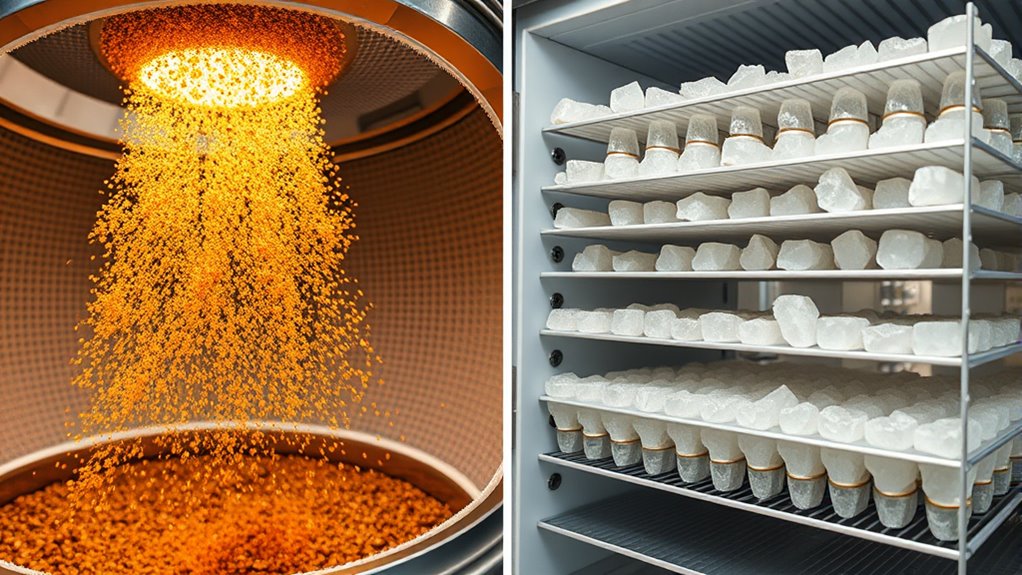
When it comes to drying instant coffee, the two main methods are spray drying and freeze drying, each offering distinct advantages and effects on the final product. Spray drying atomizes the concentrated coffee into fine droplets, which are exposed to hot air that quickly evaporates water, forming fine powder or granules. This process is fast and cost-effective but can cause some flavor loss due to high temperatures. Freeze drying involves freezing the coffee extract into slabs at -40°C or lower, then using a vacuum to sublimate the ice at around 60°C. This gentle method preserves more of the coffee’s delicate aroma and flavor compounds. While freeze drying is more expensive and time-consuming, it results in higher-quality instant coffee with better flavor retention. Additionally, the drying method greatly influences the final product’s aroma and texture, making freeze drying the preferred choice for premium instant coffees.
Preserving Flavor and Aroma in Instant Coffee

Preserving flavor and aroma in instant coffee requires careful handling throughout the production process. During roasting, beans are heated just enough to develop flavor without burning. After roasting, rapid cooling helps lock in aroma compounds. When grinding, volatile aromas are captured using nitrogen gas, then reintroduced later to restore freshness. The extraction process uses precise temperatures to maximize flavor extraction while minimizing loss. During drying, freeze drying is preferred because it preserves delicate aromatic compounds better than spray drying. The process of volatile compound retention is crucial for maintaining the coffee’s fresh taste. Additionally, implementing strict quality control measures ensures consistent preservation of flavor and aroma throughout production. The reintroduction of aromas helps to restore the coffee’s full flavor profile after processing, enhancing the overall sensory experience. The following table summarizes key techniques:
| Technique | Purpose | Effect on Flavor |
|---|---|---|
| Rapid cooling | Lock in aroma | Maintains fresh scent |
| Nitrogen capture | Preserve volatile compounds | Enhances aroma in final product |
| Freeze drying | Gentle drying, retains flavors | Keeps delicate aromatic notes |
| Reintroduction of aromas | Restores flavor profile after processing | Improves overall taste |
| Controlled extraction | Maximize flavor, caffeine retention | Ensures rich, balanced flavor |
| Quality control | Ensures consistency throughout production process | Maintains flavor integrity |
Common Criticisms and How Modern Techniques Address Them

Many people criticize instant coffee for losing flavor during processing, especially in drying. Modern techniques like freeze drying help preserve delicate aroma compounds, reducing flavor degradation. These advancements aim to improve taste without sacrificing the convenience you expect from instant coffee. Additionally, some companies now incorporate aromatic fragrances into their processing methods to enhance the coffee’s aroma and overall flavor profile.
Flavor Loss During Drying
Drying is a critical step in instant coffee production that often leads to flavor loss, especially with traditional methods like spray drying. During spray drying, the high temperatures and rapid evaporation can degrade delicate aroma compounds, resulting in a less vibrant flavor. Bitterness and flatness can also develop because heat can cause chemical changes in the coffee extract. However, modern techniques like freeze drying address these issues by gently removing moisture through sublimation at low temperatures. This process preserves more volatile aromatics and maintains the coffee’s original flavor profile. Additionally, advancements in spray drying now incorporate temperature controls and pre-atomization strategies to minimize flavor degradation. These innovations help *guarantee* that instant coffee retains as much of its natural aroma and taste as possible, despite the drying process.
Preservation of Aroma
Have you ever noticed that some instant coffees taste flat or lack the vibrant aroma of freshly brewed beans? That’s mainly due to aroma loss during processing, especially drying. Modern techniques like freeze drying help preserve these delicate compounds. Freeze drying involves freezing the coffee extract at very low temperatures and then sublimating the water in a vacuum, which avoids high heat that can degrade aromas. Additionally, manufacturers capture volatile aroma compounds during grinding and reintroduce them into the final product, boosting flavor freshness. Multi-stage evaporation also minimizes heat exposure, further protecting aroma integrity. These advancements ensure that instant coffee retains much of its original fragrance, making it more appealing. While some aroma loss is unavoidable, these innovative methods considerably improve flavor preservation compared to older production techniques.
Environmental Impact and the Future of Instant Coffee

The environmental impact of instant coffee largely depends on the energy consumed during its production and the sustainability of its supply chain. Here are four key factors to contemplate:
- Energy-intensive processing – Roasting, extraction, and drying require significant energy, especially with traditional methods like spray drying.
- Supply chain sustainability – The cultivation of coffee beans affects deforestation, water use, and soil health.
- Packaging and transportation – Lightweight, long shelf life reduces waste and carbon emissions, but packaging materials can be problematic.
- Potential for eco-friendly innovations – New drying techniques, renewable energy use, and recycled packaging are shaping a greener future.
While challenges remain, ongoing innovations promise to make instant coffee more sustainable, reducing its environmental footprint over time.
Frequently Asked Questions
How Long Does the Entire Instant Coffee Production Process Typically Take?
The entire instant coffee production process typically takes around 24 to 48 hours. You start with cleaning, roasting, and grinding the beans, which can take several hours. Then, brewing, extraction, concentration, and drying add more time, especially if freeze drying is used to preserve flavor. Overall, from raw beans to packaged instant coffee, the process is carefully managed to guarantee quality and efficiency within this timeframe.
Are There Any Additives or Preservatives in Instant Coffee?
You’ll be surprised to know that most instant coffee contains no additives or preservatives—just pure coffee and water. Some brands add stabilizers or minor preservatives to enhance shelf life, but these are typically minimal. Manufacturers aim to keep it simple, so the flavor and aroma stay intact. Always check the label if you want to avoid any extras, but generally, instant coffee is a natural, straightforward product.
Can Instant Coffee Be Made at Home Using Similar Methods?
Yes, you can make a form of instant coffee at home, but it’s not exactly the same process. You’d need to brew strong coffee, then freeze it or evaporate the water carefully. Freeze-drying or spray drying requires specialized equipment that’s hard to do at home. However, you can freeze your brewed coffee, then scrape and store the dried pieces for quick rehydration later, mimicking some aspects of instant coffee.
How Does Instant Coffee Compare Nutritionally to Brewed Coffee?
You’ll find that instant coffee and brewed coffee are quite similar nutritionally, with nearly equal caffeine levels—so you’re not missing out on that boost. Both contain antioxidants and trace minerals, though brewed coffee might have a slight edge due to fewer processing steps. However, instant coffee often has added preservatives or stabilizers, so check labels if you’re watching your intake. In the end, it’s a matter of convenience versus freshness.
Is Instant Coffee Suitable for People With Dietary Restrictions or Allergies?
Yes, instant coffee can be suitable for people with dietary restrictions or allergies, but you should check the label carefully. Some brands add preservatives, stabilizers, or flavorings that may cause reactions. Choose plain, additive-free options to avoid issues. If you have caffeine sensitivity, remember that instant coffee contains nearly all the caffeine of brewed coffee. Always consult your healthcare provider if you’re unsure about specific ingredients or sensitivities.
Conclusion
Think of instant coffee as a well-orchestrated symphony—each step carefully tuned to preserve flavor and aroma. While it may not have the same depth as fresh brew, modern methods are closing the gap, making it more than just a quick fix. So, next time you sip, remember you’re tasting a tiny miracle of science and tradition working together—proof that even in a rush, quality can still shine through.