
Your opinions about coffee feel so personal because it connects deeply to your identity, memories, and cultural background. Your preferred brewing style, flavors, or rituals express who you are and what you value. When someone critiques your coffee choices, it can feel like a challenge to your personality or routines. If you want to understand why these feelings run strong and how to respect others’ preferences, there’s more to explore.

Get coffee and tea gear delivered free with Prime
- Fast, free delivery on millions of items
- Prime Video, Amazon Music and more included
- Member-only deals all year
Key Takeaways
- Coffee preferences are deeply tied to personal identity, cultural background, and emotional memories, making opinions feel personal.
- Rituals and routines associated with coffee reflect individual values and personality, heightening emotional investment.
- Sharing or critiquing coffee can evoke feelings of belonging or judgment, intensifying personal reactions.
- Aroma and taste evoke nostalgic feelings, creating emotional bonds that make opinions more sensitive.
- Conversations about coffee often reveal personal stories, beliefs, and cultural heritage, making disagreements feel personal.
As an affiliate, we earn on qualifying purchases.
The Cultural Role of Coffee in Our Daily Lives
Coffee has become more than just a morning pick-me-up; it’s a daily ritual that shapes our routines and social interactions. Your coffee rituals, whether brewing a French press or pouring a simple drip, connect you to a larger cultural tradition. Brewing traditions vary worldwide, reflecting local customs and values, and influence how you experience coffee daily. These rituals offer comfort and stability, turning a routine into a personal moment of mindfulness. Sharing coffee, like a morning brew or a social gathering, fosters connections and community. Your choice of coffee and how you prepare it is more than taste—it’s a reflection of cultural identity and personal values. Coffee’s role in daily life underscores its importance in shaping social bonds and cultural expression. Additionally, recognizing the cultural significance of coffee highlights how deeply intertwined it is with identity and tradition across different societies. Understanding the cultural context behind coffee rituals can deepen your appreciation for the diverse ways people connect through coffee worldwide, including traditional brewing techniques that vary greatly across regions. Exploring these cultural practices can reveal how coffee functions as a symbol of community and heritage in various cultures. Moreover, the variety of brewing methods used globally demonstrates the adaptability and cultural significance of coffee preparation.
How Memories and Nostalgia Shape Our Coffee Preferences
Memories and nostalgia have a powerful influence on the coffee choices you make today. Your taste buds don’t just detect flavor; they connect to past experiences, creating flavor memories that shape your preferences. Nostalgic associations with certain coffee smells or tastes may remind you of childhood mornings or comforting routines. These feelings often influence your favorite brew more than objective flavor profiles. Consider this table, illustrating common nostalgic associations:
| Memory Type | Coffee Connection | Emotional Impact |
|---|---|---|
| Family mornings | Breakfast coffee with loved ones | Warmth, security |
| Travel adventures | Drinking espresso abroad | Excitement, curiosity |
| Special occasions | Coffee at celebrations | Joy, togetherness |
| Quiet mornings | Solo coffee rituals | Calm, reflection |
Your personal history intertwines with every sip, making coffee preferences deeply personal. Additionally, coffee aroma plays a significant role in triggering these nostalgic feelings, further reinforcing your emotional connection to certain types of coffee. Recognizing how heat pump technology influences climate control comfort can also shape your overall environment, making your daily routines more enjoyable and consistent. For example, specific tracking gear can help you discover new coffee spots that evoke similar feelings from your past, deepening your connection to your favorite brews. Moreover, understanding the impact of memory formation on taste preferences can guide you in exploring new coffee varieties that align with your nostalgic memories. It’s also important to note that affiliate disclosure transparency ensures you understand how your interactions support content creation, which can influence the variety of coffee-related information available to you.
How Personal Identity Influences the Coffee Drinks We Choose
Your personal values often guide the coffee drinks you prefer, reflecting what matters most to you. Cultural background also plays a role, shaping your taste and the choices you make. Together, these aspects reveal how your identity influences every sip. Recognizing support networks for new dads can also influence your appreciation for comfort and routine, which may extend to your coffee preferences. Additionally, emerging design trends in branding and visuals, like retro fonts and AR filters, often appeal to personal identity and cultural influences. Staying updated on personal finance planning can help you make more intentional choices in all areas of life, including your coffee preferences. Incorporating inclusive casting and diverse representations in branding can further deepen the connection between individual identity and consumer preferences. Embracing Stoic principles can also cultivate a more mindful approach to daily habits, including how you choose and enjoy your coffee.
Personal Values Shaping Preferences
Personal values often shape the coffee drinks you favor, reflecting who you are and what matters most to you. Your flavor preferences reveal your priorities—whether you prefer bold, bitter notes or smooth, sweet undertones. Brewing techniques also mirror your values; some might choose pour-over or Chemex for their appreciation of craftsmanship and precision, while others favor quick espresso shots for efficiency. These choices showcase your personality and beliefs, from a desire for quality and mindfulness to valuing convenience. Your coffee preferences aren’t random—they’re a reflection of your identity and what you hold important. Additionally, your environmental consciousness can influence your choices, such as opting for sustainably sourced beans or eco-friendly brewing equipment, which supports eco-friendly practices and aligns with your personal convictions. Understanding the variety of brewing styles and their significance can help you make more intentional decisions, especially when considering coffee gear that fits your values. The type of coffee you enjoy can also be influenced by your health considerations, further intertwining your personal identity with your beverage choices. Recognizing how personal identity influences your habits can deepen your appreciation for your coffee routine and help you align it with your broader values. Ultimately, the ways you select and prepare coffee reveal deeper aspects of your character and personal convictions.
Cultural Identity Influences Choices
Cultural identity deeply influences the coffee drinks you prefer, shaping your choices based on traditions, social norms, and regional flavors. Your cultural rituals often dictate which beverages feel familiar and comforting, like a traditional espresso or a sweet, spiced chai. These choices become a form of identity expression, showing others where you come from or what you value. For example, in some cultures, sharing a coffee signifies community and connection, while in others, a quick black coffee reflects independence. Your preferences aren’t just about taste—they mirror your background, beliefs, and social roles. By selecting specific coffee drinks, you reinforce your cultural identity and participate in a broader social narrative that connects you to your roots and community. Additionally, precious metal investments can serve as a financial expression of stability and tradition, much like the cultural significance of certain coffee drinks. Recognizing the diverse genres including action, romance, and fantasy within anime can also reflect different cultural storytelling styles and values, further emphasizing how cultural influences shape preferences. Understanding the influence of personal and cultural identities helps us appreciate that our coffee choices are often more than just taste—they’re a reflection of our personal and cultural identities. Furthermore, being aware of cultural symbolism associated with certain beverages can deepen your appreciation of how these choices connect to your heritage.
Why Do We Care So Much About Coffee Opinions?
You care about coffee opinions because they reflect your personal identity and how you see yourself. Social influences, like friends or online communities, also shape how strongly you hold onto your preferences. Together, these factors make coffee choices feel deeply meaningful and personal. Understanding how classic arcade games have evolved over time highlights how our tastes are often connected to nostalgia and shared experiences, which are powerful drivers of personal attachment. Additionally, just as in solar system design where safety considerations are crucial, our emotional investments in coffee are driven by a desire for comfort and security in our preferences.
Personal Identity Connection
Because coffee often becomes a reflection of who we are, it’s no surprise that opinions about it feel deeply personal. Your coffee rituals—whether you brew a morning espresso or savor a slow pour-over—are extensions of your identity. As your taste evolves, so does your connection to certain coffees or brewing styles, shaping how you see yourself and how others perceive you. These rituals and preferences aren’t just about flavor; they’re about expressing your personality and values. When someone critiques your favorite roast or brewing method, it feels like a challenge to your identity. Coffee becomes more than a beverage—it’s a symbol of your choices, habits, and even your cultural background, making opinions about it feel like a reflection of your true self. Understanding the personal connection to tech behind coffee equipment can also deepen your appreciation of your brewing style. Additionally, as the technology behind coffee advances, it influences how we perceive and value different brewing experiences, further strengthening the personal bond we have with our coffee. The ease of cleaning and maintenance of coffee gear can significantly impact how often and comfortably we enjoy our brewing routines, reinforcing this personal connection. Exploring how essential oils can impact overall well-being highlights the importance of personal care routines that resonate with individual preferences.
Social Influence Dynamics
Our social environments heavily influence how much you care about coffee opinions because shared tastes and group identities create a sense of belonging. When you bond over favorite brewing methods or caffeine rituals, it deepens your connection to a community. Social influence shapes your preferences, making you more invested in debates about pour-over vs. espresso or the best beans. You may feel pride in your brewing skills or loyalty to a local café. These dynamics foster a sense of identity rooted in coffee culture, making opinions feel personal.
- Your coffee choices signal belonging and expertise
- Group norms influence your brewing preferences
- Coffee rituals reinforce social bonds
- Opinions become markers of community identity
How Social Influences Shape Our Coffee Debates
Social influences play a powerful role in shaping the debates we have about coffee, often without us realizing it. You might find yourself defending a particular brew ritual or flavor stereotype because of how those around you perceive it. Friends, family, and social media create norms that subtly guide your preferences and opinions. For example, if everyone around you swears by pour-over coffee, you’re more likely to adopt that ritual yourself, believing it’s the “right” way. Likewise, flavor stereotypes—like espresso being stronger or more sophisticated—frame how you judge others’ choices. These social cues influence not just what you like, but how passionately you defend your preferences, making coffee debates deeply personal and rooted in social context.
The Values That Drive Our Coffee Preferences
The values you hold often influence the coffee choices you make and how you perceive different brewing methods or flavors. Your flavor preferences reveal what matters most to you—whether it’s boldness, smoothness, or acidity. Brewing rituals also reflect your values, shaping how you enjoy coffee daily. For example, some prefer meticulously pour-over methods that emphasize precision, while others enjoy the simplicity of a quick espresso. Your preferences are shaped by your experiences, culture, and priorities.
- Prioritizing tradition or innovation in brewing
- Valuing sustainability and ethically sourced beans
- Seeking convenience versus artisanal craftsmanship
- Emphasizing taste profiles that match your personality
Why Critiquing Someone’s Coffee Can Feel Personal
Critiquing someone’s coffee can often feel deeply personal because taste is tied to individual identity and experience. For many, coffee isn’t just about flavor; it’s about their flavor obsession, which reflects their preferences and even their personality. When you comment on someone’s brew, it touches on their brewing rituals—these routines carry emotional weight and symbolize their dedication or expertise. If you criticize their coffee, it can feel like a critique of their effort or identity. People invest time and passion into their favorite beans, brewing techniques, and flavor profiles. So, what might seem like a simple opinion to you can come across as a personal judgment, making coffee conversations unexpectedly sensitive.
How to Respect Others’ Coffee Choices and Avoid Conflict
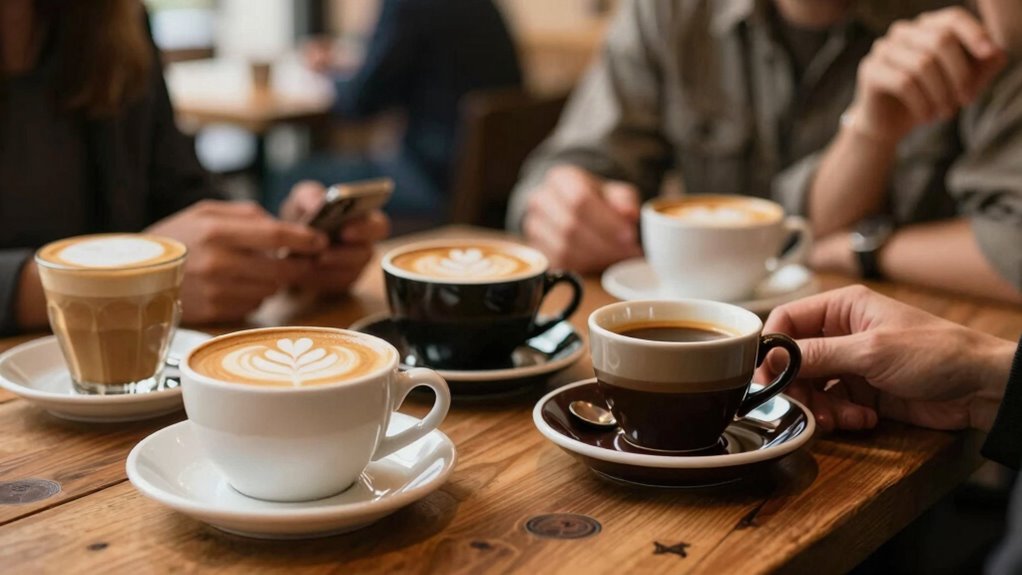
Respecting others’ coffee choices starts with recognizing that everyone’s taste preferences are unique and valid. Coffee rituals vary widely, reflecting personal routines and cultural influences. Instead of judging, embrace these differences and show appreciation for diverse flavor preferences. When discussing coffee, focus on shared enjoyment rather than critique. Keep these tips in mind:
Respect diverse coffee preferences and celebrate each unique ritual with curiosity and appreciation.
- Respect each person’s coffee ritual, whether it’s a morning espresso or a leisurely afternoon pour-over.
- Avoid assumptions about what makes a “better” coffee—preferences are subjective.
- Listen actively and show curiosity about others’ flavor preferences.
- Celebrate variety by trying new brews without dismissing familiar favorites.
Building Better Coffee Conversations Through Understanding
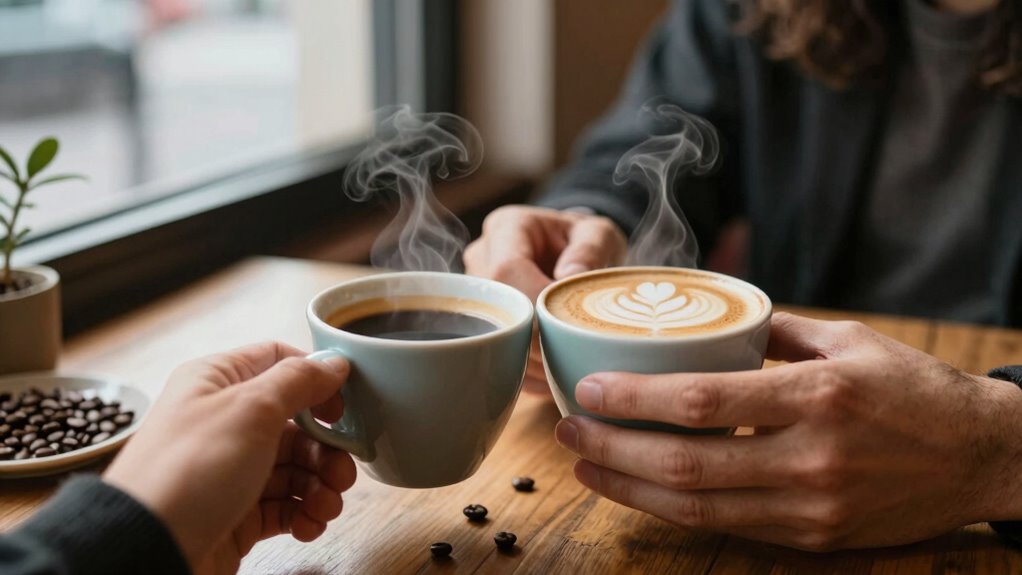
Understanding where someone’s coffee preferences come from can transform a simple conversation into a meaningful exchange. When you consider their coffee rituals, you gain insight into how they start their day or unwind, revealing personal routines and traditions. Recognizing their flavor perceptions helps you appreciate why they favor certain brews over others, even if it differs from your taste. Instead of dismissing differences, ask about their preferred preparation methods or what aroma they enjoy most. This openness fosters connection and shows genuine interest. By focusing on these elements, you create a space where conversations become enriching rather than divisive. Building better coffee conversations means valuing individual rituals and perceptions, turning a casual chat into a shared experience rooted in understanding.
Frequently Asked Questions
Can Coffee Preferences Predict Personality Traits?
Yes, your coffee preferences can hint at your personality traits. Flavor psychology suggests that people gravitate toward certain flavors based on their emotional needs or personalities. Habit formation also plays a role—your daily coffee choices can reflect routines and comfort zones. For example, someone who prefers bold, bitter brews may be adventurous, while a sweet coffee lover might value familiarity and comfort.
Why Do Some People Defend Their Coffee Choices Passionately?
You defend your coffee choices passionately because flavor associations and ritual significance deeply connect you to your routine. When someone questions your favorite brew, it feels personal, as it’s tied to comforting memories or identity. You see coffee as more than a drink; it’s part of your daily ritual, shaping how you start your day and how you feel. That emotional connection makes your preferences feel like a reflection of who you are.
How Does Cultural Background Influence Coffee Taste Expectations?
Your cultural background shapes your coffee taste expectations through cultural rituals and taste stereotypes. For example, if you come from a culture that values strong, bold brews, you’ll likely prefer that style and defend it passionately. Conversely, if lighter, milder coffees are traditional, you might be skeptical of darker roasts. These ingrained preferences influence how you perceive quality, flavor, and even what makes a perfect cup, making your opinions deeply personal.
Are Coffee Opinions Linked to Social Status?
Yes, coffee opinions are often linked to social status. Your coffee identity and social signaling influence how you perceive and share your preferences. When you choose a premium brew or a specialty drink, you’re not just savoring flavor—you’re communicating your taste, lifestyle, and social standing. These choices shape perceptions, foster connections, and reaffirm your place within a social hierarchy, making coffee more than just a beverage—it’s a statement.
Can Changing Coffee Habits Reflect Personal Growth?
Yes, changing your coffee habits can reflect personal growth. When you explore new coffee rituals, like trying different brewing methods or savoring unique flavors, you’re embracing flavor exploration that often mirrors your evolving tastes and confidence. As you refine your preferences, you demonstrate openness to change and self-discovery. This journey showcases how your relationship with coffee can symbolize your broader personal development and willingness to embrace new experiences.
Conclusion
Your coffee preferences are like a colorful mosaic of memories, identity, and culture, each piece telling its own story. When others share their opinions, it’s like a dance of personal histories and values. By understanding this, you can navigate coffee conversations with a gentle heart and open mind. Remember, respecting each sip and story creates a richer, more vibrant tapestry—one where everyone’s love for coffee adds flavor to the brew of life.
Fall Picks
fall essentials
As an affiliate, we earn on qualifying purchases.