
TL;DR

Get coffee and tea gear delivered free with Prime
- Fast, free delivery on millions of items
- Prime Video, Amazon Music and more included
- Member-only deals all year
Investing in a quality burr grinder, digital scale, and gooseneck kettle can drastically improve your coffee. Accessories are most effective when they solve specific problems or make routines easier.
If you’re serious about brewing better coffee, your accessories matter more than you might think. They’re the tools that give you control over variables like grind size, water temperature, and pouring technique. The right gear can transform a good brew into a great one.
Think of brewing as a science experiment — but instead of complicated lab equipment, you’re using simple, purposeful accessories. This blog will guide you through the most essential tools, how they work, and which ones deliver real value in your daily routine.
A burr grinder and digital scale are the two most impactful accessories for consistent, flavorful coffee.
Controlling pour and water temperature with a gooseneck kettle and a kettle with temp control makes a big difference.
Water quality and filter choice directly influence extraction and taste; don’t overlook this step.
Choose accessories based on your brewing method, routine pain points, and space — not just price or brand.
Master the basics first. Upgrading to fancy gadgets isn’t necessary until you’ve nailed the fundamentals.
Why a good grinder is the cornerstone of great coffee
A burr grinder isn’t just a fancy add-on; it’s a game changer. Unlike blade grinders, burrs crush beans to a consistent size, supporting even extraction and richer flavor.
Imagine trying to paint with a brush that splits every stroke unevenly — that’s what a blade grinder does. A burr grinder makes every grind uniform, like a fine-tuned instrument. According to coffee experts, a good burr grinder can improve your brew’s flavor clarity and strength by ensuring water contacts each particle evenly.
For example, a 1-2 mm variance in grind size can cause under- or over-extraction, leading to sour, bitter, or flat cups. Investing in a burr grinder with adjustable settings and low retention helps maintain consistency. Plus, many models now feature easy cleaning and quieter operation, making them more user-friendly.
Choosing the right burr grinder involves understanding tradeoffs: higher-quality burrs and stepless adjustments cost more but offer finer control. Cheaper models might save money upfront but can produce inconsistent grinds, which means more variability in flavor and extraction. The goal is to find a balance between durability, precision, and budget that aligns with your routine and commitment to quality. A well-chosen burr grinder becomes a long-term investment that elevates every brew.
As an affiliate, we earn on qualifying purchases.
How a digital scale turns your coffee routine into a science
A digital scale is the secret weapon for precision brewing. It tells you exactly how much coffee and water you’re using, removing guesswork and variability.
Why does this matter? Because coffee extraction is a delicate balance. Using the right ratio, such as 1:16 (20 grams coffee to 320 grams water), ensures optimal flavor. Without accurate measurements, you risk over- or under-extracting, which can make your coffee taste sour, bitter, or dull. A precise scale helps you hit these ratios consistently, making your results predictable and improving your skill over time.
In addition, features like high resolution (0.1 grams or better) and timers allow you to control steep times and pouring intervals with precision. This control is crucial for methods like pour-over or AeroPress, where small timing differences significantly impact flavor. By integrating a scale into your routine, you develop a deeper understanding of how each variable affects your brew, enabling you to troubleshoot and refine your process. The tradeoff is investing in a good-quality scale that’s durable and easy to calibrate; this investment pays off in consistent, high-quality coffee and a more scientific approach to brewing.
Why a gooseneck kettle gives you pour-over superpowers
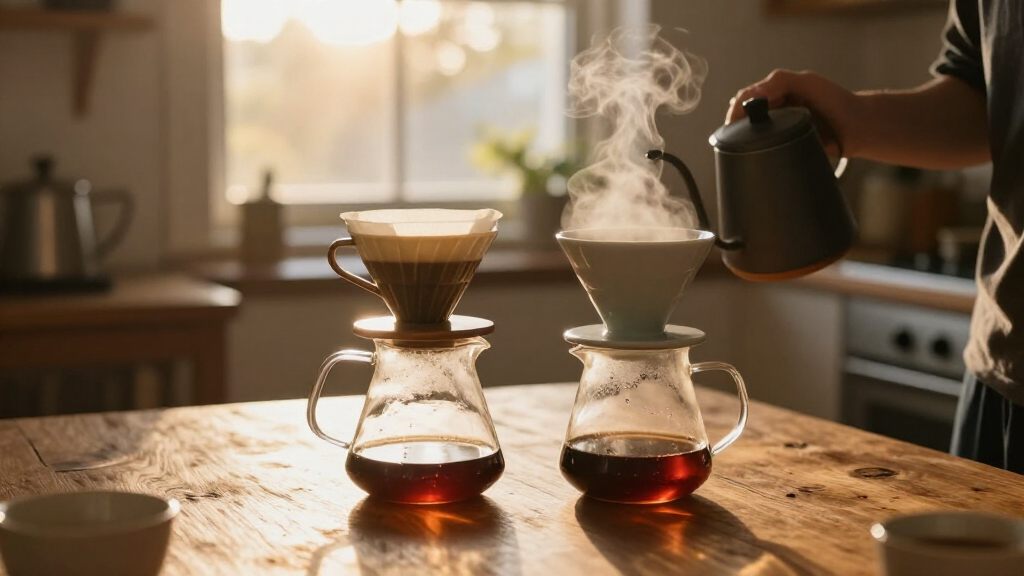
A gooseneck kettle isn’t just stylish — it offers unmatched control over water flow. Its long, curved spout allows you to pour slowly and precisely, which is crucial for pour-over brewing.
Why does this matter? Because even water distribution ensures even saturation of coffee grounds, leading to uniform extraction. A standard kettle or jug often pours too quickly or unevenly, causing channeling or under-extraction in some areas. The controlled flow from a gooseneck kettle means you can pour in a steady, thin stream, allowing you to manipulate the brew more precisely, much like an artist controlling a brush stroke. This level of control reduces the chance of uneven extraction, which can cause sour or flat flavors, and helps you achieve a balanced cup.
Features like adjustable flow rate and temperature control extend this precision. For example, a variable flow rate allows you to start slow for blooming and then increase flow for the main pour, optimizing extraction. Some kettles also maintain water temperature, preventing fluctuations that could impact flavor. The tradeoff is that higher-end models cost more and require a bit of practice to master, but the payoff is a significant leap in brewing consistency and flavor control.
Water quality and filters: why they matter more than you think
Good water is the foundation of good coffee. Hard water can cause scale buildup in your equipment and dull flavors, while too-soft water can produce flat, under-extracted brews.
Why does water chemistry matter? Because minerals in water influence extraction. Water with high mineral content (hard water) can lead to over-extraction, which tastes bitter or metallic and causes mineral deposits in your kettle and grinder over time. Conversely, very soft or distilled water lacks minerals that help extract flavors, resulting in a flat or dull cup. Achieving the right mineral balance ensures proper extraction and protects your equipment.
Using filtered water or mineral-enhanced water systems helps maintain consistency. For example, a water test kit reveals mineral content, guiding adjustments—adding mineral packets or using specific filters—to optimize flavor and prevent damage. This step is often overlooked but is critical because even high-quality beans can be underwhelming if brewed with poor water. Proper water management extends your equipment’s lifespan and ensures every cup is as flavorful as possible.
Different filters, different results: choosing the right filter material
Filter material influences flavor, body, and clarity. Paper filters create a clean cup with minimal sediment, while metal filters retain more oils and produce a fuller-bodied brew.
Why does filter choice matter? Because it directly affects how much of the coffee’s natural oils and fine particles make it into your cup, shaping the overall flavor profile. Paper filters trap most oils and tiny particles, resulting in a bright, crisp, and clean cup that highlights clarity and subtle flavors. Metal filters, on the other hand, allow more oils and fine grounds through, producing a richer, more textured brew with added body and complexity. However, this can also lead to more sediment and a different mouthfeel.
Cloth filters offer a middle ground, providing some oil retention while maintaining a fuller body than paper. The key is understanding your taste preferences and willingness to maintain your filter. For instance, if you prefer a clean, delicate taste, paper filters are ideal. If you enjoy a robust, full-bodied experience, metal filters suit you better. Each filter type involves tradeoffs: ease of cleaning, longevity, and flavor impact. Knowing these helps you tailor your brewing to your desired flavor profile and maintenance routine.
Timing matters: how a brewing timer makes your coffee consistent
A brewing timer helps you control each step — bloom, pour, steep, and total brew time. It ensures consistency, so your coffee tastes the same every morning.
Why is timing so crucial? Because each phase of brewing impacts extraction and flavor. For example, a 30-second bloom releases gases and prepares the grounds for even extraction, while a slow, steady pour over 2-3 minutes ensures uniform saturation. Without precise timing, you risk uneven extraction—leading to sourness if under-extracted or bitterness if over-extracted. Using a timer helps you replicate your ideal process reliably, which is essential for developing your skills and understanding how variables influence flavor.
Many scales now include built-in timers, or you can use your smartphone. Developing a consistent rhythm—whether it’s the pace of your pour or the length of your steep—becomes second nature. Over time, this routine produces a more predictable, balanced cup, and refining your timing allows you to experiment with new techniques confidently. The tradeoff is dedicating a bit of attention to timing, but the resulting consistency makes your coffee taste better and more consistent day after day.
The importance of temperature and how to control it
Water temperature influences extraction. Most brewers work best between 90°C and 96°C, but some roasts and methods prefer slightly different temps.
Why does temperature matter? Because it affects how soluble the coffee compounds become. Too hot, and you risk over-extraction, leading to bitter or harsh flavors; too cool, and under-extraction results in sour, flat, or weak cups. For example, a light roast often benefits from slightly higher temperatures to extract delicate flavors, while a dark roast might require slightly lower temps to avoid bitterness. Using a kettle with temperature control allows you to fine-tune this aspect, aligning your water temp with your beans and brew method.
Adjusting temperature isn’t just about following rules — it’s about understanding how different coffees respond. For instance, lowering temp can reduce acidity, while increasing it can enhance brightness and body. The tradeoff is that precise temperature control equipment can be more expensive and requires some experimentation to perfect. But mastering temperature gives you a new level of control over your brew’s flavor profile, making each cup more tailored and nuanced.
Why storage and cleaning tools keep your coffee tasting fresh
Proper storage prevents stale flavors. Airtight containers protect beans from oxygen, light, and moisture. Keep beans in a cool, dark place, away from heat sources like your oven or sunlight.
Why does storage matter? Because exposure to air and light accelerates oxidation, leading to flavor degradation. Improper storage can cause beans to become stale quickly, losing their vibrant aroma and flavor. Using sealed, opaque containers in a dark pantry slows this process, preserving freshness longer. Additionally, regular cleaning of your grinder and brewing equipment prevents old oils and residues from tainting new batches. A dirty grinder or brewer can introduce rancid flavors or clog filters, diminishing the quality of your coffee. Think of your coffee gear as a culinary tool — just as a dull knife or dirty pan compromises your dish, unclean equipment or poor storage sabotages your brew’s potential. Investing time in proper storage and cleaning is a simple but powerful way to ensure each cup tastes as fresh and flavorful as possible.
Smart tech and accessories: are they worth the hype?
Smart scales, app-connected devices, and flow-control accessories are rising in popularity. They promise precision, logging, and consistency. But do they deliver enough value for their cost?
Why consider them? Because they can help you develop consistency more easily, especially if you’re a visual or data-driven learner. For example, a smart scale with recipe guidance can help you dial in the perfect pour by providing real-time feedback and saving your preferred settings. However, the core skills—grind size, water temperature, and timing—are often just as effectively managed with simple tools and good habits. The tradeoff is that high-tech gadgets tend to be more expensive, and their benefits may be marginal for casual brewers. For enthusiasts seeking perfection, these tools can streamline adjustments and record progress, but they aren’t a substitute for understanding fundamental principles. Ultimately, mastering basic equipment and techniques remains the most reliable way to improve your coffee. Tech can enhance this process but isn’t essential for everyone.
How to choose your coffee accessories — a quick guide
- Identify your preferred brewing method (pour-over, French press, espresso).
- Determine what variable you want to control (grind size, temperature, flow).
- Assess your space and budget, favoring multi-use or compact tools.
- Prioritize accessories that solve your biggest routine headaches.
- Check for compatibility, ease of cleaning, and repairability.
- Start with the essentials: grinder, scale, water treatment, and a kettle.
- Gradually add specialized tools as you refine your technique.
For example, if you love pour-over, a good gooseneck kettle and a scale are your best first investments. Focus on quality, durability, and ease of use.
Frequently Asked Questions
Do I really need a coffee scale?
Yes. A scale makes your brewing more consistent by measuring precise coffee and water amounts. It helps you reproduce your favorite recipes and troubleshoot flavor issues with confidence.
Is a burr grinder worth it?
Absolutely. Burr grinders produce uniform particles, supporting even extraction. They are a significant upgrade over blade grinders, especially if you care about flavor clarity and repeatability.
Can I use a regular kettle for pour-over coffee?
Yes, but a gooseneck kettle offers superior control. It allows you to pour slowly and evenly, which is critical for even saturation and flavor. It’s a small upgrade that pays off quickly.
Are expensive accessories better?
Sometimes. High-end grinders, scales, and kettles often have better build quality and features. But price isn’t everything. Choose tools that fit your routine, skill level, and budget for the best results.
What’s the most important accessory I should buy first?
A good burr grinder paired with a digital scale will give you the biggest jump in quality and consistency. These tools shape every step of your brewing process more than any other accessory.
Conclusion
The right coffee accessories don’t just make your brew easier; they make it better. A quality grinder, precise scale, and controlled pour are the pillars of consistency and flavor. Once you master those, you can experiment freely and elevate your routine.
Imagine waking up to a perfectly balanced cup every morning — it’s within reach with just a few smart tools. The secret? Focus on what truly improves your brewing, and your coffee will never be the same.
Fall Picks
fall essentials
As an affiliate, we earn on qualifying purchases.