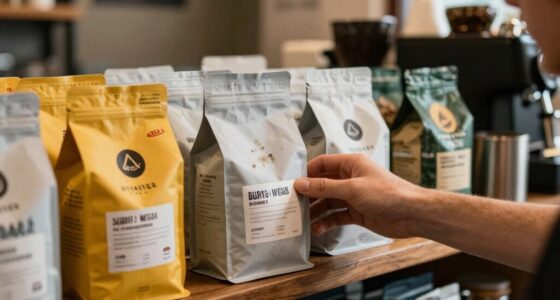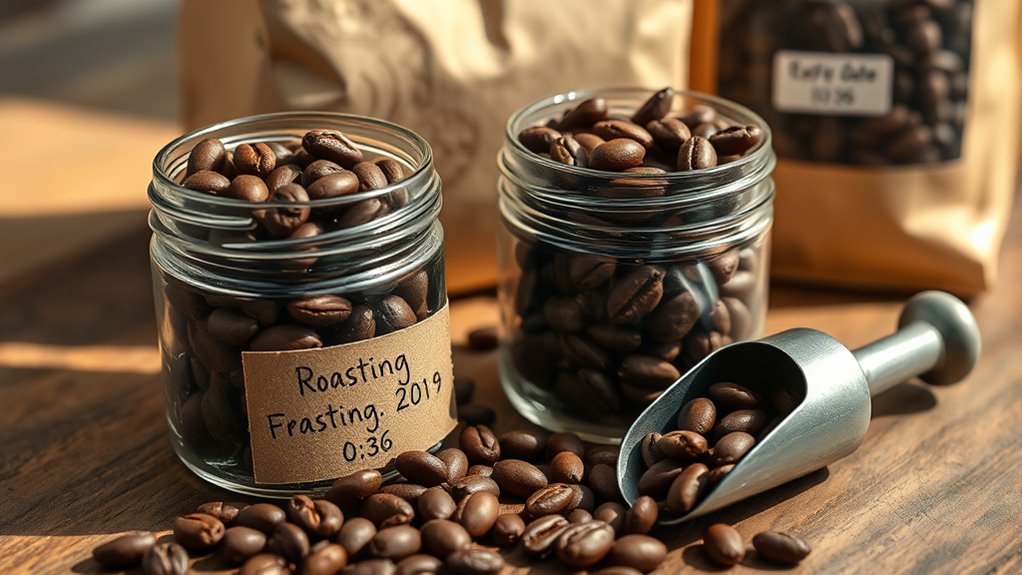

When choosing coffee, focusing on the roast date matters more than the expiry date. The roast date shows when the beans were freshly roasted, which affects flavor and aroma, typically peaking within 7-21 days. Expiry dates often don’t reflect actual freshness or quality, especially if stored properly. To enjoy the best flavor, pay attention to roast dates and storage tips—keep exploring to learn how these factors influence your brew.
Key Takeaways
- Roast dates reveal the coffee’s freshness and optimal flavor window, unlike expiry dates which focus on safety or shelf life.
- Freshness matters more than expiry dates; aim to buy coffee roasted within the past 1-3 weeks for peak flavor.
- Proper storage (airtight, cool, dark) preserves coffee’s aroma and extends its freshness, regardless of expiry dates.
- Coffee remains safe to consume beyond expiry dates if stored properly, but flavor diminishes over time.
- Monitoring roast dates helps you time your brewing for maximum flavor, whereas expiry dates are less relevant for quality.
As an affiliate, we earn on qualifying purchases.
Understanding the Significance of Roast Dates

Understanding the significance of roast dates is essential for appreciating coffee’s true flavor potential. When you know the roast date, you can gauge how fresh the beans are and how they’re likely to taste. Coffee begins to lose its ideal flavor shortly after roasting, typically within 7-21 days. This window is when the beans develop their brightest, most complex notes. Unlike expiry dates, roast dates provide a precise point in time, helping you decide whether the coffee is still at its peak. Without this information, you risk purchasing beans that are already past their prime, resulting in dull or flat flavors. Recognizing roast dates empowers you to select fresher, more flavorful coffee, enhancing your overall brewing experience. Monitoring coffee freshness is crucial for enjoying optimal flavor and aroma, as freshness preservation techniques can significantly extend the peak tasting window. Being aware of the roast date also helps in understanding how storage conditions might affect the beans’ longevity and quality over time. Proper storage methods, such as airtight containers away from light, can further help maintain coffee quality after roasting. Additionally, understanding the impact of storage can help you make better decisions about when to consume your coffee for the best taste.
The Limitations of Expiry and Best-By Dates
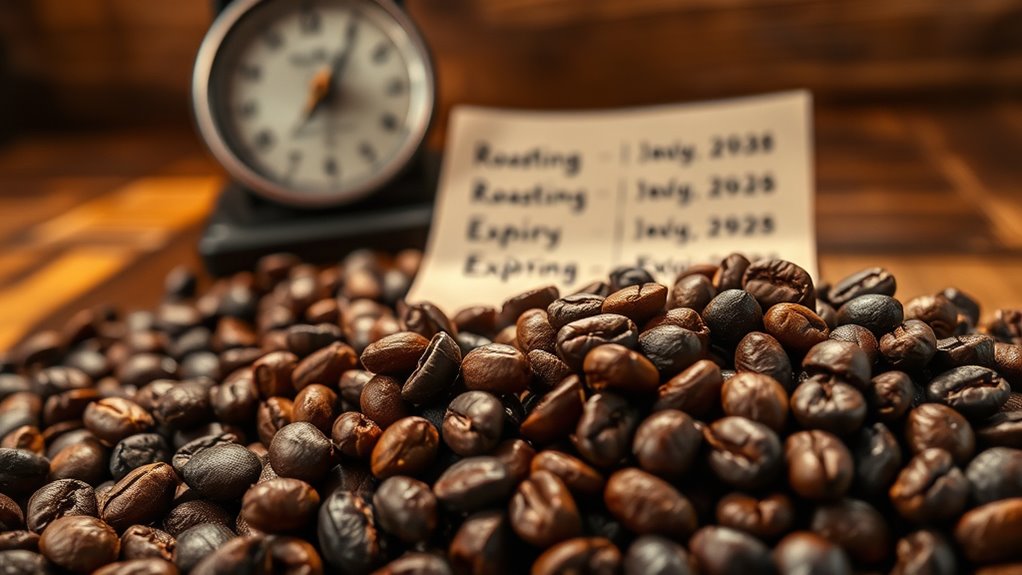
Expiry and best-by dates on coffee packaging often give a false sense of security but fail to accurately reflect freshness or flavor quality. These dates are usually set months after roasting, mainly for retail shelf stability, not taste. They can mislead you into buying stale beans, as flavor peaks within the first few weeks post-roast. Here’s a quick comparison:
| Aspect | What It Means |
|---|---|
| Expiry Date | Indicates safety, not flavor or freshness |
| Best-By Date | Suggests optimal quality, but not necessarily freshness |
| Roast Date | Shows exactly when beans were roasted, key to freshness |
| Flavor Peak Window | Usually within 7-21 days after roasting |
Relying solely on expiry dates can result in brewing dull, flat coffee, ignoring the actual freshness timeline. To truly enjoy the best flavor, understanding the roast date is essential for coffee connoisseurs. Additionally, being aware of how storage conditions affect coffee freshness can help maintain optimal flavor over time. Proper storage in a cool, airtight container can extend the enjoyable flavor profile of your beans well beyond the printed dates. Recognizing the importance of freshness indicators can significantly improve your coffee brewing experience. Moreover, staying informed about post-roast aging can allow you to better assess when your beans are at their peak.
How Storage and Packaging Impact Coffee Freshness
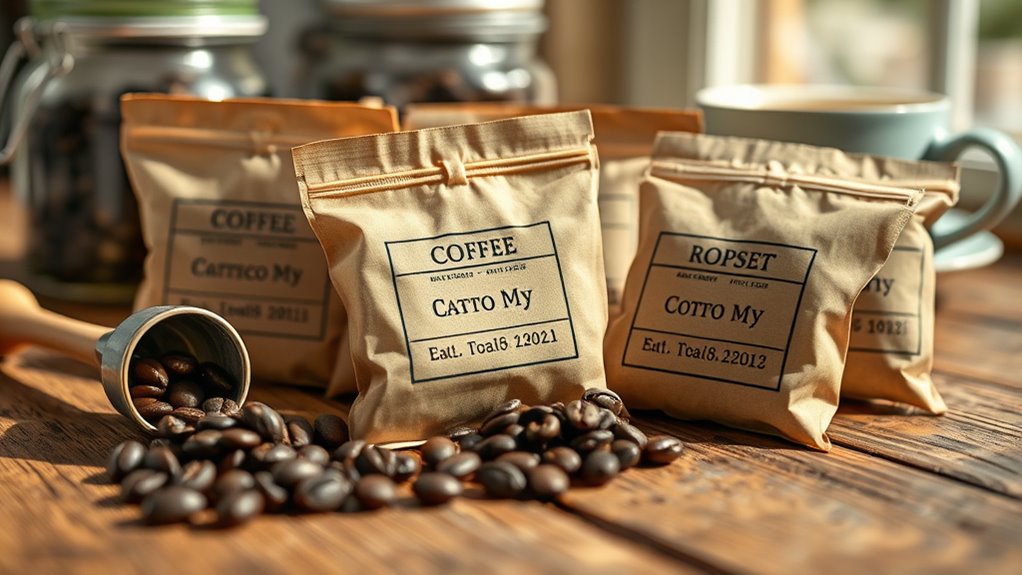
Proper storage and packaging are crucial for maintaining coffee’s freshness because they directly influence how quickly beans degrade over time. When you keep coffee in airtight containers, it limits oxygen exposure, slowing oxidation that causes flavor loss. Store your beans in a cool, dark place away from heat and light, which accelerate deterioration. Vacuum-sealed or nitrogen-flushed packaging helps preserve oils and aroma, extending freshness. Once opened, coffee’s exposure to air speeds up staling, so reseal or transfer it to a proper container. Grinding coffee increases surface area, making it more vulnerable to flavor degradation, so grind only what you need just before brewing. Implementing proper storage techniques can significantly improve coffee longevity and flavor quality. Using quality packaging materials can further enhance freshness by providing an effective barrier against environmental factors. Proper storage practices ensure your coffee retains its vibrant flavor longer, maximizing each roast’s peak potential. Additionally, implementing automated inventory management can help you keep track of freshness dates and optimize storage conditions. Regularly checking the storage environment can prevent exposure to moisture or temperature fluctuations that speed up spoilage.
Recognizing the Ideal Window for Peak Flavor
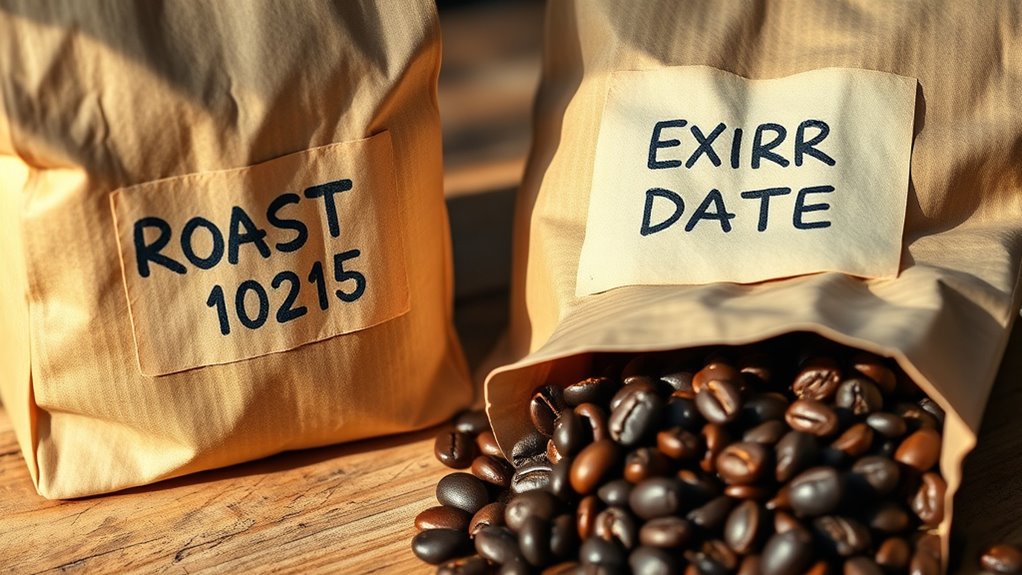
The best time to enjoy your coffee’s full flavor is during its peak window, which typically occurs between 7 and 21 days after roasting. During this period, the beans have fully degassed, allowing their aromatic compounds and flavor profile to shine. If you brew too early, the coffee might taste sour or off because the gases haven’t settled. Brew too late, and the flavors start to fade, becoming dull or flat. To maximize freshness, aim to consume your coffee within this window. Look for recent roast dates and buy from brands that prioritize transparency. Proper storage—airtight, cool, and dark—helps maintain peak flavor longer, but timing remains your best guide to enjoying the most vibrant, complex coffee experience. Additionally, understanding appliance maintenance plans can help ensure your brewing equipment stays in optimal condition, preserving your coffee’s quality over time. Recognizing the ideal freshness window is essential for making the most of your coffee, and being aware of roast date labels can assist in tracking freshness more accurately. Implementing payment solutions compatible with your purchase method can streamline your buying process, especially when shopping for specialty beans. Regularly monitoring pinball machine mechanics can also serve as a reminder of the importance of proper maintenance to keep your equipment in top shape.
Practical Tips for Buying and Storing Fresh Coffee
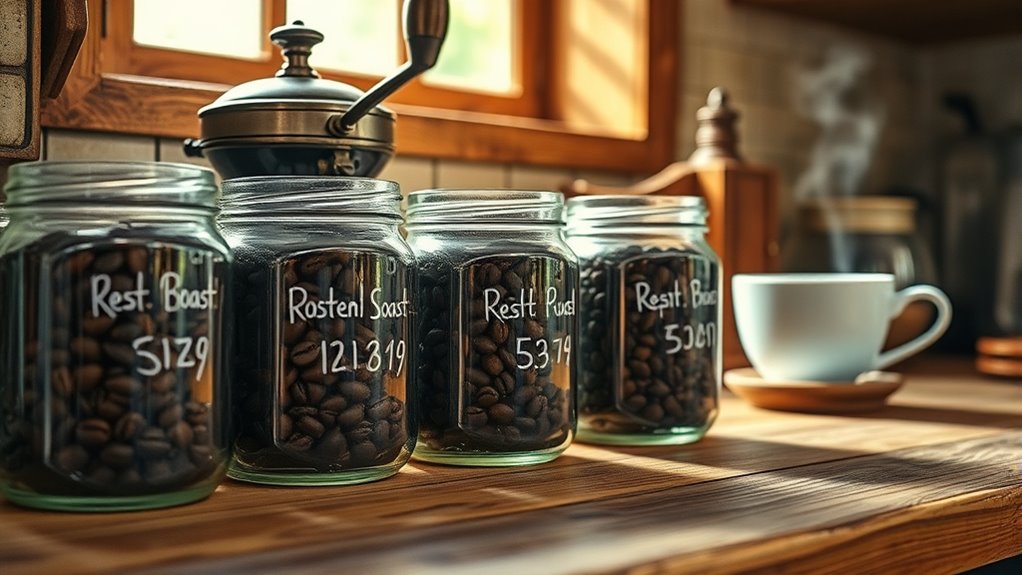
When you’re buying coffee, paying attention to the roast date can make a noticeable difference in flavor. Look for beans roasted within the last 1-3 weeks to enjoy peak freshness. Always check for a visible roast date; if missing, you can’t judge freshness accurately. Store your coffee in an airtight container in a cool, dark place to slow oxidation and moisture loss. Avoid exposure to sunlight, heat, and humidity. Grind just before brewing to preserve aroma and flavor. Buying smaller quantities ensures you consume fresh coffee before it stales. Consider brands that display clear roast dates for transparency and quality. Proper storage and timely purchase help maximize flavor and aroma, making every cup more enjoyable.
| Tip | Why It Matters |
|---|---|
| Check roast date | Ensures you’re buying fresh beans |
| Store in airtight container | Prevents oxygen exposure and staling |
| Keep in a cool, dark place | Slows degradation caused by heat and light |
| Grind just before brewing | Preserves maximum aroma and flavor |
| Buy smaller quantities | Avoids drinking stale coffee |
Frequently Asked Questions
Can Coffee Still Be Safe to Drink After the Expiration Date?
Yes, coffee can still be safe to drink after the expiration date. The date mainly indicates safety, not freshness or flavor quality. As long as the beans are stored properly in airtight, cool, dark conditions, they won’t pose health risks. However, their flavor and aroma will likely decline over time. If the coffee smells off or tastes stale, it’s best to discard it, but it’s generally safe to consume beyond the date.
How Can I Tell if My Coffee Has Gone Stale?
You might think stale coffee tastes flat or dull, but studies show oxidation actually alters aroma compounds, diminishing flavor. To tell if your coffee’s gone stale, smell it—if it lacks aroma or smells musty, it’s probably past its prime. Also, taste a small brew; if it tastes flat, bitter, or dull, it’s likely stale. Using fresh beans and proper storage keeps your coffee vibrant longer.
Do Darker Roasts Age Faster Than Lighter Roasts?
Yes, darker roasts tend to age faster than lighter ones. The oils in dark roasts are more exposed, making them more susceptible to oxidation and staling. You’ll notice they lose flavor quicker and become dull or bitter sooner. To enjoy the best taste, buy darker roasts closer to their roast date and store them properly in airtight containers away from heat and light.
Does Grinding Coffee Speed up Flavor Degradation?
Yes, grinding coffee speeds up flavor degradation. When you grind beans, you expose a larger surface area to oxygen, which accelerates oxidation and staling. This process causes your coffee to lose its aromatic oils and fresh flavors faster. To enjoy maximum freshness, grind your beans just before brewing and store any remaining grounds in an airtight container away from heat, light, and moisture.
Are There Specific Storage Conditions That Best Preserve Freshness?
If you want to keep your coffee tasting like it just left the roaster, store it in an airtight container, away from heat, light, and moisture—think of it as a fortress protecting precious flavor. Keep it in a cool, dark place, like a cellar or pantry, to slow down oxidation and staling. Avoid the fridge or freezer, which can introduce moisture and cause flavor loss, ruining your brew’s potential.
Conclusion
Remember, roasting dates reveal recent freshness, while expiry dates often mislead. To savor superior sips, store your coffee securely, seek out the sharpest, freshest beans, and stay savvy about timing. By understanding dates and diligently deciphering packaging, you’ll enjoy the perfect pour every time. Don’t just buy blindly—be mindful, monitor meticulously, and maximize your coffee’s potential. With awareness and attention, you’ll always brew your best cup, celebrating the quintessential quality that coffee can truly offer.