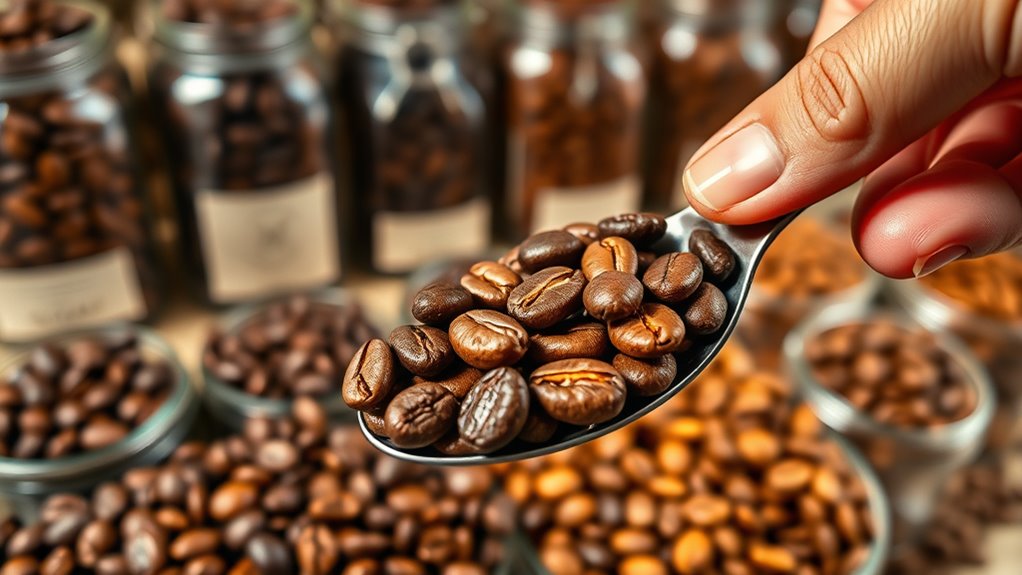

Many believe dark roasts have less caffeine and are healthier, but that’s a myth. Roast level mainly affects flavor, aroma, and appearance, while caffeine remains similar across all levels when measured by weight. Your choice should depend on your taste preferences—whether you like bright, fruity light roasts or bold, smoky dark ones. If you want to find the perfect brew for you, understanding these facts can help you make an informed decision.
Key Takeaways
- Caffeine content is similar across roasts when measured by weight; darker roasts are less dense but not less caffeinated.
- Dark roasts develop bold flavors and lower acidity, but do not necessarily contain less caffeine than lighter roasts.
- Choose a roast level based on your flavor preference: bright and fruity for light, balanced for medium, bold and smoky for dark.
- Dark roasting reduces chlorogenic acids, potentially lowering some health benefits compared to light or medium roasts.
- Matching your brewing method and taste preference ensures a satisfying coffee experience, regardless of roast color.

Veken French Press Coffee Maker 34oz, No Plastic Touching Cafe,Thickened Glass Stainless Steel Brewer, Cold Brew Cafetera Tea pot for Kitchen Travel Camping, Gifts, Decor, Bar Accessories, Dark Pewter
No Plastic Touching Food: Made with 304 stainless steel and food-grade silicone, our French press keeps all brewing…
As an affiliate, we earn on qualifying purchases.
As an affiliate, we earn on qualifying purchases.
Understanding Roast Levels and Their Characteristics
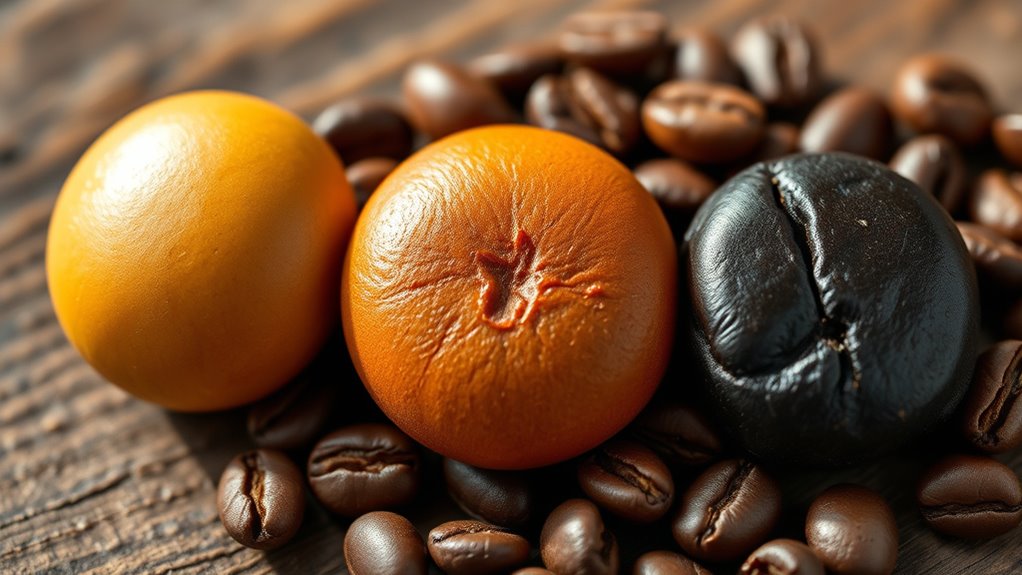
To understand roast levels and their characteristics, it’s essential to recognize how roasting time and temperature influence the coffee’s flavor, aroma, and appearance. Light roasts are roasted to 415–425°F, resulting in a dry, light brown bean with no oil, highlighting bright, fruity, and floral notes with high acidity. Medium roasts reach around 426°F, offering a smooth, balanced flavor with nutty and sweet undertones. Medium-dark roasts are just after the first crack, with slight oil and a richer body, emphasizing full-bodied and slightly spicy flavors. Dark roasts are roasted past the second crack, producing shiny, oily beans with bold, smoky, and bittersweet profiles. These distinctions are measured by color, Agtron scale, and weight loss, guiding you to select your preferred roast. Additionally, understanding the mechanics of French press can help you appreciate how extraction affects flavor profiles across different roast levels. Recognizing the influence of roast level on flavor development can enhance your overall coffee experience and help you choose the perfect roast for your taste preferences. Moreover, proper storage conditions are vital for maintaining the freshness and flavor of your coffee beans over time. Exploring different brewing methods further reveals how roast levels interact with extraction techniques to shape your coffee’s flavor profile.

Amazon Fresh, Just Bright Whole Bean Coffee Light Roast, 32 Oz
Light roast with a crisp and clean flavor
As an affiliate, we earn on qualifying purchases.
As an affiliate, we earn on qualifying purchases.
Debunking Common Myths About Caffeine Content
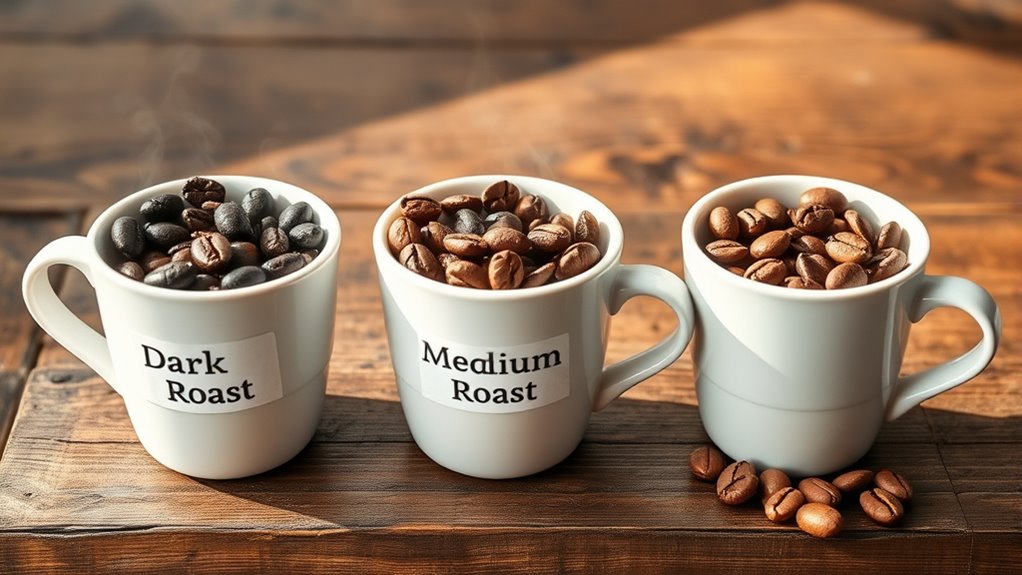
Many believe dark roasts have less caffeine than lighter ones, but in reality, caffeine levels are similar across roast levels when measured by weight. You might think bean density affects caffeine, and it does—light roasts are denser, so scoops contain more caffeine, but weight remains key. Understanding these differences helps you make better choices beyond common myths about caffeine content. Additionally, being aware of wood stove safety standards and proper installation can prevent accidents and ensure a safe environment when enjoying your coffee. Recognizing how automation technologies influence various industries can also help consumers make informed decisions about products and services they use daily. Knowing the roasting process can further deepen your appreciation for your favorite brew and its unique flavor profile. Moreover, understanding conversion kits can illustrate how technological adaptations enhance everyday experiences, whether in transportation or other fields.
Caffeine Levels by Roast
Despite common beliefs, the roast level of your coffee doesn’t substantially change its caffeine content. Whether you prefer a light or dark roast, the caffeine per bean remains nearly the same. The main difference is how you prepare and measure your coffee. Light roasts are denser, so if you scoop by volume, you’ll get more beans—and thus more caffeine—per scoop. Dark roasts are less dense, meaning fewer beans per scoop, which can lead to the impression of less caffeine. However, when you measure by weight, the caffeine content across roast levels evens out. So, choosing a roast based on caffeine isn’t necessary. Instead, focus on flavor and aroma preferences, knowing caffeine levels are fairly consistent throughout the roasting spectrum. Additionally, density differences between roast levels influence measurement methods but do not significantly affect caffeine content. It’s also important to note that roast development affects flavor profiles more than caffeine levels, further emphasizing that roast choice should align with taste preferences rather than caffeine concerns.
Bean Density Misconceptions
A common misconception is that darker roasted beans contain less caffeine because they are less dense than lighter roasts. In reality, roasting changes bean density but doesn’t profoundly affect caffeine levels. You might think fewer beans mean less caffeine, but when measured by weight, caffeine content stays consistent across roast levels.
| Roast Level | Bean Density | Caffeine by Volume |
|---|---|---|
| Light Roast | Denser | Higher (more beans per scoop) |
| Dark Roast | Less dense | Slightly lower (fewer beans per scoop) |
Weight vs. Caffeine Content
While roasting impacts the size and density of coffee beans, it doesn’t substantially change the amount of caffeine they contain by weight. This means that, ounce for ounce, dark and light roasts have nearly identical caffeine levels. However, because dark roasted beans are less dense, a scoop of dark roast coffee contains fewer beans and less caffeine than a scoop of light roast. Conversely, light roasts are denser, so a scoop holds more beans—and more caffeine. If you measure your coffee by weight, the caffeine content remains consistent across roast levels. It’s a common myth that dark roasts have less caffeine; in reality, the difference is minimal. Your choice of roast should depend on flavor preference, not caffeine content. The impact of roasting on bean density also influences brewing methods and flavor extraction. Additionally, processing techniques like homogenization and extraction methods can affect how caffeine is released during brewing. Furthermore, bean density can influence how efficiently caffeine is extracted during brewing, affecting the overall caffeine content in your cup. For instance, roast level can alter the solubility of caffeine during brewing, impacting the final caffeine content.
A proper grinding size can also optimize caffeine extraction and flavor profile during brewing.
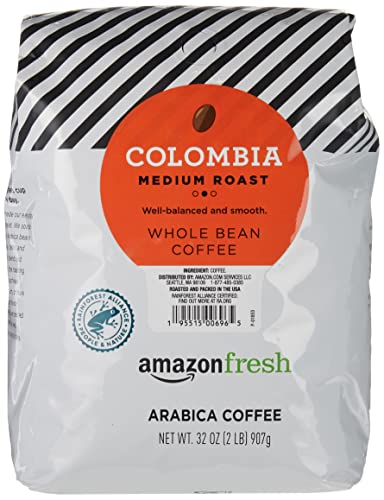
Amazon Fresh, Colombia Whole Bean Coffee Medium Roast, 32 Oz
Balanced, full-bodied medium roast with a smooth finish
As an affiliate, we earn on qualifying purchases.
As an affiliate, we earn on qualifying purchases.
How Roast Level Affects Flavor Profiles
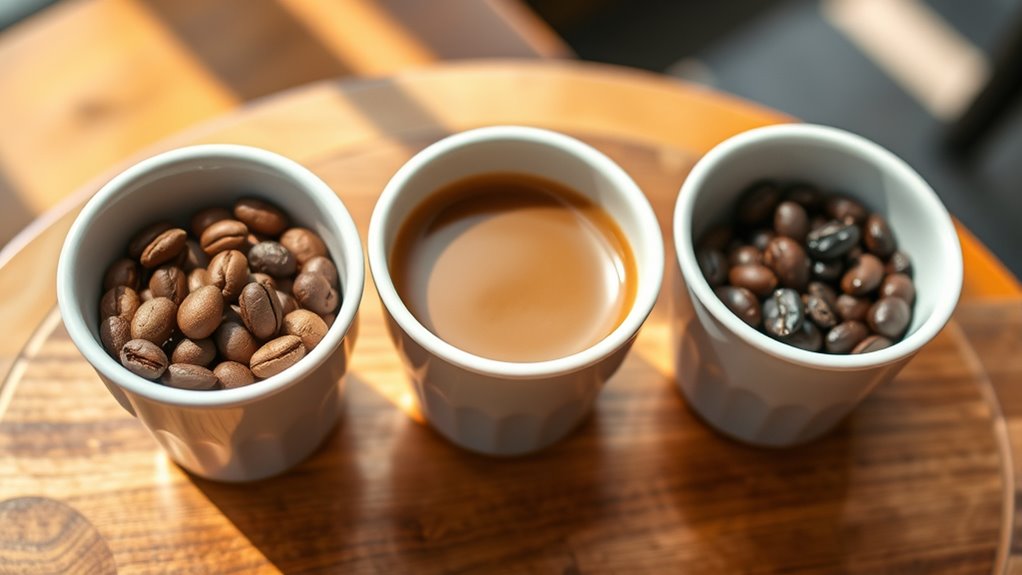
The roast level of coffee directly influences its flavor profile, shaping the taste experience you get with each cup. Light roasts highlight bright, fruity, and floral notes, preserving the unique flavors of the beans’ origin. They offer high acidity and a clean, crisp taste. Medium roasts balance these bright qualities with nutty, sweet flavors and moderate acidity, creating a smooth, well-rounded profile. Moving to medium-dark roasts, expect a richer, fuller body with hints of spiciness and reduced acidity, as the roast’s influence becomes more prominent. Dark roasts deliver bold, intense flavors—dominated by chocolatey, smoky, and bittersweet notes—where the roast overshadows the bean’s original character. Your preferred flavor depends on whether you seek brightness, balance, or boldness.

Copper Moon Dark Roast Whole Bean Coffee, Sumatra Blend, 2 Lb
CAFÉ QUALITY COFFEE BREWED BY YOU: Sumatra coffee is enjoyed by those who prefer a more bold and…
As an affiliate, we earn on qualifying purchases.
As an affiliate, we earn on qualifying purchases.
Health Implications of Different Roast Levels
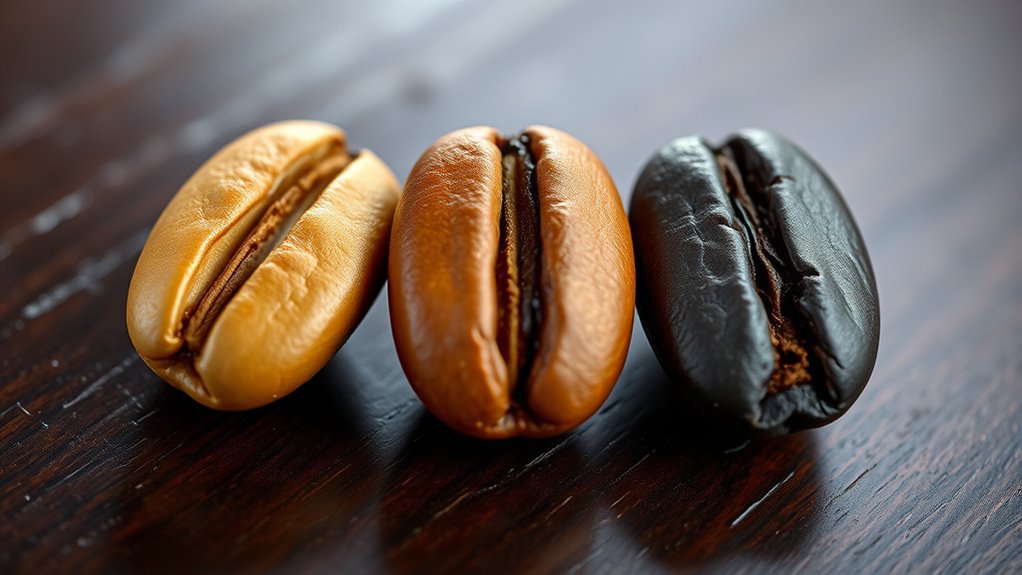
You might think darker roasts are less healthy, but they actually contain more melanoidins, which have antioxidant properties. Conversely, lighter roasts preserve higher levels of chlorogenic acids, known for their health benefits. Understanding how roast levels alter bioactive compounds helps you make better choices for your wellness. Additionally, processing methods can reflect changes in health and emotional balance related to dietary choices and lifestyle habits. Recognizing the impact of roasting techniques on nutrient retention can further inform your selection process. Moreover, nutritional variations across roast levels influence not only health benefits but also how these coffees may affect mood and emotional well-being.
Antioxidant Variations
Different roast levels considerably influence the antioxidant content in coffee, which can impact its health benefits. As you move from light to dark roasts, the antioxidant levels tend to decrease, but the story isn’t straightforward. Here’s what you should know:
- Light roasts retain more chlorogenic acids, potent antioxidants linked to health benefits.
- Medium roasts have a balanced antioxidant profile, preserving some chlorogenic acids.
- Dark roasts lose many chlorogenic acids but develop new antioxidants called melanoidins during roasting.
- Melanoidins may provide antioxidant effects and support gut health, partially compensating for the loss.
- The processing methods used can also influence the antioxidant levels and overall health impact of different coffee roasts.
- Additionally, the degree of roasting affects the preservation of bioactive compounds, which are crucial for maximizing potential health benefits.
- Incorporating mindful coffee consumption, such as choosing the appropriate roast, can be part of a holistic approach to wellness and mindfulness practices. A deeper understanding of antioxidant variations can help you make informed choices about your coffee intake.
Chlorogenic Acid Levels
While roasting coffee transforms its flavor and aroma, it also considerably impacts its chlorogenic acid content, a key antioxidant linked to health benefits. Light roasts retain most of these acids, offering higher levels of chlorogenic acids that support weight management and blood sugar regulation. As beans go darker, chlorogenic acids break down, reducing their presence in the brew. Medium roasts balance flavor with antioxidant retention, while dark roasts have markedly lower chlorogenic acid levels. If you’re seeking the health benefits associated with these antioxidants, lighter roasts are your best choice. However, keep in mind that darker roasts develop other compounds that might offer different health effects. Ultimately, your roast preference influences your intake of chlorogenic acids, aligning with your specific health goals.
Bioactive Compound Changes
Roasting coffee triggers chemical changes that substantially alter its bioactive compounds, impacting potential health benefits. As you roast, antioxidants, acids, and melanoidins transform, affecting how your body absorbs and uses these compounds. Here’s what happens:
- Light roasts retain more chlorogenic acids, boosting antioxidant levels.
- Medium roasts balance antioxidants with some breakdown of acids.
- Dark roasts reduce chlorogenic acids but produce melanoidins, which have antioxidant properties.
- Over-roasting can diminish overall bioactive compounds, reducing potential health benefits.
These changes influence not only flavor but also health impacts. If you seek higher antioxidant intake, lighter roasts are preferable. Conversely, dark roasts may offer benefits through different compounds like melanoidins, but overall, roasting levels shape the bioactive profile.
Measuring Roast Level: Methods and Standards
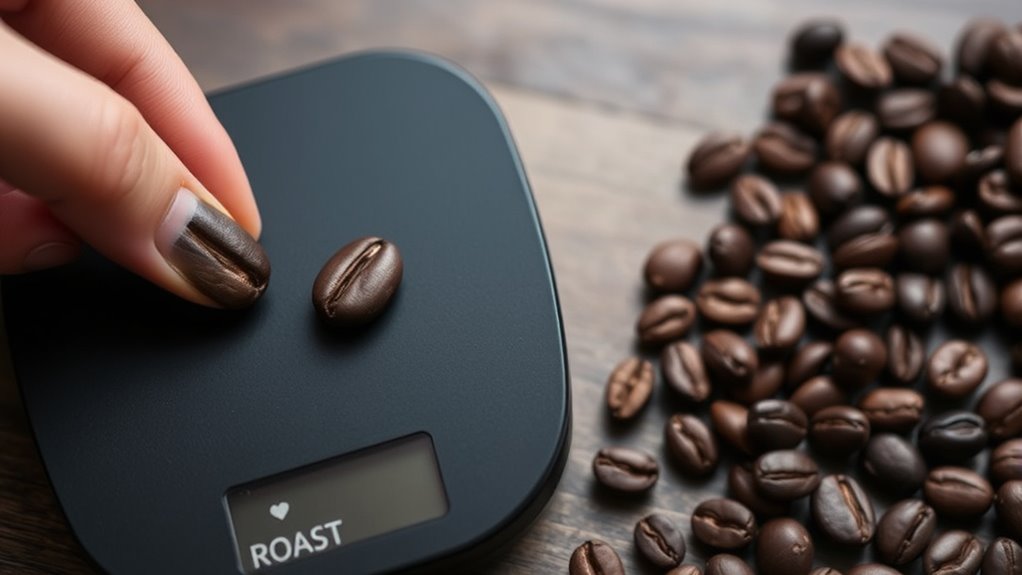
Measuring roast level accurately is essential for ensuring consistency and quality in coffee production, and several standardized methods are used across the industry. The most common is the Agtron scale, which assigns a number from 25 (dark) to 95 (light) based on color and caramelization. Visual inspection also plays a role, where roasters assess color, surface oil, and crack stages. Weight loss measurement is another method—darker roasts lose more moisture, resulting in higher percentage weight loss. Infrared spectrophotometers can determine Agtron numbers objectively, reducing subjective variability. Industry standards like the universal coffee color curve help calibrate these measurements across producers. These methods guarantee that you get a consistent roast profile, regardless of the roaster or location.
Aligning Your Coffee Choice With Personal Preferences
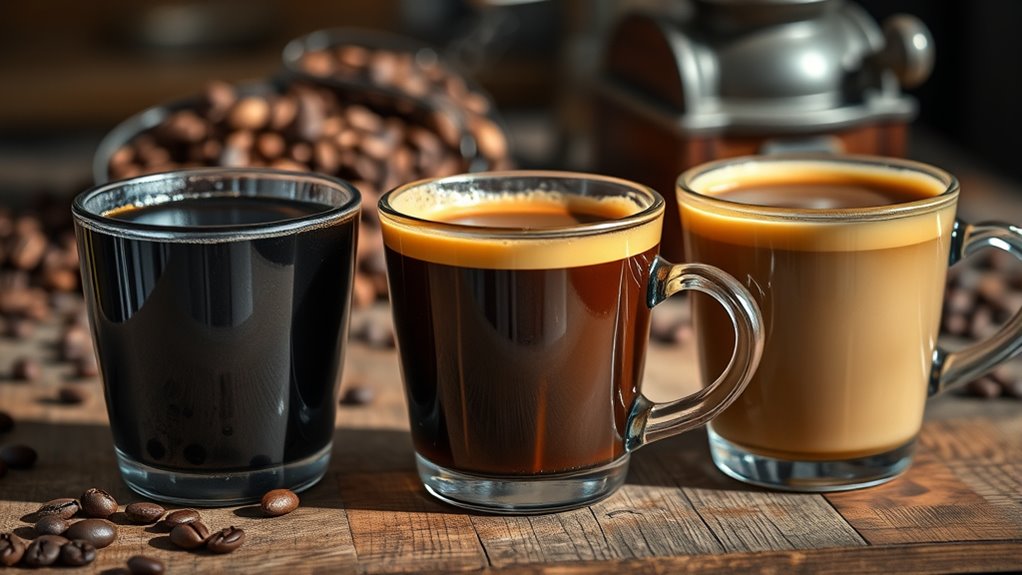
Choosing the right coffee roast level depends on your personal taste preferences and how you plan to enjoy your brew. To align your choice, consider these factors:
- If you love bright, fruity flavors with high acidity, go for a light roast.
- For a balanced, nutty, and mildly sweet profile, a medium roast suits you.
- If you prefer a richer, fuller body with spicy notes and lower acidity, choose a medium-dark roast.
- To enjoy bold, smoky, and chocolatey flavors, opt for a dark roast.
Your brewing method also matters—filter coffee works well with lighter roasts, while espresso favors darker roasts. Matching roast levels to your taste and preparation style ensures a satisfying coffee experience.
Trends and Insights in Coffee Roasting and Consumer Choices
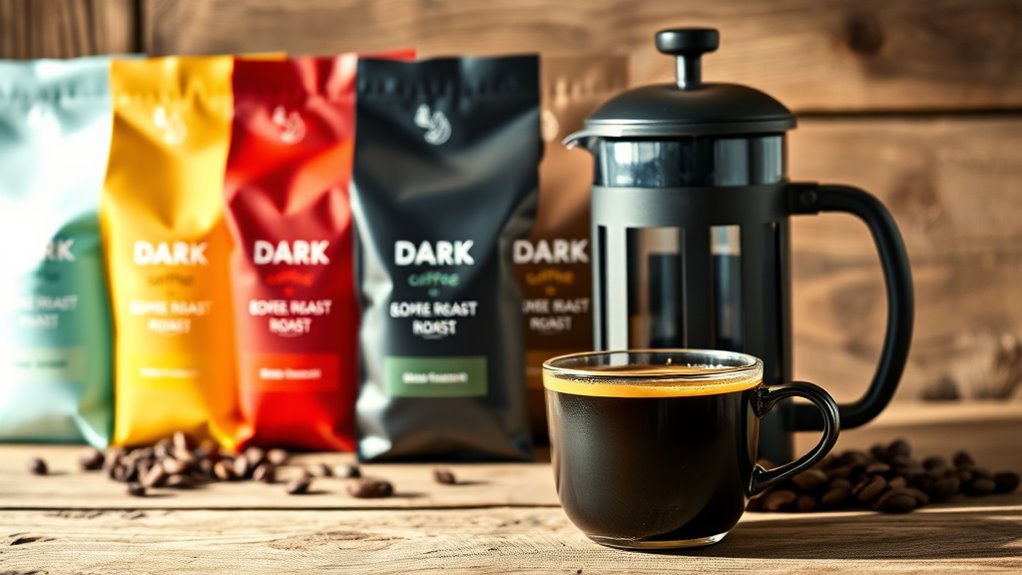
Recent trends show that consumers are increasingly paying attention to roast levels when selecting their coffee, with 70% indicating they’re more likely to buy when the roast is specified. This shift highlights a desire for transparency and personalized flavor. Many drinkers now seek out medium roasts for a balanced profile, while others prefer light roasts to savor nuanced, origin-specific notes. Dark roasts remain popular for bold, consistent espresso, but awareness of their flavor dominance is growing. Consumers are also more informed about how roast levels influence health, caffeine, and aroma. Coffee brands respond by clearly labeling roast levels and educating buyers on flavor profiles. Overall, understanding these trends helps you make more intentional choices that align with your taste preferences and values.
Frequently Asked Questions
Can Roast Level Influence How Coffee Affects My Digestion?
Yes, your roast level can influence digestion. Dark roasts contain more melanoidins, which may aid digestion and reduce stomach acidity. Light roasts preserve more chlorogenic acids, which can sometimes cause stomach discomfort in sensitive individuals. Your personal tolerance varies, so try different roasts to see how your body reacts. Generally, darker roasts might be gentler on your stomach, but individual responses differ.
Do Darker Roasts Have More Antioxidants Than Lighter Ones?
Darker roasts pack a punch with antioxidants like melanoidins, which act like tiny shields fighting off free radicals. While light roasts have more chlorogenic acids, dark roasts undergo chemical changes that boost these powerful compounds. So, if you want a coffee with more antioxidants, go for the dark roast—it’s like a fiery fortress defending your health, offering rich flavor and benefits in every bold sip.
Is There a Significant Difference in Caffeine by Brewing Method?
You’ll find that brewing method doesn’t make a huge difference in caffeine content. Pour-over, French press, or drip brewing all extract similar amounts of caffeine per gram of coffee. However, the amount you use and brew time matter more. Using more coffee beans or brewing longer can boost caffeine. So, focus on your coffee quantity and brewing style rather than the method itself for caffeine levels.
How Does Roast Level Impact the Coffee’s Environmental Sustainability?
Roast level impacts sustainability more than you might think, shaping the environmental footprint of your coffee. Lighter roasts keep more antioxidants and require less energy during roasting, making them more eco-friendly. Dark roasts, needing longer, hotter roasting, consume more energy and produce more emissions. So, by choosing a lighter roast, you could be helping reduce your coffee’s environmental impact—like giving a tiny yet mighty push to a greener planet.
Are Specialty Roasters Better at Customizing Roast Levels for Health?
Specialty roasters excel at customizing roast levels to suit your health preferences. They often experiment with lighter roasts to maximize antioxidants or darker roasts for specific health benefits like weight reduction. You can communicate your priorities, and these roasters tailor the process accordingly. This personalized approach means you get a coffee that aligns with your health goals while enjoying the flavor profile you prefer.
Conclusion
Now that you know the truths behind roast levels, it’s clear there’s no one-size-fits-all choice. Whether you prefer a light, fruity brew or a bold, smoky cup, selecting the right roast is about your taste and lifestyle. So, why settle for myths when you can explore and find what truly satisfies your palate? Embrace the variety, trust your preferences, and enjoy every sip—after all, isn’t that what coffee’s all about?