

When choosing decaf coffee, it’s important to know how different methods impact flavor, aroma, and quality. Water and CO2 processes usually preserve more of the natural taste, while solvent-based methods might alter flavor or leave residues. Look for labels like “Swiss Water Process” or “CO2 Decaffeination” to find chemical-free options. Considering your flavor preferences and storage needs helps, and exploring these details further can lead to your perfect decaf choice.
Key Takeaways
- Check labels for decaffeination methods like Swiss Water or CO2 to ensure chemical-free processing.
- Understand that water and CO2 methods better preserve flavor and aroma compared to solvent-based decaffeination.
- Consider sampling different decaf types to find flavors that match your taste preferences.
- Be aware that solvent-based decafs may have residual chemicals and can affect flavor profile.
- Store decaf coffee properly in airtight, cool, dark conditions to maintain freshness and quality.
Understanding Different Decaffeination Methods

Decaffeination methods vary in how they remove caffeine from coffee beans, each influencing the flavor and quality differently. You might find some processes preserve more of the beans’ original taste, while others can introduce off-flavors. The Swiss Water Process uses water and charcoal filters, removing caffeine without chemicals, which helps retain the coffee’s natural profile. CO2 decaffeination employs supercritical carbon dioxide under pressure, selectively extracting caffeine while maintaining flavor compounds. Solvent-based methods, like those using methylene chloride or ethyl acetate, often cost less but may impact flavor quality and leave residual traces if not carefully managed. Each method’s approach affects the bean’s aroma, taste, and shelf life, so understanding these differences helps you choose a decaf that best matches your preferences. Additionally, considering the natural materials used in processing can influence the overall purity and flavor integrity of the final product. The choice of decaffeination method can also affect the coffee’s shelf life and freshness over time. Furthermore, ongoing research into AI security practices aims to improve safety and quality control in food manufacturing processes.
The Swiss Water Process: A Chemical-Free Choice

The Swiss Water Process offers a chemical-free way to decaffeinate coffee, so you don’t have to worry about residual solvents. It effectively preserves the beans’ natural flavor, ensuring a richer taste experience. Plus, its eco-friendly approach makes it a responsible choice for environmentally conscious coffee lovers. Additionally, the high-pressure method used in this process enables thicker coffee beans to be decaffeinated efficiently without compromising quality. This second trimester overview highlights how careful processing methods like this can maintain the integrity of the beans while providing a safer decaffeination alternative. Moreover, understanding quality assessment can help consumers select decaf options that meet high standards of flavor and safety. Color accuracy in the process ensures that the beans retain their original characteristics, contributing to a more authentic flavor profile. Recent innovations in AI-powered quality control are further enhancing the consistency and reliability of decaffeination techniques.
Chemical-Free Decaffeination Method
If you’re looking for a chemical-free way to enjoy decaf coffee, the Swiss Water Process offers an excellent choice. This method uses only water and activated charcoal filters to remove caffeine, ensuring no chemicals touch your beans. The process involves soaking beans in water, where caffeine dissolves along with other soluble compounds. The water then passes through charcoal filters that trap caffeine molecules but keep flavor intact. The beans are re-soaked in fresh water to remove remaining caffeine, maintaining their original qualities. This gentle, chemical-free process preserves the coffee’s natural flavor while reducing caffeine to less than 0.1%. Here’s a quick comparison:
| Method | Key Feature | Benefits |
|---|---|---|
| Swiss Water | Water and charcoal filters | Preserves flavor, chemical-free |
| Mountain Water | Glacier water, natural process | Natural, chemical-free |
| Traditional Solvent | Solvents like methylene chloride | Cost-effective, less flavor preservation |
| Ethyl Acetate | Natural or lab-made solvent | Sweeter taste, faster degradation |
| CO2 Process | Supercritical CO2 extraction | Maintains flavor and oils |
Additionally, the glycolic acid skincare products are popular for their exfoliating benefits, but this is a different context from decaffeination. Understanding decaffeination methods can help you choose the best process for your preferences.
Furthermore, research into decaffeination techniques can provide deeper insight into how each method impacts the final flavor profile and quality of your decaf coffee. Exploring chemical-free decaffeination options might also lead you to more natural choices aligned with your lifestyle.
Flavor Preservation Benefits
Because it relies solely on water and charcoal filters, the Swiss Water Process excels at preserving a coffee’s natural flavor profile. Unlike chemical methods, it doesn’t strip away essential oils, acids, or aromatic compounds that give coffee its distinctive taste. By soaking beans in water saturated with coffee solubles, only caffeine is extracted, leaving behind the rich flavors. The activated charcoal filters trap caffeine molecules while allowing flavor molecules to remain in the water. This gentle process guarantees the beans retain their original complexity and aroma, resulting in a fresher, more vibrant cup. Additionally, the process minimizes chemical residues, making it a chemical-free choice for health-conscious consumers. If you’re seeking decaf that offers a true-to-origin flavor experience, the Swiss Water Process provides a natural, chemical-free solution that preserves the coffee’s integrity.
Eco-Friendly Processing Approach
The Swiss Water Process stands out for its commitment to environmental sustainability by eliminating the use of chemicals entirely. You get decaf coffee that’s processed solely with water and charcoal filters, making it a eco-friendly choice. This method uses osmosis and solubility principles to remove caffeine while preserving flavor compounds. Because no chemicals enter the process, it’s safer for the environment and your health. Plus, it maintains the coffee’s natural oils and aroma better than solvent methods. Here’s a quick comparison:
| Feature | Swiss Water Process | Other Methods |
|---|---|---|
| Chemical Use | None | Chemicals like methylene chloride or ethyl acetate |
| Flavor Preservation | High | Varies; some impact flavor |
| Environmental Impact | Low | Higher due to chemicals |
Choosing a chemical-free decaffeination process aligns with eco-conscious values and can enhance your coffee experience. Additionally, this method supports sustainable coffee practices, which are increasingly important to environmentally aware consumers.
A lesser-known benefit of the Swiss Water Process is its ability to retain more of the coffee’s original aroma and flavor, making it a preferred choice for discerning coffee lovers.
How CO2 Decaffeination Works and Its Benefits

You should understand how supercritical CO2 works to extract caffeine efficiently without harming flavor. This process uses high-pressure CO2 that acts like both a gas and liquid, targeting only caffeine molecules. Its eco-friendly nature and ability to preserve the coffee’s original taste make it a popular choice among decaf enthusiasts. Additionally, the ethical considerations of CO2 decaffeination highlight its sustainability and reduced environmental impact compared to other methods. The process also benefits from selective extraction, which helps maintain the integrity of the coffee’s natural aroma and flavor profile. Furthermore, understanding the carbon footprint of various decaffeination techniques can guide consumers toward more sustainable choices.
Supercritical CO2 Mechanics
Supercritical CO2 decaffeination leverages carbon dioxide in a state that combines properties of both a gas and a liquid, enabling it to selectively extract caffeine from coffee beans. Under high pressure and temperature, CO2 becomes supercritical, meaning it can penetrate the beans like a gas while dissolving compounds like a liquid. You place the beans in a sealed vessel, then introduce supercritical CO2, which binds with the caffeine molecules. The caffeine-laden CO2 is then depressurized, causing it to release caffeine while remaining reusable. This process preserves most of the beans’ original flavor compounds, oils, and aroma. Because of its selectivity, supercritical CO2 decaffeination is gentle, efficient, and results in a high-quality decaf coffee with minimal flavor loss.
Flavor Preservation Benefits
Because it targets caffeine specifically, CO2 decaffeination effectively preserves the coffee’s original flavor profile, oils, and aroma compounds. By using supercritical CO2, the process extracts caffeine without stripping away essential flavor components, ensuring your coffee retains its rich, nuanced taste. Unlike solvent-based methods, CO2 leaves behind fewer residual chemicals, maintaining the beans’ integrity. This selective extraction means that the natural sweetness, body, and aromatic qualities stay intact, giving you a more authentic coffee experience. Additionally, because the process operates under controlled conditions, it minimizes flavor degradation caused by heat or chemical interactions. As a result, decaffeinated coffee processed with CO2 offers a cleaner, more vibrant flavor profile, closer to that of regular beans. Furthermore, the process’s ability to precisely target caffeine contributes to higher-quality decaf coffee with minimal flavor loss, aligning with advanced extraction techniques that prioritize flavor preservation. This method also helps to preserve the nutritional content of the beans, making it a popular choice among specialty coffee producers.
Eco-Friendly Extraction Process
The CO2 decaffeination process stands out as an eco-friendly method because it relies on natural, recyclable substances instead of chemical solvents. It uses supercritical carbon dioxide at high pressure to selectively remove caffeine while preserving flavor compounds. This process minimizes waste and reduces chemical use, making it a sustainable choice. Additionally, the use of recyclable CO2 helps maintain a low environmental footprint. Because CO2 is recycled, it lowers environmental impact and avoids chemical residues. It’s especially suited for high-quality Arabica beans, ensuring you enjoy decaf coffee with minimal flavor loss and a greener footprint. Supercritical CO2 extraction is a key component of this process, further emphasizing its environmentally conscious design. Moreover, it aligns with sustainable coffee practices that prioritize environmental conservation.
Solvent-Based Decaffeination: What You Should Know
Are you curious about how solvent-based decaffeination works? In this method, coffee beans are first steamed to open their pores. Then, they’re rinsed with chemical solvents like methylene chloride or ethyl acetate, which selectively bond with caffeine molecules. After the caffeine is extracted, the beans go through a steaming process to remove any residual solvent, ensuring safety. Methylene chloride has been scrutinized but is regulated to keep residual levels below 1 part per million in the final product. Ethyl acetate is sometimes marketed as a natural solvent, but it can be lab-made. While this method is more affordable and efficient, it may slightly impact the coffee’s flavor, often producing a different taste profile compared to water or CO2 processes.
Impact of Decaffeination on Coffee Flavor and Aroma
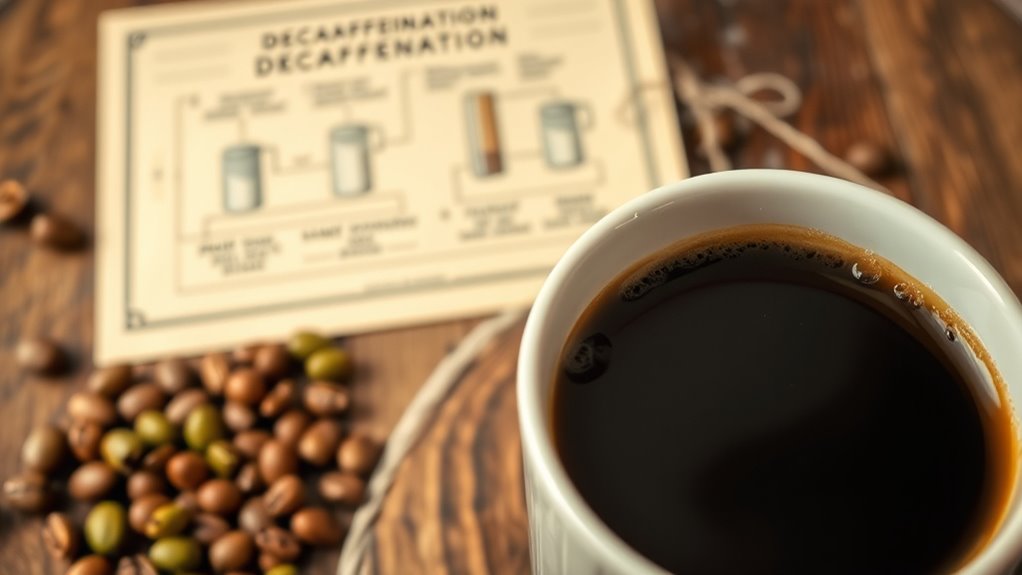
Decaffeination processes can considerably influence the flavor and aroma of your coffee, often altering its original characteristics. When you choose a decaf, the method used impacts how close it tastes and smells to regular coffee. Water-based methods like Swiss Water and Mountain Water preserve more of the beans’ natural oils and flavors, resulting in a richer, fuller taste. CO2 processes tend to retain the coffee’s complex aroma, offering a fresher profile. In contrast, solvent-based methods, especially those using methylene chloride or ethyl acetate, can impart off-flavors or diminish aromatic nuances. Additionally, certain decaffeination techniques may cause quicker flavor degradation over time. Understanding these differences helps you select decaf that maintains the desired flavor qualities, ensuring a satisfying coffee experience even without caffeine.
Shelf-Life and Storage Considerations for Decaf Coffee

Proper storage is essential to maintaining the freshness and flavor of your decaf coffee over time. To prolong its shelf life, keep your beans in an airtight container, away from heat, light, and moisture. Avoid storing in the fridge or freezer, as fluctuating temperatures can cause condensation and degrade quality. For best results, store whole beans rather than ground coffee, which loses freshness faster. Check the table below for storage options:
| Storage Method | Pros | Cons |
|---|---|---|
| Airtight Container | Preserves aroma and freshness | Needs to be kept in a cool place |
| Cool, Dark Pantry | No risk of moisture exposure | Limited shelf life |
| Freezer | Extends shelf life slightly | Can cause moisture when thawed |
Keeping your decaf in ideal conditions ensures a flavorful brew every time.
The Role of Roasting in Decaffeinated Coffee Quality

Roasting plays a significant role in shaping the flavor and aroma of decaffeinated coffee, just as it does with regular beans. Because decaf beans often have subtle flavor differences due to the decaffeination process, roasting becomes even more essential. A well-executed roast enhances the beans’ natural characteristics, bringing out complex aromas and balanced flavors. Since decaf beans may have lost some oils or flavor compounds during decaffeination, a careful roast can compensate by developing richer taste profiles. Light roasts highlight brightness and acidity, while darker roasts add body and depth. Keep in mind, decaf beans are more sensitive to over-roasting, which can accentuate any residual off-flavors. Ultimately, mastering the roast ensures your decaf coffee delivers a satisfying, flavorful cup.
Choosing the Right Decaf Coffee for Your Taste Preferences
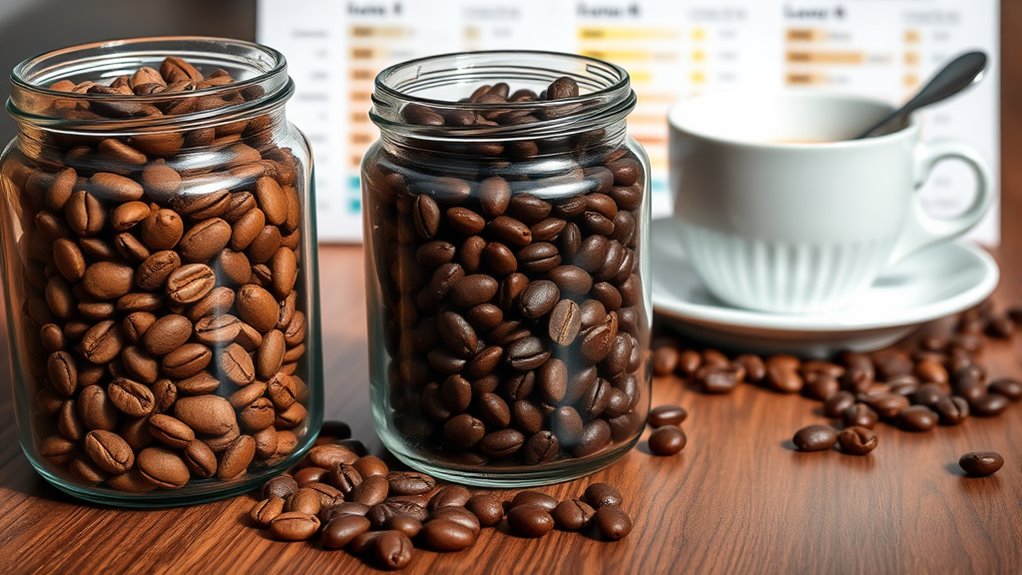
Choosing the right decaf coffee depends largely on your taste preferences and priorities. If you prefer a rich, full-bodied flavor, look for decafs processed with the Swiss Water or CO2 methods, as these preserve more of the original taste and aroma. If you enjoy a sweeter, milder profile, ethyl acetate decafs might suit you, though they tend to have a shorter shelf life. For those who prioritize natural, chemical-free options, water-based processes are ideal. Keep in mind that decaffeination can subtly alter the flavor—so, if possible, sample different types before buying. Ultimately, your choice should reflect your flavor preferences, whether you favor boldness, smoothness, or a more natural profile.
Reading Labels and Identifying Decaffeination Processes
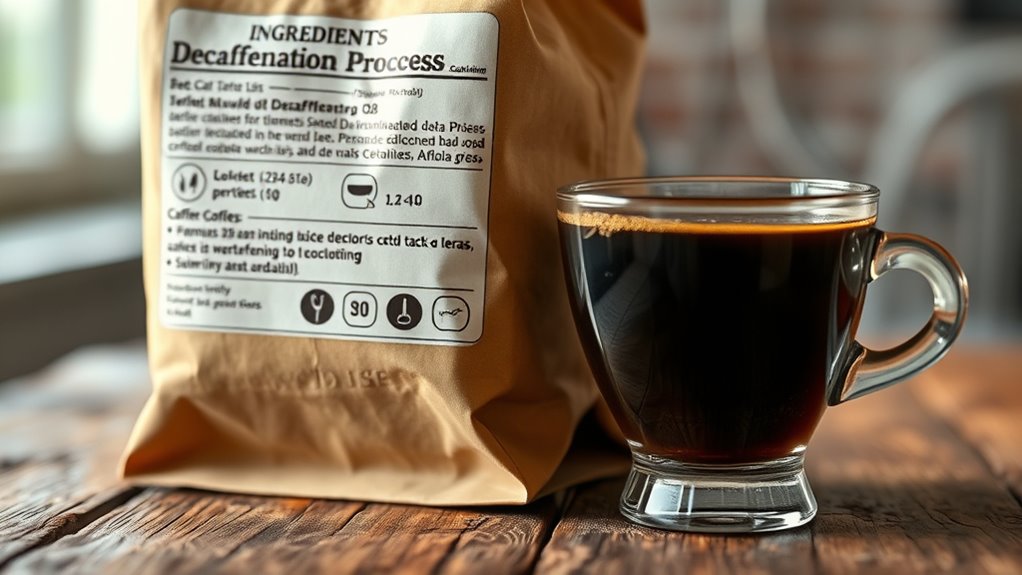
When selecting decaf coffee, reading the labels carefully helps you identify how the beans were decaffeinated. Look for specific terms like “Swiss Water Process” or “CO2 Decaffeination,” which indicate chemical-free methods that preserve flavor. Labels mentioning “solvent-based” or “ethyl acetate” suggest chemical processes that may impact taste. Some brands specify “naturally decaffeinated,” often referring to the EA method, though it’s not always natural. If you prefer a flavor-rich, chemical-free option, choose coffees processed with water or CO2. Be aware that decaffeination labels often include caffeine content details, showing the percentage remaining. Recognizing these labels helps you make an informed decision aligned with your taste preferences and health concerns. Clear labeling ensures you select a decaf that suits your lifestyle.
Frequently Asked Questions
Are All Decaffeination Methods Equally Safe for Health?
Not all decaffeination methods are equally safe for your health. Chemical processes like methylene chloride and ethyl acetate may leave trace residues, though levels are generally within safety limits. Water and CO2 methods are chemical-free, making them safer options. If you’re concerned about additives, choose decaf processed with Swiss Water or CO2 methods, as they eliminate chemical residues and preserve flavor without health risks.
How Does Decaffeination Affect Coffee’s Antioxidant Levels?
Decaffeination can dramatically reduce coffee’s antioxidants, sometimes by up to 80%, turning a powerhouse of health benefits into a shadow of its former self. You might be surprised to learn that the process strips away essential compounds like chlorogenic acids that fight free radicals. While some methods preserve more antioxidants, most decaf coffees still contain considerably fewer antioxidants than regular brews, impacting their health-boosting potential.
Can Decaf Coffee Cause the Same Stomach Issues as Regular Coffee?
Yes, decaf coffee can cause the same stomach issues as regular coffee. Both contain acids and compounds that may irritate your stomach lining, leading to discomfort, acid reflux, or indigestion. Decaffeination doesn’t remove all these substances, so if you’re sensitive to coffee’s acids or have gastrointestinal issues, you might still experience problems. Consider trying low-acid decafs or limiting your intake to see if symptoms improve.
Does Decaffeination Process Impact Coffee’s Caffeine Content Over Time?
A stitch in time saves nine, so you should know that decaffeination process doesn’t markedly change caffeine content over time. Once decaffeinated, the caffeine level stays pretty stable, especially if stored properly. However, improper storage can cause flavor and aroma deterioration, but caffeine remains mostly unchanged. So, your decaf coffee’s caffeine content stays consistent, ensuring you get the same mild stimulant effect regardless of how long it’s been stored.
Are Organic Decaf Coffees Processed Differently From Conventional Decaf?
Organic decaf coffees are processed similarly to conventional decafs, often using Swiss Water or CO2 methods that avoid synthetic chemicals. The key difference is that the beans are certified organic, meaning they’re grown without synthetic pesticides or fertilizers. These processes preserve the beans’ natural flavor while maintaining organic standards. So, when you choose organic decaf, you’re getting a chemical-free process that aligns with organic farming principles, often resulting in a purer, more natural product.
Conclusion
Choosing decaf is like selecting a gentle sunrise; it hints at promise without overwhelming. By understanding decaffeination methods, you can find the perfect brew that suits your taste and lifestyle. Think of each cup as a new horizon—calm, comforting, and full of potential. So, trust your senses and labels, and savor your decaf journey. After all, the best coffee isn’t just about caffeine; it’s about embracing the quiet beauty in each sip.