

To order exactly what you want, start by understanding common coffee types like espresso, drip, and cold brew, along with their flavors and textures. Recognize popular drinks such as lattes, cappuccinos, and flavored options like mochas. Use specific descriptions for strength, milk ratio, or extras, and don’t hesitate to clarify preferences with the barista. If you keep exploring, you’ll master how to navigate menus and get your perfect cup every time.
Key Takeaways
- Learn common coffee terminology like “espresso,” “drip,” “cold brew,” and modifiers to identify your preferred brewing style.
- Understand espresso-based drinks and their milk ratios, such as latte, cappuccino, or macchiato, for accurate ordering.
- Pay attention to flavor descriptors like “chocolate,” “vanilla,” or “single origin” to customize your taste experience.
- Know how to specify desired textures or milk amounts, e.g., “extra foam” or “less milk,” for a tailored drink.
- Use descriptive clues and menu labels to clarify your preferences, ensuring you get exactly what you want.
Understanding the Basics of Coffee Types and Brewing Methods

Understanding the basics of coffee types and brewing methods helps you make informed choices and enjoy your favorite cup. Knowing whether you prefer a bold, concentrated shot or a smooth, mellow brew guides your order. For example, espresso is a quick, intense shot brewed under high pressure, delivering rich flavor and crema. Drip coffee is made by slowly dripping hot water over grounds, resulting in a balanced, lighter taste. Cold brew uses cold water over extended time, producing a smooth, less acidic drink. Pour-over allows precise control, highlighting delicate flavors. Recognizing these methods helps you select drinks matching your taste preferences and understand menu descriptions. Additionally, understanding the caffeine content of different brews can help manage your intake. The choice of brew method can also influence the flavor profile and overall drinking experience, making it important to know what each technique emphasizes. Exploring brewing techniques can further enhance your appreciation for coffee and help you choose the perfect preparation for your palate. Being aware of how different brewing styles impact coffee strength allows you to tailor your order to your desired intensity. For instance, some brewing methods extract more bitter compounds, affecting the overall taste experience. Whether you’re after a quick pick-me-up or a carefully crafted specialty, understanding these basics guarantees a satisfying coffee experience.
Recognizing Espresso-Based Drinks and Their Differences
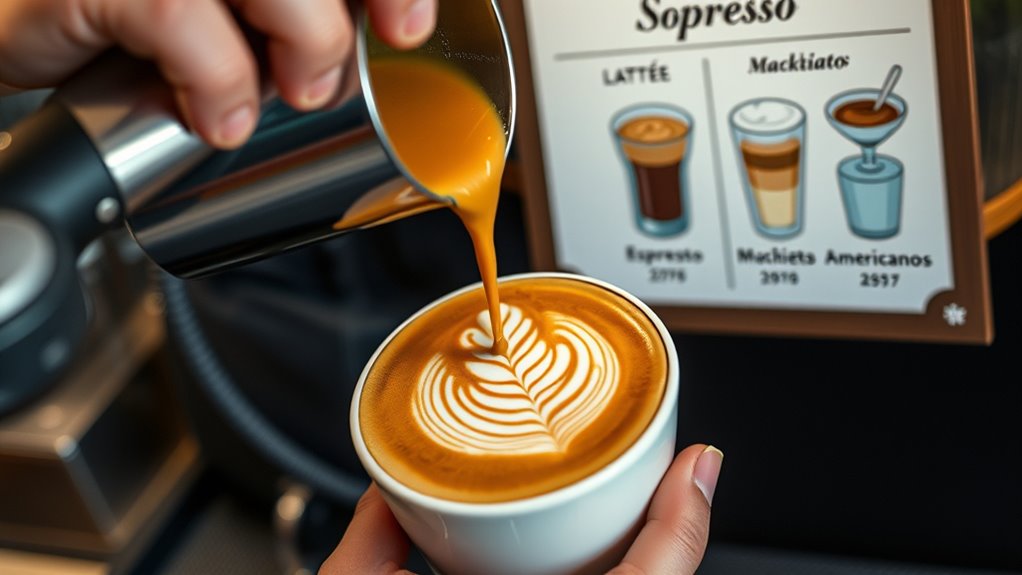
Understanding the differences between espresso and brewed coffee helps you choose the right drink for your taste and caffeine needs. Pay attention to milk ratios and textures, as they define popular espresso-based options like lattes, cappuccinos, and macchiatos. Recognizing these key features makes decoding a menu quick and easy. For example, knowing the coffee preparation method can help you identify whether a drink is made with a French Press, percolator, or espresso machine, each producing distinct flavor profiles. Additionally, being aware of automation technologies in coffee equipment can enhance consistency and quality in your preferred brew. For instance, some machines incorporate precise temperature control to optimize extraction and flavor. Understanding how energy monitoring features in smart appliances can impact your coffee setup may also improve efficiency and energy savings, especially if you have a smart home system. Awareness of milk frothing techniques can also improve your ability to select drinks with the desired texture and presentation.
Espresso vs. Brewed Coffee
How can you tell the difference between espresso-based drinks and brewed coffee? Espresso is a concentrated shot made by forcing hot water through finely ground coffee under high pressure. It’s thick, intense, and has a layer of crema on top. Brewed coffee, like drip or pour-over, involves hot water passing through coarser grounds, resulting in a lighter, more diluted flavor. Espresso usually comes in small servings, like a single or double shot, and forms the base for many drinks like lattes and cappuccinos. Brewed coffee is typically larger, with a milder, more straightforward taste. When ordering, look for terms like “shot,” “espresso,” or “single origin” for espresso, versus “drip,” “pour-over,” or “batch brew” for brewed coffee. Proper extraction is essential for achieving the desired flavor profile in both brewing methods. Additionally, understanding the differences in brewing techniques can help you select the perfect coffee to suit your taste preferences.
Milk Ratios and Textures
Milk ratios and textures play a key role in distinguishing espresso-based drinks. They influence the drink’s creaminess, strength, and mouthfeel, helping you identify what you’re ordering. For example, a latte has a high milk-to-espresso ratio with steamed milk and a thin layer of foam, making it smooth and mild. A cappuccino balances equal parts espresso, steamed milk, and thick foam, creating a rich and airy texture. A macchiato features just a splash of milk or foam, emphasizing the espresso’s boldness. The cortado combines equal parts espresso and lightly steamed milk, offering a smooth, less milky experience. Keep an eye out for these cues to understand the texture and intensity of each drink:
- Milk-to-espresso ratio
- Foam thickness
- Milk texture (steamed or frothed)
- Overall creaminess
Understanding the holistic approach to coffee preparation can also enhance your appreciation of these differences. Recognizing different espresso-based drinks helps you choose the perfect beverage to suit your taste preferences. Additionally, paying attention to texture cues can improve your overall coffee experience by helping you select drinks that align with your preferences.
Popular Espresso Drinks
Are you familiar with the key differences between popular espresso drinks? Knowing them helps you order with confidence. A latte has a shot of espresso with lots of steamed milk and a small foam layer, making it creamy and mild. A cappuccino combines equal parts espresso, steamed milk, and thick foam, delivering a stronger coffee flavor. A macchiato is just espresso “stained” with a splash of milk or foam—bold yet slightly creamy. The flat white resembles a latte but uses velvety, lightly frothed milk for a more pronounced coffee taste. The ristretto is a shorter, more concentrated shot of espresso, offering a sweeter and richer flavor. Recognizing these differences lets you select the perfect drink to match your taste preference.
Deciphering Flavored and Specialty Coffee Options
Deciphering flavored and specialty coffee options can seem complex at first, but paying attention to menu descriptions makes it easier. These drinks often include added ingredients or creative twists that enhance or change the flavor profile. To help you navigate, look for clues like “chocolate,” “whipped cream,” or “frosted” in the name or description. Here are some key points to ponder:
- Mocha combines coffee with chocolate, often topped with whipped cream.
- Affogato features espresso poured over ice cream, blending hot and cold.
- – Menu terminology can vary between establishments, so understanding common descriptors will help you make informed choices.
- Red Eye adds a shot of espresso to brewed coffee for an extra caffeine boost.
- Con Panna is espresso topped with whipped cream for richness without milk.
- Being aware of menu descriptions and terminology can greatly improve your coffee ordering experience and ensure you get exactly what you want.
Key Coffee Terminology to Know Before Ordering

Understanding key coffee terminology is essential for making informed choices when ordering at a café. Knowing the difference between espresso, drip, and cold brew helps you pick drinks that match your taste and caffeine needs. Terms like “crema” indicate quality espresso shots, while “single origin” highlights unique regional flavors. Understanding roast levels—light, medium, or dark—lets you choose the flavor profile you prefer. Familiarity with milk-based drinks like lattes, cappuccinos, and cortados clarifies the balance of coffee and milk, guiding you to your ideal strength and texture. Recognizing modifiers such as “blended,” “stale,” or “ristretto” ensures you avoid less desirable options. Mastering this terminology equips you to navigate menus confidently and order exactly what you want. Additionally, understanding extraction methods can help you appreciate the nuances of different brewing styles and their impact on flavor, while awareness of filter types can inform your choices about how your coffee is brewed and prepared.
How Brewing Techniques Influence Flavor and Texture

- Espresso creates a rich, intense flavor with a velvety crema, emphasizing boldness and body.
- Cold brew produces a smooth, low-acid drink with a mellow profile and a silky texture.
- Pour-over offers a clean, bright cup with clarity and nuanced flavors due to precise water flow.
- Batch brew delivers convenience but can lack freshness, resulting in a flatter taste.
- The dilution guidelines for essential oils influence how well flavors are balanced and how the final product is perceived.
- Additionally, plant health factors such as soil quality and sunlight can subtly influence the flavor profiles of coffee beans, especially when sourced from environmentally diverse regions.
- Understanding brewing techniques can help you tailor your coffee to match your preferred flavor and texture profile.
- The use of high-pressure extraction in espresso brewing enhances the flavor extraction process, contributing to the intensity and richness of the final cup.
- Properly managing water temperature during brewing is crucial, as it directly impacts extraction efficiency and flavor clarity.
Tips for Communicating Your Preferences to Baristas

Ever wonder how to guarantee your coffee matches your preferences? Clear communication is key. Start by specifying the drink type and size, then mention your preferred strength, milk texture, and any extras. Use specific terms like “less bitter,” “extra smooth,” or “light foam” to guide the barista. If you want a latte with less milk, say “smaller milk ratio,” or ask for a “dry cappuccino” for more foam. Here’s a quick guide:
| Preference | Description |
|---|---|
| Milk Texture | Steamed, foamed, or dry (less milk) |
| Strength | Bold, mild, or balanced |
| Additions | Chocolate, whipped cream, flavor shots |
| Serving Style | Hot, iced, blended |
Being precise helps you get exactly what you want. Understanding mental wellbeing can also help you approach your coffee choices with clarity and confidence, ensuring a satisfying experience every time.
Reading Menus and Identifying Common Coffee Descriptions

When you look at a coffee menu, you’ll notice various descriptions that quickly convey the type, flavor, and preparation method of each drink. Recognizing these terms helps you choose what suits your taste. For example, look for words like “espresso” for strong, concentrated coffee, or “latte” if you want creamy milk. Pay attention to modifiers such as “cold brew” or “pour-over,” which tell you about brewing style. Keep an eye out for flavor indicators like “chocolate” or “vanilla,” signaling added flavors. Also, note descriptions like “foamed,” “steamed,” or “shaken,” which describe texture and mouthfeel. Understanding these common descriptions allows you to decode the menu confidently and order precisely what you want.
Frequently Asked Questions
How Do I Choose the Right Coffee Strength for My Taste?
To choose the right coffee strength, consider how bold or mild you like your coffee. If you prefer a strong, intense flavor, go for espresso or ristretto. For a smoother, milder taste, opt for a latte or flat white with more milk. You can also ask for a lighter roast if you want a less bitter profile. Tasting different types helps you find your perfect balance.
What’s the Difference Between a Flat White and a Latte?
Think of a flat white as a smooth, velvety river flowing with more pronounced coffee flavor, while a latte is like a gentle stream with a creamier, milkier taste. A flat white uses little foam and has a higher coffee-to-milk ratio, offering a bolder sip. A latte features more steamed milk and a small foam layer, making it creamier and milder. Choose based on whether you prefer a richer or softer coffee experience.
How Can I Customize My Drink’s Sweetness or Creaminess?
You can customize your drink’s sweetness or creaminess by asking for added ingredients or adjustments. Request extra syrup, chocolate, or flavored additions to boost sweetness. For creaminess, ask for more milk, whipped cream, or a flavored creamer. You can also specify the type of milk (whole, skim, almond) or request less or more foam to tailor the texture. Don’t hesitate to communicate your preferences clearly to get it just right.
What Do Menu Abbreviations Like “Doppio” or “Venti” Mean?
Think of “doppio” as a secret handshake among espresso enthusiasts—it’s just a double shot of espresso, giving you twice the caffeine punch. “Venti,” like the grand stage of a performance, means a large size, typically 20 ounces at Starbucks. Recognizing these abbreviations helps you navigate menus with confidence, ensuring you get the perfect strength and size of your coffee. So, next time you see them, you’ll know exactly what you’re ordering.
How Do I Order a Coffee With Specific Milk or Foam Textures?
To order a coffee with specific milk or foam textures, clearly specify the type and amount you want. For example, ask for steamed milk if you want creamy warmth, or request extra foam for a cappuccino. Mention preferences like velvety or light foam, and specify if you want minimal or no foam. Using terms like “extra steamed milk” or “light foam,” helps baristas craft your perfect drink.
Conclusion
Now that you know how to decode coffee menus, ordering exactly what you want becomes easier. Imagine visiting a café and confidently asking for a velvety flat white with a hint of vanilla—no confusion. By understanding your options and communicating your preferences clearly, you’ll enjoy your perfect cup every time. Next time, use what you’ve learned to customize your order and savor a coffee that truly hits the spot.