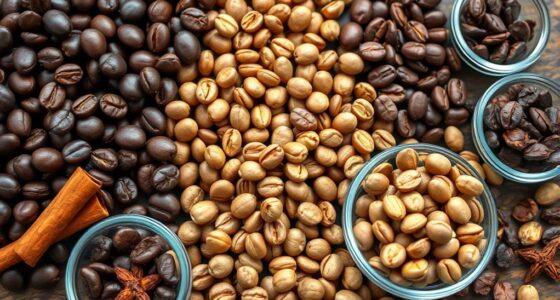

Many expensive coffees seem rare, but their high prices often come from unique genetics, limited regions, special processing, or exclusive certifications rather than quality alone. Factors like remote locations, small farms, and auction prices boost their exclusivity. While these coffees are prized for their flavors and story, understanding what truly makes them rare can surprise you. Keep exploring to discover what truly drives their value—and if some are worth the splurge.
Key Takeaways
- Rare coffee beans often come from unique varietals, limited regions, or specialized processing methods that significantly restrict supply.
- Geographic isolation, challenging terrain, and small-scale farms contribute to scarcity and higher market value.
- Certifications like Geisha, Blue Mountain, or auction exclusives enhance perceived rarity and authenticity.
- Limited editions and auction prices reflect actual scarcity and increase the coffee’s prestige and market demand.
- Unique flavor profiles and environmental factors make certain beans highly sought after, but rarity doesn’t always equate to taste quality.
What Makes a Coffee Truly Rare?
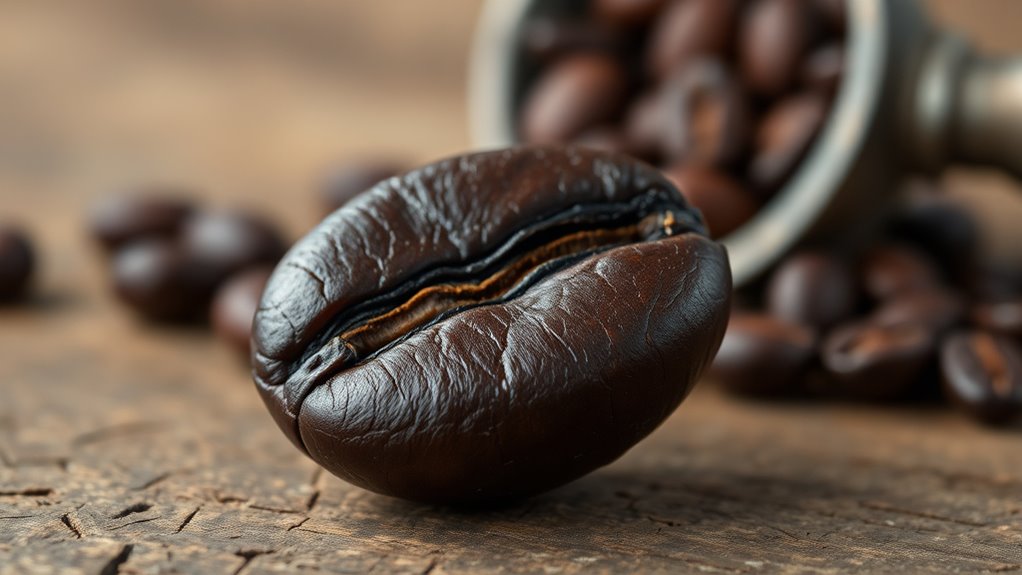
A coffee becomes truly rare when its production is limited by factors beyond simple geography or popularity. You’ll find that rarity often comes from unique genetics or specialized processing methods. Some beans, like Geisha or Pacamara, have distinct genetic traits that make them stand out. Others are rare because of how they’re processed—like Kopi Luwak, which involves animal digestion, or Black Ivory, requiring labor-intensive steps. Limited supply also plays a key role, whether due to low yields, geographic isolation, or strict regulations. These factors create exclusivity, making the coffee highly sought after and often expensive. Additionally, specialty coffee grading systems help identify and promote rare coffee varieties, further influencing their value and desirability. Recognizing the genetic traits that contribute to a coffee’s uniqueness can also elevate its status among connoisseurs. Moreover, the processing methods used can significantly impact the flavor profile and rarity of the beans. Understanding the processing techniques involved can help explain why some beans command higher prices and are considered more exclusive. For example, the water processing method can further enhance the flavor complexity and rarity of certain beans.
The Role of Genetics and Processing in Rarity

Genetics and processing methods play a crucial role in determining a coffee’s rarity because they directly influence its unique flavor, appearance, and exclusivity. Certain rare varietals, like Geisha or Liberica, come from distinct genetic lineages that produce exceptional taste profiles and limited availability. Processing techniques, such as dry, wet, or innovative methods like animal digestion, further set rare coffees apart. These specialized processes often require significant labor and expertise, making the beans harder to produce at scale. The labor-intensive nature of such methods adds to the overall scarcity of these beans. Additionally, the specific processing techniques can alter the chemical composition of the beans, further enhancing their uniqueness and desirability. The genetic diversity of coffee plants also contributes to the rarity, as some genetic strains are naturally less common. As a result, the combination of unique genetics and labor-intensive processing creates a scarcity that elevates a coffee’s status and price. By controlling these factors, producers craft distinctive, sought-after beans that stand out in a crowded market, fueling the perception of rarity and exclusivity. Understanding how Processing techniques can influence a coffee’s unique qualities underscores the importance of strategic planning to maximize its value and appeal.
Geographic Isolation and Limited Production

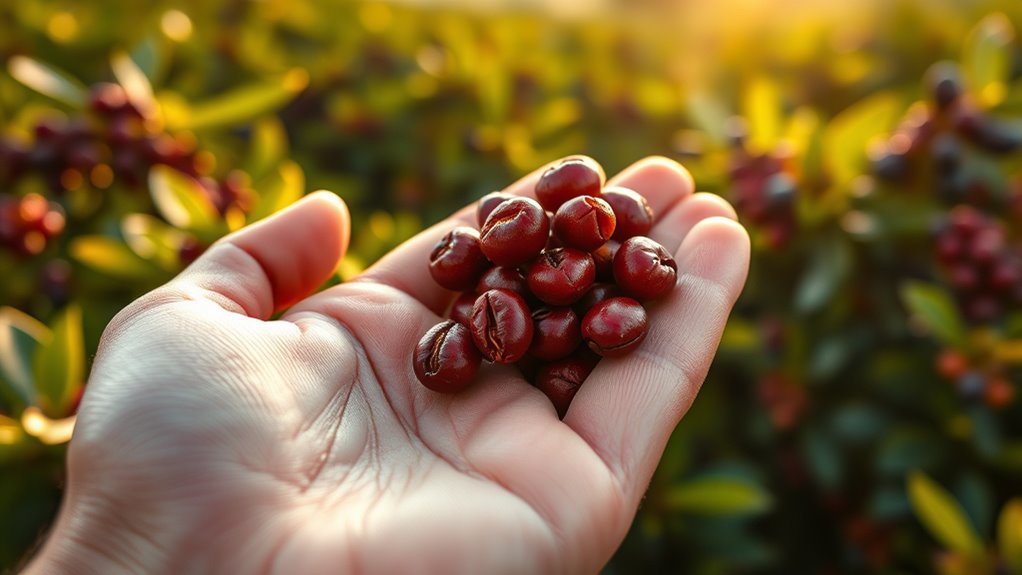
You’ll notice that some rare coffees come from remote growing regions, where access is limited by rugged terrain or distance. Small-scale cultivation in these areas keeps production low, adding to their scarcity. Geographic barriers make it difficult to expand supply, which often drives up the coffee’s exclusivity and value.
Remote Growing Regions
Have you ever wondered why some coffees are considered rare? Remote growing regions play a big role in that rarity. These areas often sit in hard-to-reach places, making cultivation difficult and limiting supply. Imagine:
- Mountainous islands with steep slopes, where access is only possible by boat or helicopter.
- Volcanic highlands, where the terrain is rugged and infrastructure sparse.
- Dense forests, where dense foliage and wildlife complicate harvesting. These challenging terrains often require specialized equipment and techniques for coffee cultivation, further restricting production. Additionally, the microclimates created by these remote locations can produce distinctive flavor profiles that are highly prized by connoisseurs. These factors restrict production and keep the beans confined to specific locations. Limited access means fewer farmers can grow and harvest the coffee. As a result, these beans become highly sought after, their scarcity fueling the perception of exclusivity and high value. Additionally, the geographic isolation of these regions often leads to unique microclimates that influence the beans’ flavor profiles, further enhancing their rarity and desirability. The remote locations also contribute to higher transportation costs, which can increase the overall price of the beans.
Small-Scale Cultivation
Small-scale cultivation often goes hand-in-hand with geographic isolation, amplifying the rarity of certain coffees. When farmers grow beans in remote or hard-to-reach areas, production remains limited. You’ll find this with varieties like Geisha in isolated mountain regions or Blue Mountain in Jamaica’s rugged terrain. These small farms produce only a few hundred pounds annually, making supply scarce. Limited land, labor-intensive processes, and specific environmental conditions restrict output further. Because of this, each batch becomes a prized commodity, often fetching high prices. As a result, the rarity isn’t just about the beans themselves but also about the unique, often inaccessible places where they’re cultivated. This small-scale approach helps sustain the exclusivity that drives demand and elevates the coffee’s perceived value. Limited production further contributes to the scarcity, making such coffees highly sought after by connoisseurs. Additionally, specialized farming techniques employed in these regions enhance both the quality and uniqueness of the beans, reinforcing their exclusivity. Moreover, organic and sustainable practices can further increase the desirability and value of these rare coffee beans. Implementing innovative processing methods can also support sustainable cultivation in remote areas, reducing environmental impact.
Geographic Barriers
Geographic barriers considerably contribute to the rarity of certain coffees by limiting where they can be grown. These barriers restrict access to ideal climates and terrains, making some beans difficult to produce at scale. Imagine:
- A tiny hillside plantation in Panama’s highlands, producing Geisha beans with delicate, floral notes.
- Volcanic slopes in Hawaii where Kona coffee thrives, offering rich soil and unique terroir.
- Remote mountain regions in Jamaica, where Blue Mountain coffee is carefully cultivated within strict boundaries.
These isolated locations mean fewer farms, limited harvests, and higher costs. The difficulty of access and the specific environmental conditions create natural scarcity, driving up the value and exclusivity of these coffees. Proper installation and venting are essential for maintaining quality and safety, which further influences the availability and coffee production limitations. Environmental conditions, such as microclimates and soil composition, also impact crop yields, making some beans rare and highly sought after. Additionally, climate variability can further restrict harvests and add to their scarcity.
The Impact of Certification and Auctions

Certification can markedly boost a coffee’s perceived value, making it more desirable to collectors and connoisseurs. Auction prices often reflect a coffee’s rarity, with limited releases fetching top dollar due to their exclusivity. When producers release small quantities, it fuels demand and elevates the coffee’s status in the market. Additionally, delivery logistics play a crucial role in preserving coffee freshness and quality during transportation.
Certification Boosts Perceived Value
Certification and auction results considerably boost a rare coffee’s perceived value by signaling quality, authenticity, and exclusivity. When a coffee is certified—like Organic, Fair Trade, or Geisha-specific—you immediately trust its origin and production standards. Auctions further elevate a coffee’s status, showcasing its rarity through record-breaking prices. Imagine:
- A coffee auction where beans sell for hundreds per pound, highlighting its exclusivity.
- Certified coffees with labels that guarantee origin, processing methods, and ethical practices.
- Limited editions sold at premium prices, making collectors and connoisseurs enthusiastic to acquire them.
These markers create a perception of prestige, making consumers believe the coffee’s worth exceeds its actual rarity. Certification and auction results become powerful tools to boost perceived value and justify higher prices.
Auction Prices Reflect Rarity
Auction prices serve as a powerful reflection of a coffee’s rarity, often setting the benchmark for its market value. When rare coffees like Geisha or Blue Mountain hit the auction block, their prices skyrocket, signaling exclusivity to collectors and enthusiasts. These high bids highlight scarcity, limited availability, and the desirability of the beans. You’ll notice that auction records often verify a coffee’s status as rare, with some beans fetching hundreds or thousands of dollars per pound. However, prices can also be driven by marketing, hype, and perceived prestige rather than quality alone. As a result, auction prices shape consumer perception, making certain coffees seem more valuable simply because they’re auctioned at a premium. This dynamic reinforces the idea that rarity, as reflected by auction prices, directly influences market value.
Limited Releases Drive Demand
Have you ever noticed how limited releases of rare coffees create a surge in demand? When a coffee is released in small quantities, it instantly becomes a must-have for collectors and connoisseurs alike. This scarcity fuels excitement and drives prices higher.
Think of it like this:
- Certification labels, like Geisha or Blue Mountain, add a sense of authenticity and exclusivity.
- Auctions highlight the rarity, with high bids signaling prestige and desirability.
- Limited edition releases, often tied to specific harvests or regions, create buzz and urgency to buy before it’s gone.
These factors make rare coffees more than just drinks—they become status symbols, pushing demand and pricing through the roof. The scarcity created by limited releases keeps the market competitive and highly sought after.
Flavor Profiles of Known Rare Coffees

Rare coffees are celebrated not only for their scarcity but also for their distinctive and memorable flavor profiles. When you taste Geisha, you’ll notice floral notes, tropical fruits, and a hint of white wine or peach, often with a delicate acidity. Kona offers a smooth, balanced experience with caramel, milk chocolate, and nutty undertones, along with a bright acidity. Blue Mountain presents a mild, sweet profile with low acidity, featuring nutty and chocolate flavors that are easy to enjoy. Kopi Luwak surprises with a chocolaty, sweet aroma and a lower bitterness, making it unique. Liberica delivers smoky, nutty, and floral notes, often with hints of dark chocolate and ripe berries. These profiles showcase how rarity enhances flavor complexity and uniqueness.
Market Value: Are Rare Coffees Worth the Price?

Are rare coffees truly worth their high price tags? It depends. These beans often fetch top dollar because of their limited supply, unique characteristics, or prestigious reputation. Picture yourself:
- Sampling a tiny cup of Panama Geisha, with its floral and tropical notes, knowing only a few harvests exist each year.
- Sipping Kona coffee, grown on volcanic slopes, offering a smooth, nutty flavor with high acidity.
- Acquiring a rare Blue Mountain, with its balanced, sweet profile, auctioned for hundreds per pound.
While rarity boosts value, it doesn’t guarantee better taste. Sometimes, marketing and exclusivity drive prices more than flavor. So, ask yourself if paying a premium aligns with your coffee values.
Navigating the True Value of Expensive Beans

The high prices of expensive coffee beans often lead consumers to wonder if they’re truly getting their money’s worth. To navigate this, focus on understanding what makes a coffee rare and how that influences value. Rarity isn’t just about price; it’s about unique genetics, limited production, and special processing methods. Taste plays a role, but personal preference matters most—try different varieties to see what appeals to you. Consider the origin, terroir, and certifications, which can enhance a coffee’s authenticity. Be cautious of marketing hype and auction prices that inflate perceived value. Ultimately, the true worth lies in your enjoyment and appreciation of the coffee’s unique qualities, not just its rarity or price tag.
Frequently Asked Questions
Can a Coffee Be Considered Rare Without High Auction Prices?
Yes, a coffee can be considered rare without high auction prices. Rarity depends on factors like limited production, unique genetics, or specialized processing, not just auction value. You might find rare coffees from specific regions, small harvests, or uncommon varietals that aren’t sold at high prices but are still unique and hard to find. Their rarity comes from scarcity and distinct characteristics, regardless of their market value.
Do Rare Coffees Always Taste Better Than Common Varieties?
Rare coffees don’t always taste better than common varieties, so don’t assume rarity equals superior flavor. Factors like unique genetics or processing methods can create interesting flavors, but personal preference matters most. Some rare coffees have delicate, complex profiles, while others might be bold or less refined. Tasting and comparing different coffees helps you discover what you enjoy, regardless of how rare or common they are.
How Does Climate Change Affect the Rarity of Certain Coffee Beans?
Climate change threatens the rarity of your favorite coffees by shrinking the regions where they can thrive. Rising temperatures, unpredictable weather, and pests push these plants to the brink, reducing yields and pushing these beans toward extinction. You might not notice it now, but soon, your exclusive Geisha or Blue Mountain could become even scarcer—making their rarity and price skyrocket. The future of rare coffee hangs in a delicate balance.
Are There Undiscovered Rare Coffees in Remote Regions?
Yes, there are likely undiscovered rare coffees in remote regions. You might find unique beans growing in isolated mountain villages, hidden jungles, or secluded islands, where traditional cultivation methods persist. These areas often haven’t been thoroughly explored or documented, so you could stumble upon a new varietal or process that creates a rare, exceptional coffee. Exploring these untouched environments might reveal the next sought-after coffee gem, waiting to be appreciated worldwide.
Does Rarity Guarantee Better Quality or Simply Exclusivity?
Rarity is like a sparkling gem—its value often lies in its exclusivity, not necessarily its brilliance. You might find a rare coffee that’s simply unique or a hidden treasure that’s just scarce. While rare beans can offer exceptional flavors, they don’t guarantee better quality. Think of it as a luxurious cloak—standing out because it’s rare, not because it’s inherently better. The true measure is your personal taste, not just rarity.
Conclusion
So, next time you see that pricey bag of coffee, remember it’s not just about rarity; it’s about quality, story, and craft. Sure, it’s expensive, but if you’re a true coffee lover, it’s worth savoring those unique flavors. Don’t let the price scare you—sometimes, the rarest beans deliver the most unforgettable experience. After all, good coffee is an investment in your daily joy, not just a purchase.