Your coffee routine has hidden costs beyond the price tag. Energy consumption from machines, standby power, and features like warming plates or milk frothers add up quickly. Single-serve pods generate waste and cost more over time. Maintenance, descaling, and choosing energy-efficient equipment can substantially cut expenses and environmental impact. If you keep an eye on these factors, you’ll find ways to save while enjoying your brew—discover how to make your coffee routine more sustainable below.
Key Takeaways
- Single-serve coffee pods incur higher per-cup costs and generate significant waste compared to bulk ground coffee.
- Warming plates and standby modes in coffee makers consume additional energy, increasing long-term electricity expenses.
- Using electric kettles for water heating is more energy-efficient and cost-effective than stove boiling or less efficient methods.
- Regular maintenance like descaling and replacing parts prevents efficiency loss, saving money on repairs and energy.
- Energy consumption varies greatly based on brewing habits, with frequent small brews and prolonged warming increasing overall costs.
The True Energy Toll of Different Coffee Makers
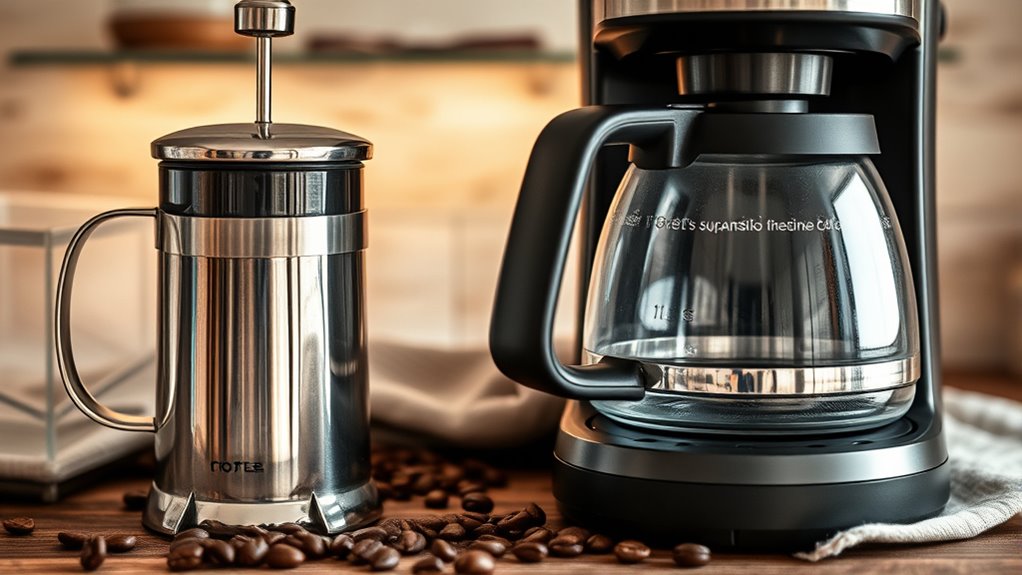
When comparing different coffee makers, it’s important to recognize that their energy consumption varies markedly based on design and features. Drip coffee makers typically use between 550 and 1200 watts during brewing, with larger models consuming more power. Single-serve pod machines, like Keurig or Nespresso, often use 900 to 1710 watts, especially during brewing peaks. While these machines brew quickly, their standby modes and warming plates can add extra energy costs. An average coffee maker consumes about 150 kWh annually, costing roughly $21 a year in the US. Brewing duration, whether 5 or 20 minutes, impacts energy use, and keeping coffee warm with heating plates can markedly increase consumption. Selecting the right power management features can help reduce unnecessary energy use and save money. Additionally, understanding energy-efficient designs can further minimize your coffee routine’s energy toll. Being aware of usage patterns can help optimize your coffee-making habits to save energy and reduce costs. Considering automatic shut-off features can also prevent energy waste when the machine is not in use. Understanding these differences helps you gauge the true energy toll of your coffee routine.
How Brewing Habits Impact Your Power Bill
Your brewing habits directly influence how much you pay in electricity each month. If you brew multiple small cups daily, your energy costs add up faster than making one larger batch. Using a machine with a warming plate or leaving it on after brewing consumes extra power, increasing your bill. Opting for quick brewing cycles or frequent use of high-wattage machines also raises costs. Filling a smaller water reservoir repeatedly instead of brewing larger quantities wastes energy. Additionally, brewing more often with single-serve machines means more frequent power spikes and standby energy use. To cut costs, consider brewing larger batches, turning off warming plates immediately after brewing, and using energy-efficient models. Implementing energy-saving techniques can significantly reduce your energy consumption and monthly expenses. Being mindful of energy efficiency and choosing the right appliances can help you save both money and energy over time. Small habit changes, such as selecting tuning options that optimize your coffee maker’s performance, can considerably lower your energy consumption and monthly expenses. Incorporating smart technology into your brewing routine can further enhance energy savings by allowing you to control and monitor usage remotely.
The Environmental Footprint of Your Morning Brew

Every cup of coffee you brew leaves an environmental footprint that extends beyond just the beans and water. Your energy source impacts this footprint considerably. If you use electricity from fossil fuels, your coffee’s carbon emissions are higher, roughly equivalent to driving over 100 miles. Brewing in larger batches or choosing energy-efficient machines can lower your overall impact. Single-serve pods generate waste and require energy, especially if they’re not recyclable. Keeping your coffee maker warm or using features like milk frothers increases energy use and emissions. Switching to refillable pods, brewing only what you need, and powering your machine with renewable energy reduces your environmental footprint. Small habits, like turning off standby modes, also make a difference in minimizing your coffee’s ecological impact. Additionally, being aware of sustainable consumption practices can help you make more environmentally friendly choices in your coffee routine. Incorporating lifestyle adjustments such as reducing overall energy consumption can further enhance your efforts to lessen your environmental impact. Implementing battery technologies like portable power stations can provide cleaner energy options for your brewing routines, especially when away from traditional power sources. Furthermore, choosing eco-friendly coffee brands that prioritize sustainable farming methods can also significantly reduce your overall footprint.
What Features Drive Up Your Coffee Machine’s Power Use
Features like milk frothers, warming plates, and standby modes substantially increase a coffee machine’s power consumption. Milk frothers operate continuously or on-demand, drawing extra watts beyond brewing, which adds to energy costs. Warming plates keep coffee hot, consuming up to 400 watts even when idle, increasing overall energy use. Standby modes, intended to save power, still draw a small but steady amount of electricity, especially if left on for long periods. Programmable schedules can help reduce unnecessary warming, but some models still use power during idle times. Larger, feature-rich machines often peak during water heating, and their extra functions—like self-cleaning or advanced heating elements—drive up wattage. These features, while convenient, can markedly elevate your machine’s total power consumption over time. Additionally, understanding energy efficiency can help you select models that balance features with lower power draw. Recognizing AI-driven energy management technologies can further optimize your device’s power use and reduce costs, making your coffee routine more sustainable. Incorporating smart home integration can also assist in managing energy consumption more effectively, especially when combined with energy monitoring systems.
Hidden Costs of Single-Serve Coffee Pods
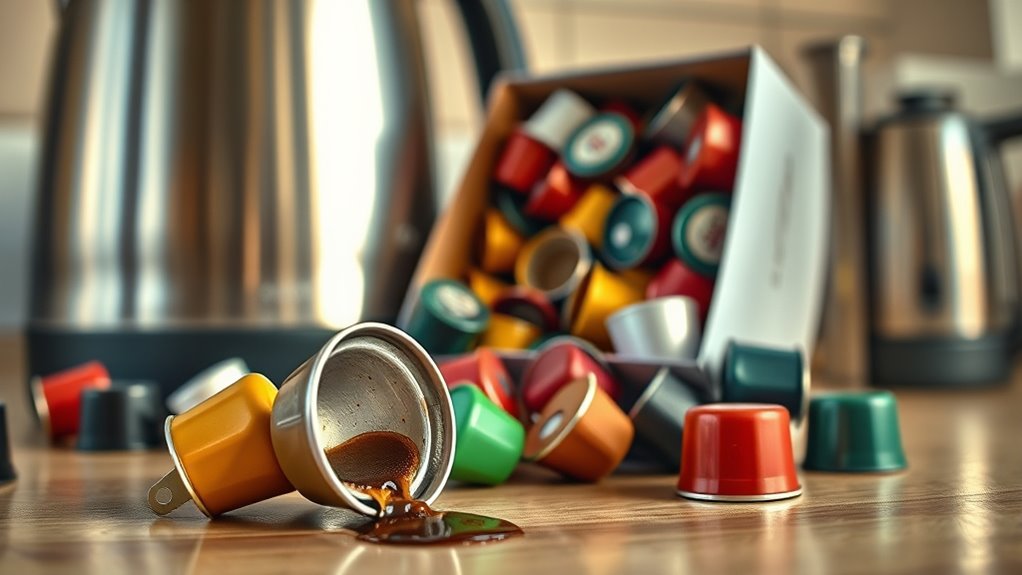
While single-serve coffee pods offer convenience and speed, they hide several costs beyond just the price of the pods themselves. First, the recurring expense adds up quickly—each pod costs more per cup compared to bulk grounds. Second, the environmental impact is significant: most pods are single-use, generating tons of waste that may end up in landfills or recycling centers. Third, disposal costs and recycling efforts increase your routine’s hidden expenses. Additionally, the manufacturing process of these pods often involves industrial production methods, which can have environmental repercussions. The recycling challenges associated with pod waste further add to the overall costs. Moreover, many consumers are unaware of the dog names that can personalize their coffee experience, making it more enjoyable and unique. The long-term environmental footprint of disposable pods highlights the importance of considering sustainable alternatives. Higher per-cup cost than traditional coffee – Environmental waste and recycling challenges – Additional disposal and maintenance costs
Comparing Water and Energy Consumption: Stove vs. Electric Kettle
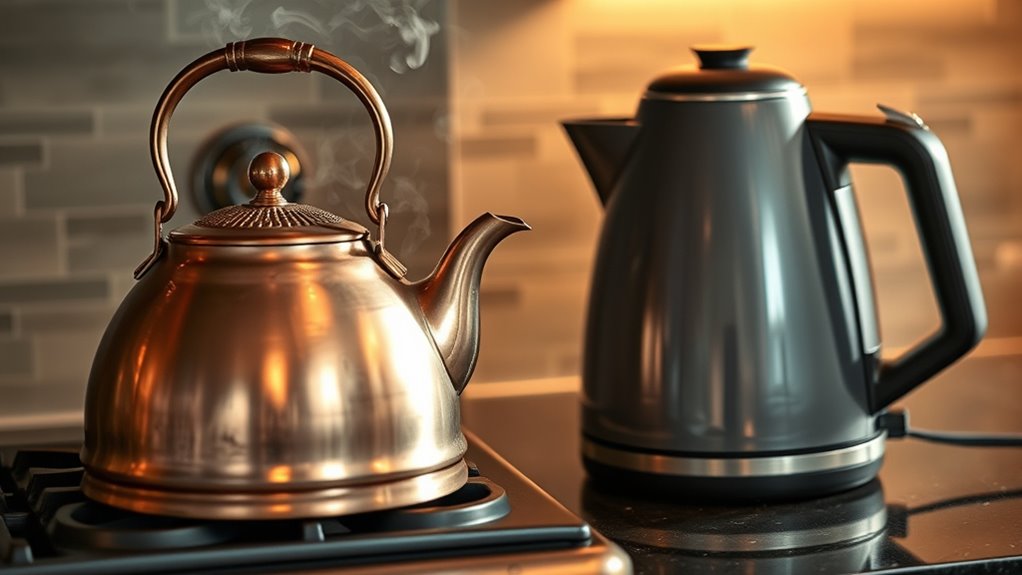
You’ll find that electric kettles often heat water faster and use less energy than stoves. While stoves can be less efficient and consume more power, kettles are designed specifically for quick boiling, reducing overall energy use. Considering environmental impact, electric kettles typically have a smaller carbon footprint compared to stove boiling, especially when powered by renewable energy. Additionally, electric kettles often feature adjustable settings that optimize energy consumption based on the amount of water being heated. Their gears and mechanical components, inspired by Victorian-era machinery, also contribute to their precise control and durability. Incorporating energy-efficient features can further enhance their eco-friendly benefits and reduce utility costs.
Efficiency of Heating Methods
Electric kettles are generally more energy-efficient than using a stove to boil water for your coffee. They heat water directly through specialized heating elements, minimizing heat loss. In contrast, stoves transfer heat through a burner, often wasting energy as heat escapes around the pot. This efficiency difference means you use less electricity or fuel with a kettle.
- Electric kettles heat water faster, reducing energy waste.
- They maintain water temperature more precisely.
- Using a kettle avoids unnecessary heat loss common with stove boiling.
Energy Use per Boil
Using an electric kettle to boil water for your coffee is generally more energy-efficient than relying on a stove. Electric kettles are designed specifically for boiling water, so they heat up quickly and use less energy overall. They convert about 80% of electrical energy into heat, whereas stoves lose more heat to the environment. Boiling a liter of water in an electric kettle typically consumes around 0.1 to 0.2 kWh, depending on the kettle’s power and efficiency. In contrast, boiling the same amount on a stove can use approximately 0.3 to 0.4 kWh, as heat escapes around the pot’s sides. This difference adds up over time, making the kettle a more economical and energy-conscious choice for your coffee routine.
Environmental Impact Comparison
When comparing the environmental impact of water heating methods for your coffee, electric kettles are markedly more efficient than stoves. They use less energy, reducing overall greenhouse gas emissions. Electric kettles heat water directly, minimizing heat loss and cutting down on wasted energy. In contrast, stoves transfer heat through burners, often losing a substantial portion to the surroundings.
- Electric kettles consume about 28.6 kWh/year for boiling water, while stoves use approximately 185 kWh/year.
- Kettles heat water faster, saving both time and energy.
- Using an electric kettle with renewable energy sources further decreases your carbon footprint.
Switching to an electric kettle can markedly lessen your environmental impact compared to stove boiling.
The Hidden Expenses of Maintaining Your Coffee Equipment

Maintaining your coffee equipment goes beyond just buying the machine; it involves ongoing expenses that can catch you off guard. You’ll spend money on replacement parts, filters, and descaling solutions to keep your machine running smoothly. Regular maintenance prevents breakdowns and prolongs its lifespan, saving you money long-term. Additionally, higher-end machines with extra features, like frothers or warming plates, often require more upkeep.
| Maintenance Item | Cost Range |
|---|---|
| Replacement filters | $5–$20 per year |
| Descaling solutions | $10–$15 annually |
| Replacement parts | $20–$100 depending on the part |
These costs add up over time, making routine upkeep a hidden expense in your coffee routine.
Energy-Efficient Choices for Sustainable Sipping
Choosing energy-efficient options for your coffee routine can markedly reduce both costs and environmental impact. To do this, select machines with high energy ratings like Energy Star-certified models that manage power effectively during brewing and standby. Brewing larger batches at once and storing coffee in a thermal carafe reduces the need to keep warming plates active, saving energy. Additionally, turning off warming features immediately after brewing prevents unnecessary power drain.
- Use larger capacity machines to minimize frequent brewing.
- Opt for reusable pods to cut waste and recurring costs.
- Maintain your machine regularly to ensure peak energy use.
Off-Grid Coffee Making: Power Needs Beyond the Grid
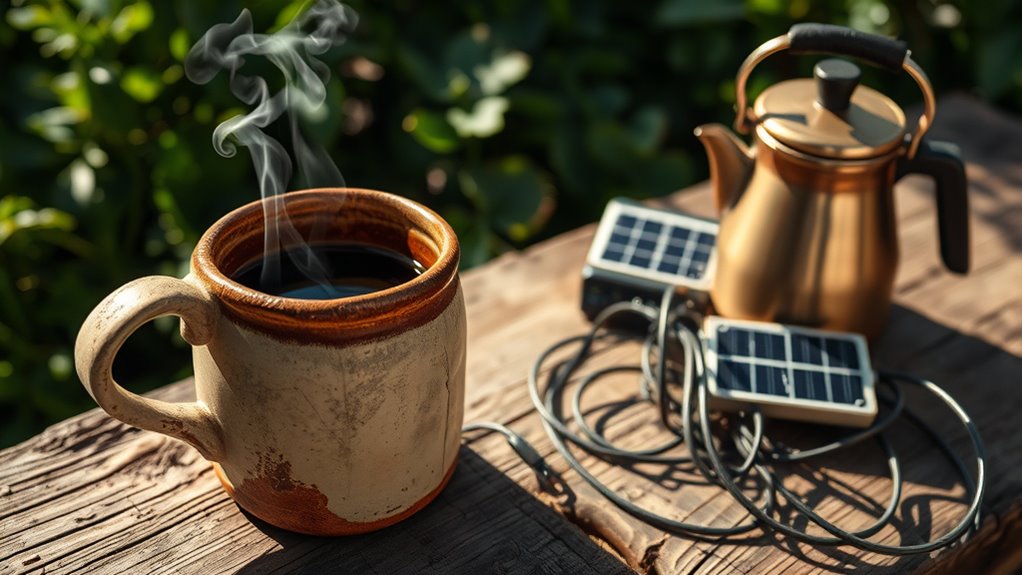
Off-grid coffee making requires careful consideration of power needs, as traditional household appliances often rely on grid electricity. If you want to brew coffee away from the mains, you’ll need a reliable power source, like a generator, solar panels, or batteries. Coffee makers vary in wattage, with many consuming between 900 and 1500 watts during operation, and some features like warming plates or frothers increasing power demands. You must account for peak power spikes during brewing and continuous power for warming or standby modes. Portable generators can handle high wattage, but they’re noisy and fuel-dependent. Solar setups require sizable panels and batteries to meet the energy demand reliably, especially for larger or feature-rich machines. Planning your power system carefully guarantees you can enjoy your coffee without interruptions in off-grid environments.
Tips to Save Energy and Reduce Your Coffee Routine’s Cost
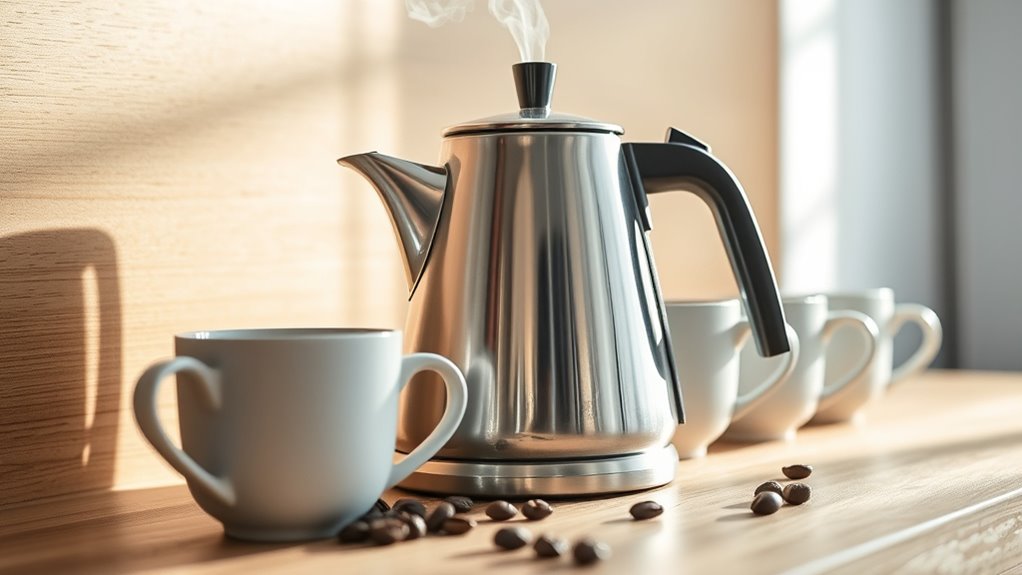
You can cut energy costs by brewing larger batches and storing coffee in a thermal carafe instead of keeping the warming plate on. Choosing energy-efficient models with Energy Star ratings helps lessen power usage over time. Regularly maintaining your coffee maker ensures it operates efficiently, saving both energy and money.
Brew Larger Batches
Brew larger batches of coffee at once to save energy and reduce costs in your routine. Instead of brewing multiple small pots throughout the day, make a bigger batch and use a thermal carafe to keep it warm. This minimizes the number of times your machine powers up, cutting down on energy consumption. Plus, it reduces wear and tear on your equipment. To maximize savings:
- Brew enough for multiple servings in one go
- Store excess coffee in a thermal container instead of reheating
- Avoid repeatedly brewing small amounts, which wastes power
Opt for Energy-Efficient Models
Choosing energy-efficient coffee makers can substantially lower your electricity bills and reduce environmental impact. Look for models with an Energy Star rating, which are designed to consume less power during operation and standby. These machines manage heating and warming cycles more effectively, minimizing energy waste. Opt for drip or single-serve machines with programmable features, so you can turn off warming plates after brewing or schedule brewing times to avoid unnecessary energy use. Replacing older, high-wattage machines with modern, efficient ones can cut your annual energy consumption markedly. Additionally, consider models with insulation or thermal carafes that keep coffee hot without relying on warming plates. By choosing the right equipment, you save money and lessen your carbon footprint effortlessly.
Maintain Your Coffee Maker
Regularly maintaining your coffee maker guarantees it operates efficiently and consumes less energy. Clean the machine’s components, like filters and water reservoirs, to prevent buildup that causes longer heating times. Descale it periodically to remove mineral deposits, which can reduce heating efficiency. Replace worn-out parts promptly to keep performance ideal. Proper maintenance minimizes unnecessary energy use and extends your machine’s lifespan.
- Use a descaling solution or vinegar to prevent mineral buildup
- Clean brewing baskets and water filters regularly
- Check and replace worn parts promptly for better efficiency
Frequently Asked Questions
How Does the Initial Purchase Price Affect Long-Term Coffee Routine Costs?
Your initial purchase price impacts your long-term coffee routine costs markedly. A more expensive machine often offers better energy efficiency, durability, and advanced features, reducing ongoing expenses like repairs and high electricity bills. Cheaper models may save money upfront but can lead to higher maintenance costs, quicker replacements, and increased energy use over time. Investing wisely in a quality coffee maker helps you save money and energy in the long run.
Are There Health or Safety Concerns Associated With High-Wattage Coffee Makers?
High-wattage coffee makers can pose safety concerns, especially if you don’t follow proper usage. For example, some machines use up to 1700 watts, increasing the risk of overheating or electrical short circuits if they’re faulty or exposed to moisture. Always make certain your device has safety features like automatic shutoff, and keep it dry and well-maintained to prevent accidents. Regular inspections reduce potential hazards, keeping your coffee routine safe.
How Does the Type of Coffee Beans Influence Machine Energy Efficiency?
The type of coffee beans you use impacts your machine’s energy efficiency mainly through grind size and brewing time. Finely ground beans, like espresso, require longer or more intense extraction, increasing energy consumption. Coarser beans, used for drip or French press, generally need less time and energy to brew. Choosing the right beans for your machine can help reduce unnecessary energy use and improve overall efficiency.
What Are the Maintenance Costs Linked to Different Coffee Machine Features?
Maintenance costs multiply with machine features. If you opt for a fancy, feature-rich coffee maker, expect to spend more on descaling, replacing filters, or repairing frothers and warmers. Simple machines with fewer features generally require less upkeep, saving you money and time. Regular cleaning prevents costly breakdowns, but high-tech options often demand specialized servicing. So, the more features, the higher your maintenance costs and the more your wallet whines.
Does the Frequency of Cleaning Impact the Energy Consumption of My Coffee Maker?
Yes, cleaning frequency impacts your coffee maker’s energy use. When you don’t clean it regularly, mineral buildup and residue can make the machine work harder, increasing energy consumption. A dirty machine takes longer to heat water and brew, wasting electricity. By cleaning your coffee maker as recommended, you keep it running efficiently, reducing power needs and preventing unnecessary energy waste over time.
Conclusion
Now that you know the hidden costs behind your coffee routine, will you continue to overlook the energy and environmental impacts? Making smarter choices—like switching to energy-efficient machines or brewing less often—can save you money and reduce your footprint. Your morning cup shouldn’t come at the expense of the planet or your wallet. Are you ready to brew more consciously and enjoy sustainable sips every day?