Limited edition coffees can be more than just marketing hype; they tap into your desire for exclusivity, authentic stories, and unique flavors. Brands create buzz by highlighting special origins, craftsmanship, and scarcity, making these coffees feel special and worth the premium. Many find value in the rarity and authenticity, but it’s wise to contemplate if the story matches the taste and price. Explore further to see if these limited releases truly deliver on their promises.
Key Takeaways
- Limited edition coffees often feature unique sourcing and storytelling, making them appealing for authentic, high-quality experiences.
- Scarcity and exclusivity drive consumer demand, creating a sense of urgency and perceived value beyond regular offerings.
- Brands leverage limited editions for marketing hype, but careful sourcing and craftsmanship justify their premium prices.
- Younger consumers, especially Gen Z, value these coffees as expressions of identity and sustainability, encouraging trial and loyalty.
- Market challenges like supply chain disruptions can impact availability, but well-curated limited editions remain desirable for their uniqueness.
The Rise of Limited Edition Coffees in a Saturated Market
As the specialty coffee market approaches saturation in mature regions like the US, brands are turning to limited edition offerings to stand out. You’ll notice that these exclusive releases create buzz and attract attention in a crowded space. Limited editions tap into consumers’ desire for uniqueness, driving urgency and excitement around purchasing. They also allow brands to showcase innovation, special sourcing, or seasonal flavors without diluting their core lineup. With high-quality, scarce products, you’re more likely to view them as collectible or special, increasing perceived value. This strategy helps brands differentiate themselves, appeal to collectors, and strengthen loyalty among passionate coffee enthusiasts. In a market where differentiation becomes tougher, limited editions serve as a powerful tool to maintain relevance and drive demand.
What Defines a Coffee as ‘Limited Edition’?

What makes a coffee truly ‘limited edition’? It’s about exclusivity, scarcity, and unique attributes. Limited editions often stem from specific harvests, regions, or processing methods. They’re produced in small quantities, creating a sense of rarity. To clarify, here’s a quick comparison:
| Attribute | Explanation |
|---|---|
| Production Volume | Small batches, often fewer than a few thousand bags |
| Sourcing & Origin | Single-origin, rare microclimates, or unique terroirs |
| Release Strategy | Time-limited, seasonal, or tied to special events |
This combination of factors elevates a coffee from regular to limited, appealing to connoisseurs seeking exclusivity and distinctiveness. Additionally, color accuracy in the processing methods can further enhance the perception of quality in limited-edition coffees. Paying attention to processing techniques can also distinguish these coffees and influence their flavor profiles. For example, micro-lot farming often results in more refined and distinctive flavor notes that are highly sought after. Furthermore, understanding the market demand for limited-edition coffees can help producers tailor their releases to meet consumer expectations and maximize appreciation for these exclusive offerings.
Consumer Perceptions and Willingness to Pay a Premium
Consumers increasingly recognize the value of limited edition coffees, viewing them as more than just rare finds. You’re willing to pay a premium when you perceive a product as exclusive, authentic, and rooted in craftsmanship. Limited editions tap into your desire for uniqueness and storytelling**, making each cup feel special. Your perception of quality, origin, and sustainability influences your willingness to spend extra. Younger consumers especially see limited editions as a way to stand out or express personal identity. Price sensitivity varies, but many are ready to pay more for these rare experiences if they believe the coffee offers exceptional flavor or provenance. Additionally, perceived scarcity heightens the appeal and desirability of limited edition coffees, encouraging consumers to act quickly. The safety features of limited edition products can also contribute to consumer confidence, especially when associated with high-quality craftsmanship. Ultimately, your perception of value—driven by branding, transparency, and perceived scarcity**—determines whether limited edition coffees justify their higher price tags.
Differentiation Strategies: Storytelling, Origin, and Craftsmanship
To stand out in a crowded market, brands are leveraging storytelling, origin, and craftsmanship to differentiate their limited edition coffees. You’ll notice that companies emphasize the unique journey from farm to cup, highlighting specific regions, farming techniques, and climate conditions. This storytelling creates an emotional connection, making each product feel exclusive and authentic. Origin details, like altitude and soil quality, justify higher prices and appeal to connoisseurs seeking transparency. Craftsmanship also plays a key role, showcasing meticulous roasting methods and artisanal processes that enhance flavor profiles. Additionally, coffee cultivation practices are increasingly highlighted to demonstrate sustainable and ethical sourcing, further elevating the product’s appeal. By combining these elements, brands position their limited editions as more than just coffee—they become a sensory and cultural experience. This strategy appeals to consumers enthusiastic for authenticity, uniqueness, and a deeper appreciation of their coffee’s story.
The Role of Scarcity and Exclusivity in Consumer Appeal
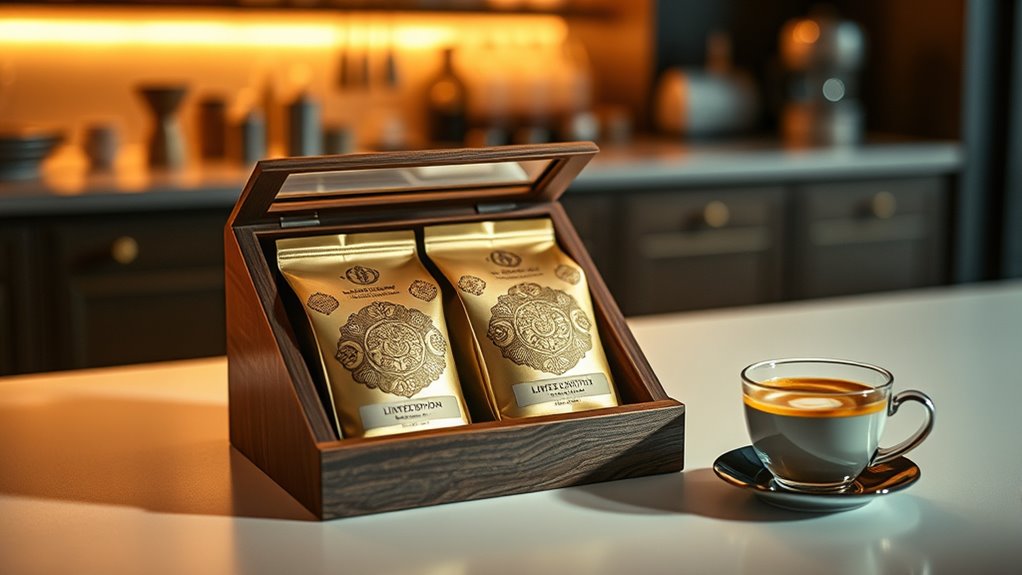
Limited edition coffees harness scarcity and exclusivity to elevate their appeal, turning a simple beverage into a coveted luxury. When you see limited releases, you’re drawn to the idea that these coffees are rare and hard to find, making them more desirable. This sense of exclusivity taps into your desire to stand out and enjoy something unique. Brands often emphasize limited availability, creating urgency and FOMO—fear of missing out—that motivates quick purchases. By controlling supply, companies can justify premium prices and foster brand loyalty among enthusiasts enthusiastic for rare experiences. Scarcity signals quality and rarity, making each sip feel special. In a crowded market, this strategy makes limited edition coffees not just drinks but status symbols and collector’s items. Additionally, the psychological impact of perceived brand value can strongly influence consumer behavior and boost sales.
Impact of Supply Chain Challenges on Limited Release Availability

Supply chain disruptions are increasingly constraining the availability of limited edition coffees, making it harder for brands to meet demand. Severe droughts, erratic rainfall, and geopolitical factors disrupt the flow of premium beans, leading to shortages. Elevated prices and tight inventories mean brands must decide between limited supply or higher consumer costs. This unpredictability affects release schedules, often causing delays or cancellations. The table below highlights how supply chain issues influence limited releases:
| Challenge | Impact |
|---|---|
| Droughts and weather events | Reduced harvests, lower stock levels |
| Rising freight costs | Increased distribution delays |
| Limited farmer access | Scarcity of high-quality, unique beans |
These factors tighten supply, forcing brands to adapt and rethink how they offer limited edition coffees. Additionally, agricultural challenges like unpredictable weather patterns further complicate sourcing efforts. To navigate these complexities, brands need to develop strategic sourcing plans that mitigate risks and ensure product availability. Moreover, understanding the health benefits of specialty ingredients can help brands market their products more effectively amidst these supply issues. The adoption of sustainable farming practices can also contribute to more resilient supply chains and better long-term sourcing stability.
Trends Driving Demand for Unique and Rare Coffee Offerings

Your curiosity about rare coffees is fueling demand for unique offerings. Consumers now seek compelling origin stories and transparency that build trust and excitement. Scarcity and exclusivity make these limited editions even more desirable, creating a sense of urgency to experience something special. Ensuring quality and safety in sourcing is essential to maintaining consumer confidence in these reliable products.
Growing Consumer Curiosity
What’s fueling the surge in consumer curiosity for unique and rare coffee offerings? You’re increasingly drawn to these coffees because they promise distinct flavors, stories, and exclusivity. Younger consumers, especially Gen Z, crave personalized experiences and transparency about where their coffee comes from. They want more than just a caffeine fix; they seek authenticity, sustainability, and connection to specific origins. Limited edition coffees tap into this desire by offering rare beans, unique processing methods, and compelling narratives that elevate their status. The thrill of trying something scarce makes the experience more memorable. As the specialty coffee market expands rapidly, consumers are enthusiastic to explore new tastes and stories, fueling demand for these distinctive offerings that stand out from mass-market options. Additionally, the growing interest in Volkswagen Tuning reflects a broader trend of customizing products to reflect individual preferences and enhance overall satisfaction. Recognizing and interpreting these exclusive offerings can also serve as spiritual messages, enriching the consumer experience beyond just taste.
Emphasis on Origin Stories
Consumers’ fascination with unique coffee experiences now centers heavily on origin stories, as they seek to understand the journey from farm to cup. You want to know where your coffee comes from, how it’s grown, and what makes it special. Brands highlight details like altitude, soil quality, climate, and farming practices to create a compelling narrative. This emphasis on origin helps you connect emotionally with the product, making it more than just a beverage. It justifies premium prices and sets brands apart in a crowded market. You’re willing to pay more for transparency and authenticity, especially when a story reveals sustainable practices or rare regional terroirs. Ultimately, origin stories aren’t just marketing—they’re essential for delivering the sense of rarity and craftsmanship that today’s consumers crave.
Scarcity and Exclusivity
The growing desire for scarcity and exclusivity is transforming the way coffee brands appeal to discerning buyers. You’re increasingly drawn to limited releases because they promise something rare and special. Brands leverage this by creating products with:
- Small batch quantities to boost perceived value
- Unique regional or seasonal harvests
- Collaborations with renowned growers or artisans
- Limited-time offers that create urgency
- Personalized or bespoke packaging options
This strategy taps into your desire for differentiation and status. As supply tightens and competition grows, brands see exclusivity as a way to stand out. Scarcity fuels demand, allowing premium prices and elevating the coffee’s prestige. Additionally, proper storage methods help maintain the freshness and quality of these limited editions, which further enhances their desirability. Proper storage techniques ensure the coffee remains fresh and flavorful, preserving its unique characteristics over time. The use of specialized storage containers can further safeguard the beans from environmental factors. Moreover, understanding the importance of self-awareness can help consumers make more informed choices about their coffee preferences and purchasing habits. Ultimately, limited editions become more than just beverages—they’re symbols of uniqueness and prestige.
Balancing Price, Quality, and Perception in Limited Editions

You need to find the sweet spot where price, quality, and perception align, especially for limited edition coffees. When you raise prices, customers expect top-tier quality and a story worth sharing, but overpricing can backfire if the experience doesn’t match. Balancing these factors is key to creating perceived value that justifies premium pricing without alienating your audience.
Perceived Value Enhancement
Balancing price, quality, and perception is essential for elevating the perceived value of limited edition coffees. To do this, focus on crafting a compelling story that highlights unique origin details, sustainable practices, and artisanal processes. Creating a sense of scarcity through limited releases enhances exclusivity. You can also boost perceived value by emphasizing craftsmanship, rarity, and authentic sourcing. Consider these strategies:
- Share detailed origin stories and farming practices
- Highlight limited availability to generate urgency
- Use premium packaging to reinforce quality
- Incorporate transparent traceability for authenticity
- Leverage storytelling around sustainability and community impact
- Understanding spearfishing safety protocols and local regulations can serve as a metaphor for emphasizing the importance of authenticity and responsible sourcing in coffee marketing.
These tactics help justify higher prices and deepen consumer perception of value, making your limited edition coffee more than just a product—it becomes an experience worth seeking out.
Price-Quality Tradeoff
Finding the price-quality tradeoff in limited edition coffees requires careful alignment of consumer perceptions with tangible product attributes. You need to clearly communicate the rarity, origin, and craftsmanship behind these coffees to justify premium prices. When consumers perceive high quality—such as unique flavors, sustainable sourcing, or exclusive availability—they’re more willing to accept higher costs. However, if the perceived value doesn’t match the price, buyers may feel misled or disappointed. Balancing this tradeoff involves transparency about the product’s story and quality standards. You must also consider market pressures, like rising costs due to supply chain challenges and crop variability. Ultimately, successfully managing the price-quality perception helps build trust and encourages consumers to invest in these limited editions, making them feel they’re getting both exclusivity and genuine value.
How Brands Leverage Limited Releases for Brand Loyalty and Growth

Brands leverage limited releases to create a sense of exclusivity that resonates deeply with consumers, encouraging loyalty and repeated engagement. When you see a limited edition coffee, you’re often drawn in by its rarity and unique story, making it more desirable. This strategy builds emotional connections and sense of belonging among loyal customers. To maximize impact, brands often:
Limited releases create exclusivity, foster loyalty, and deepen emotional connections with consumers.
- Use storytelling to highlight sourcing and craftsmanship
- Collaborate with renowned artisans or influencers
- Release limited quantities to boost demand
- Create buzz through social media campaigns
- Offer early access or VIP experiences
- Optimize website user experience to ensure seamless purchasing, increasing the likelihood of repeat sales. Incorporating limited edition product strategies can also drive excitement and anticipation, reinforcing your perception that the brand values quality and uniqueness. As a result, you’re more likely to stay loyal, purchase repeatedly, and share your experience, fueling long-term growth for the brand.
Is Investing in Limited Edition Coffees a Smart Choice for Consumers?
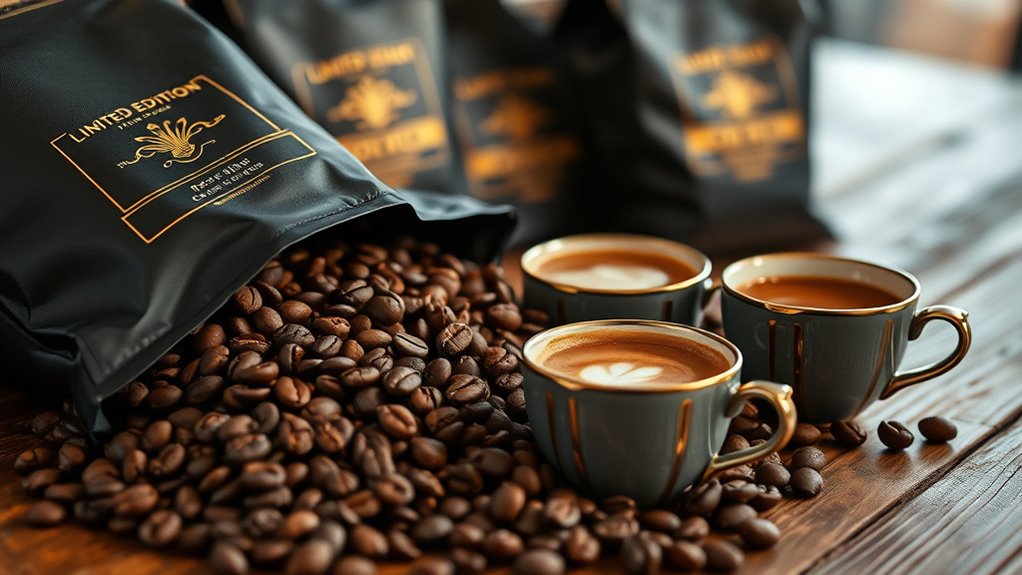
Is investing in limited edition coffees a smart move for consumers? It depends on your priorities. Limited releases often carry higher prices, but they also offer unique flavors and exclusivity that can enhance your coffee experience. If you value rarity, provenance, and supporting sustainable practices, investing might be worthwhile. However, the market’s volatility and rising costs mean you could pay a premium for fleeting trends. Consider this table:
| Benefit | Risk | Emotional Impact |
|---|---|---|
| Unique flavors | Price volatility | Excitement of discovery |
| Supporting small farms | Limited availability | FOMO (Fear of Missing Out) |
| Collectible value | Market saturation | Pride in owning rare items |
| Storytelling & authenticity | Investment risk | Connection to origin |
| Premium experience | Short-lived trends | Satisfaction of exclusivity |
Weigh these factors before investing—sometimes, the thrill outweighs the cost.
Frequently Asked Questions
How Do Limited Edition Coffees Influence Overall Market Pricing Strategies?
Limited edition coffees substantially influence your market pricing strategies by creating a sense of exclusivity and urgency. You can justify higher prices through storytelling about unique sourcing, rare flavors, and craftsmanship, appealing to premium consumers. These offerings help differentiate your brand in saturated markets, attract younger buyers, and enhance perceived value. By leveraging scarcity, you can command premium prices, boost margins, and position your brand as a must-try, elevating overall market competitiveness.
What Environmental Impacts Are Associated With Producing Limited Edition Coffees?
Producing limited edition coffees can have significant environmental impacts, including increased resource use and carbon emissions from specialized farming and processing methods. You might notice higher water and energy consumption, especially if farmers focus on unique or rare varieties. Additionally, the demand for exclusive beans can lead to overharvesting or land degradation if sustainability isn’t prioritized, making environmental considerations vital for responsible limited edition coffee production.
How Do Cultural Trends Shape Consumer Interest in Rare Coffee Offerings?
Cultural trends heavily influence your interest in rare coffee offerings. As consumers seek uniqueness, authenticity, and storytelling, you’re drawn to limited editions that showcase craft, origin, and sustainability. Younger buyers, especially, want personalized experiences and to support brands with meaningful narratives. This desire for exclusivity and connection fuels your willingness to explore rare coffees, making these offerings more than just hype—they become a way to express your identity and values.
Are There Risks of Overhyping and Devaluing Limited Edition Coffee Brands?
You risk turning your limited edition coffees into fleeting illusions, like shooting stars that burn bright but fade fast. Overhype can drown their true value, making them seem disposable rather than treasured. If you overpromise, customers may see through the smoke and mirrors, devaluing your brand. To stand out, focus on authentic storytelling and quality; let rarity be a whisper, not a shout, to preserve their true worth.
How Do Supply Chain Disruptions Specifically Affect the Availability of Limited Releases?
Supply chain disruptions directly limit the availability of limited releases by delaying harvests, restricting inventory, and increasing production costs. You might find these exclusive coffees harder to source or face longer wait times. As supply shrinks, prices could rise, and scarcity heightens their perceived value. This makes limited editions more desirable but also riskier if supply chain issues persist, potentially frustrating loyal customers and damaging brand reputation.
Conclusion
So, next time you see that limited edition coffee on the shelf, ask yourself—are you craving a unique experience or just chasing the hype? Remember, these rare brews aren’t just about exclusivity; they’re crafted stories waiting to be tasted. Will you let the allure of scarcity turn your ordinary coffee routine into an extraordinary adventure? Ultimately, it’s your palate and wallet that decide if these limited treasures are worth the sip.