To spot fake “premium” coffee marketing, look beyond vague buzzwords like “luxurious” or “exclusive.” Authentic premium coffee highlights specific flavor notes such as fruity, nutty, or floral profiles, often backed by details about origin or processing. Be cautious of inflated prices that may just be branding tactics. Focus on concrete labels, certifications, origin details, and flavor descriptions. If you’re curious about how to truly evaluate quality, there’s more to uncover below.

Get coffee and tea gear delivered free with Prime
- Fast, free delivery on millions of items
- Prime Video, Amazon Music and more included
- Member-only deals all year
Key Takeaways
- Vague terms like “luxurious” or “exclusive” lack specific details about flavor or origin.
- Overly promotional language often avoids concrete information about cultivation or processing.
- High prices may reflect branding, not actual quality or unique flavor profiles.
- Authentic premium coffee highlights specific flavor notes and detailed origin or cultivation info.
- Marketing buzzwords can create an illusion of quality without meaningful differences in the product.
gourmet coffee beans with flavor notes
As an affiliate, we earn on qualifying purchases.
As an affiliate, we earn on qualifying purchases.
How to Spot Fake ‘Premium’ Buzzwords in Coffee
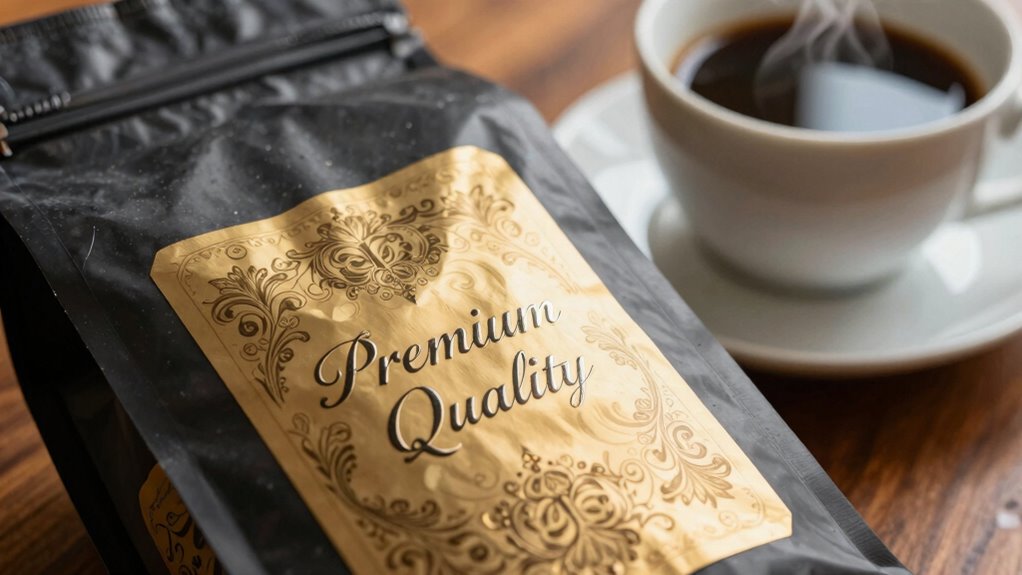
Many coffee brands use fancy buzzwords to make their products seem more premium than they really are. When inspecting labels, look beyond vague terms and focus on flavor profiles and roasting techniques. Genuine premium coffees often highlight specific flavor notes like fruity, nutty, or floral, which come from careful cultivation and processing. Be wary of overly broad descriptions like “luxurious” or “exclusive” without details. Also, check if the brand mentions roasting techniques, such as “light roasted for brightness” or “dark roasted for boldness,” which can indicate a more thoughtful approach. Fake buzzwords tend to be vague or overly promotional, while authentic premium coffees give you concrete information about flavor and roasting. Recognizing these clues helps you avoid being fooled by empty marketing language and understand quality indicators, which are often rooted in processing methods and specific cultivation practices. Paying attention to specific flavor notes can also aid in distinguishing truly premium beans from those with just marketing gloss.
What ‘Premium’ Really Means in Coffee Marketing
Understanding what “premium” truly means in coffee marketing helps you see beyond the buzzwords and marketing fluff. Typically, “premium” refers to coffees with richer, more complex flavor profiles that result from specific roasting techniques. These techniques focus on enhancing unique qualities of the beans, highlighting subtle notes like fruitiness or nuttiness. However, “premium” doesn’t always guarantee higher quality—sometimes it’s a marketing term meant to justify a higher price. When you see “premium,” ask yourself if the flavor profiles are genuinely distinct or if the roasting techniques used aim to create a more appealing taste. Recognizing these distinctions helps you avoid being swayed by superficial claims and makes you a more informed coffee consumer. roasting techniques play a crucial role in shaping the flavor, but they are often used as a marketing tool rather than a guarantee of quality. Understanding the different stages of roasting can help you identify when a coffee’s flavor is truly enhanced versus when it’s merely marketing hype. Additionally, being aware of how marketing language can sometimes be used to create an illusion of quality helps you make better purchasing decisions. For example, some electric dirt bikes are marketed as “premium” due to their advanced features, but their actual performance and quality may not align with the label. Recognizing the subtleties of label terminology can further help you distinguish between genuine quality and marketing hype.
Questions to Ask About Coffee Origin and Quality?
As you evaluate coffee options, asking about the origin and quality of the beans can reveal a lot about what you’re really getting. Inquire where the coffee was grown and whether it’s single-origin or a blend. Good quality beans often come with certifications like Fair Trade or Organic, indicating better growing conditions. When considering coffee brewing, ask if the beans are freshly roasted and how they’re stored. Use tasting techniques, like smelling the grounds and analyzing flavor notes, to gauge freshness and quality. A transparent producer will gladly share details about their sourcing and processing methods. Genuine high-quality coffee often leads to a richer, more nuanced cup—so don’t hesitate to ask questions that help you understand its true origin and craftsmanship. Additionally, paying attention to the regional characteristics can help identify the specific terroir that influences the flavor profile of the beans. Recognizing certification labels can also provide insight into the ethical and sustainable practices behind your coffee. Understanding the 16PF traits of a producer or brand can give you further confidence in their commitment to quality. Being aware of these factors can also help you make more ethical consumer choices aligned with your values. A deeper understanding of coffee classifications can enhance your appreciation and selection process.
Is the Price Tag Just Marketing Hype?

While asking about the origin and quality of your coffee helps guarantee you’re getting a good product, it’s equally important to question whether the price reflects its true value. Sometimes, high prices are just marketing jargon designed to create a perception of exclusivity. Brands often use branding strategies that inflate costs without improving the actual coffee quality. Premium price tags can be a way to justify the label “specialty” or “artisanal,” but that doesn’t always mean the beans are better. Be cautious of marketing hype that relies on buzzwords rather than tangible differences. If the price seems disconnected from the actual product, it’s likely more about branding strategies than genuine quality. Don’t let the price trick you into believing it’s inherently superior.
Evaluating Coffee Labels: What Should You Look For?
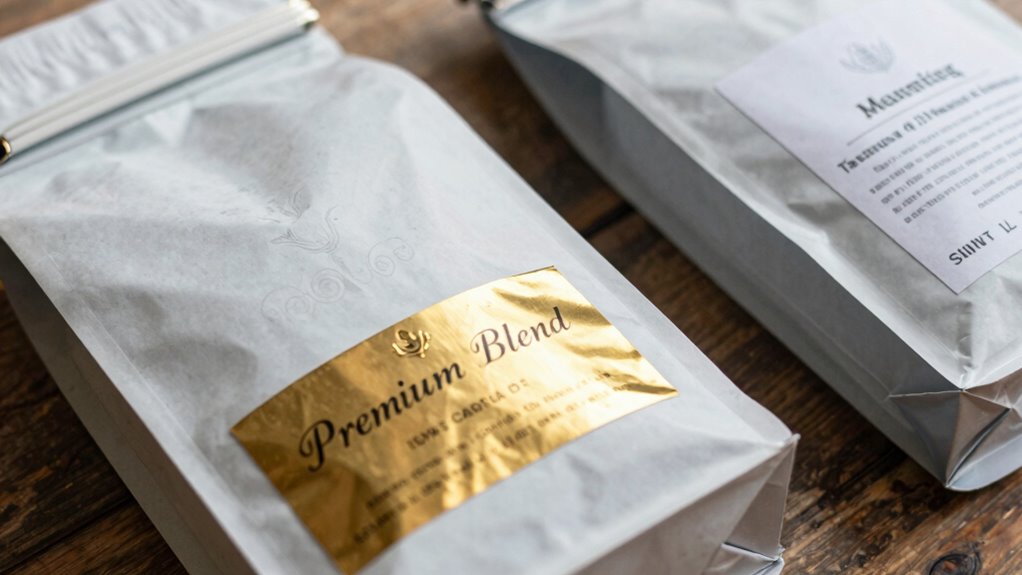
When examining coffee labels, understanding what details truly matter and which ones might be just marketing fluff is essential. Focus on clear information about flavor profiles and recommended brewing methods, as these reveal the coffee’s true qualities. Labels that list specific flavor notes like citrus, chocolate, or floral indicate a more transparent, quality product. Also, check for detailed origin information—single-origin beans suggest unique flavor nuances. Avoid vague terms like “premium” or “artisanal” without context. Use this table as a guide:
| Label Element | What to Look For | Why It Matters |
|---|---|---|
| Flavor Profiles | Specific notes (e.g., berry, nut) | Indicates flavor complexity |
| Origin Details | Region or farm info | Guarantees authenticity |
| Brewing Recommendations | Suitable brewing methods | Maximizes flavor extraction |
| Roast Level | Light, medium, dark | Affects flavor intensity |
| Certifications | Organic, Fair Trade | Suggests quality standards |
Additionally, recognizing marketing language in labels can help you distinguish genuine quality from promotional hype.
Frequently Asked Questions
Can Branding Alone Determine a Coffee’s Quality or Origin?
Branding alone can’t determine a coffee’s quality or origin. You might fall for artificial hype and branding illusions that suggest superiority, but true quality depends on factors like bean origin, processing, and freshness. Don’t rely solely on packaging or labels—research the story behind the coffee, check reviews, and taste different options. Real quality reveals itself through flavor and aroma, not just branding tricks meant to elevate perceived value.
Are There Certifications That Guarantee “Premium” Coffee Standards?
Yes, certifications like Fair Trade and Organic Certification help guarantee “premium” coffee standards. Fair Trade ensures fair wages and sustainable practices, while Organic Certification confirms the absence of harmful chemicals. When you see these labels, you can trust that the coffee meets specific ethical and quality standards. Keep an eye out for these certifications to make more informed choices and steer clear of marketing hype that doesn’t reflect true quality.
How Do I Identify Genuine Specialty Coffee Labels?
Ever wonder if that label truly guarantees quality? To spot genuine specialty coffee, check for detailed flavor profiles that highlight unique tastes. Look for sourcing transparency—know exactly where and how your coffee was grown. Authentic labels often provide information about the farm, processing methods, and certifications. If these details are clear and specific, you’re more likely to enjoy a true, high-quality specialty coffee experience.
Does Higher Price Always Mean Better Coffee Quality?
Higher price doesn’t always mean better coffee quality, as price inflation often fuels marketing hype rather than actual value. You might pay more for a brand’s prestige or packaging, not necessarily for a superior product. Instead of relying solely on price, taste the coffee, check for transparency about sourcing, and research the roaster’s reputation. This approach guarantees you find quality coffee without falling for marketing tricks that inflate prices without improving taste.
What Are Common Deceptive Marketing Tactics in Coffee Branding?
You should watch out for deceptive marketing tactics like artificial hype and misleading descriptors. Brands often use words like “artisanal,” “single-origin,” or “premium” to inflate perceived quality, even when the product doesn’t deliver. They might highlight vague certifications or exotic-sounding origins without transparency. Stay skeptical of flashy packaging and exaggerated claims, and always check for clear, honest information about the coffee’s actual source and quality to avoid being misled.
Conclusion
Next time you’re shopping for coffee, don’t be fooled by flashy buzzwords or hefty price tags—think of it like a good ol’ detective story from the days of Sherlock. Ask questions about origin and quality, and trust your instincts. Remember, not all that glitters is gold, even if it’s labeled “premium.” With a keen eye, you’ll steer clear of marketing tricks and find a brew that truly deserves your hard-earned doubloons.
Fall Picks
fall essentials
As an affiliate, we earn on qualifying purchases.