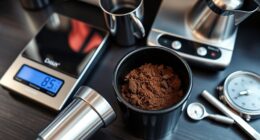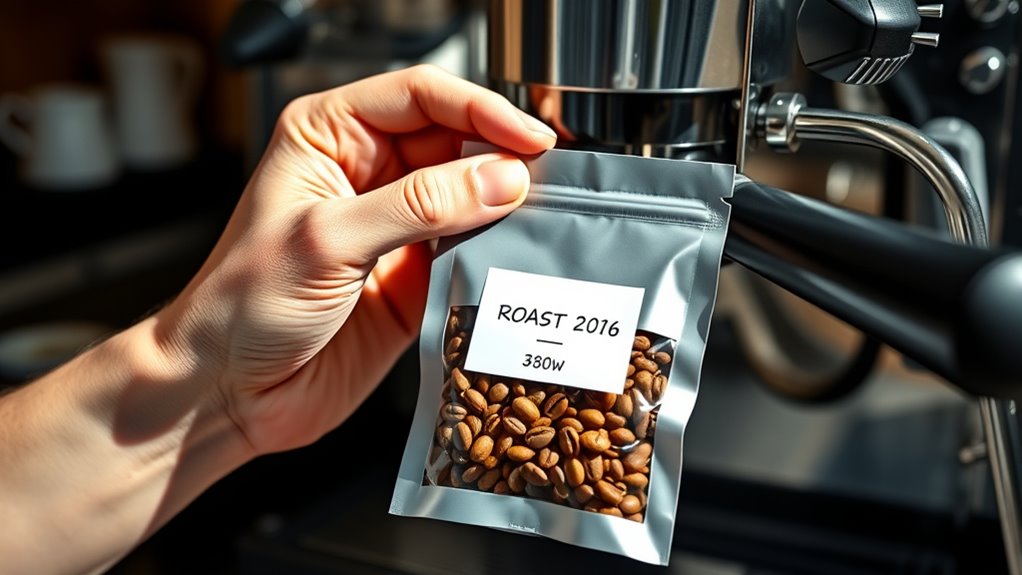

To tell if beans are too fresh for espresso, check the roast date on the packaging—ideally, wait 4 to 7 days after roasting for light roasts or 1 to 3 days for dark roasts. Fresh beans release gases and can taste grassy or sour, which can disrupt extraction. Waiting the right amount of time guarantees vibrant flavor and proper brewing. Keep exploring to master perfect timing for your espresso.
Key Takeaways
- Roast date labels indicate freshness; ideally, beans are 4-7 days old for light roasts and 1-3 days for dark roasts.
- Beans are “too fresh” when they are within 1-3 days post-roast, causing sour, grassy, or raw flavors in espresso.
- Recognize signs of over-freshness: pungent aroma, excess gases, and a raw taste, indicating they need resting before brewing.
- Proper storage (airtight, cool, dark) extends optimal freshness, reducing premature aging and sourness.
- Waiting about 4-14 days after roasting allows volatile compounds to settle, producing balanced, vibrant espresso flavors.
Understanding Roast Date Labels and Terminology
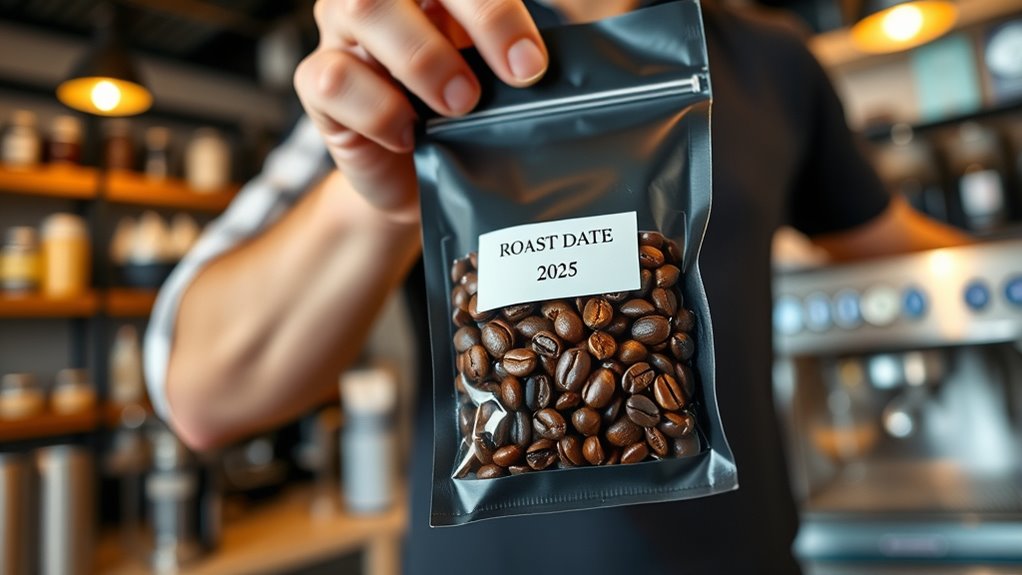
Understanding roast date labels and terminology is essential for choosing the freshest coffee. When you look at roast labeling, you’ll notice dates indicating when the beans were roasted. This helps you gauge bean freshness, which directly impacts flavor and aroma. Coffee packaging may show a “roasted on” date, a “best by” date, or a “freshness” window. Knowing how to interpret these labels allows you to select beans that haven’t lost their vibrant qualities. Keep in mind that different roasters may use varying formats, so familiarize yourself with common terms like “roasted on” or “packed date.” By understanding these labels, you ensure you’re getting high-quality, fresh coffee, perfect for brewing your best espresso. Proper storage methods also play a crucial role in maintaining coffee freshness over time. Accurate reading of roast dates helps you enjoy optimal flavor with every cup.
Why Roast Date Matters for Espresso Quality
The roast date directly influences the flavor and aroma of your espresso, making it a crucial factor in brewing a high-quality shot. Freshly roasted beans release gases and oils that impact extraction, so knowing the date helps you gauge freshness. Beans with recent roast dates often carry more vibrant flavors but can also be too volatile for ideal espresso. Conversely, older beans may lack brightness but offer steadier extraction. When choosing beans, look for certifications like Fair Trade or Organic, which emphasize ethical sourcing. These practices not only support sustainable farming but also often ensure quality control. Understanding roast dates helps you select beans that align with your taste preferences and ethical values. Proper timing, combined with certified sourcing, enhances your espresso experience. Additionally, considering the Louisiana alimony laws can be helpful if you’re navigating financial adjustments post-purchase or during your coffee journey.
The Ideal Freshness Window for Coffee Beans

You want to enjoy coffee at its peak flavor, which means understanding the best rest period after roasting. Too soon, and the beans might be overly fresh, leading to sour or grassy notes; wait too long, and they could lose brightness. Knowing the ideal freshness window helps you brew coffee that’s vibrant and balanced every time. Additionally, color accuracy plays a role in how you perceive the freshness and quality of the beans’ appearance, enhancing your overall experience.
Optimal Rest Period
To enjoy coffee at its peak flavor, timing your beans’ rest period is essential. The ideal rest window depends on grain maturity and roasting levels. Lighter roasts typically need a longer rest to develop full flavor, often around 4 to 7 days post-roast. Medium roasts generally reach their best between 2 to 5 days, while darker roasts can be enjoyed sooner, sometimes within 1 to 3 days. During this rest period, gases escape and flavors settle, balancing acidity and body. If you brew too early, the coffee might taste overly sharp or undeveloped. Waiting too long can cause flavor degradation. Pay attention to the roast date and your preferred roast level to pinpoint the perfect freshness window for your perfect espresso. Additionally, understanding relationships – personality traits can help in choosing the right coffee experience that matches your mood and preferences.
Signs of Overly Fresh
Even if your coffee beans are freshly roasted, tasting them too soon can result in a cup that’s overly sharp and underdeveloped. Signs of overly fresh beans include a lack of balance, with dominant acidity and muted flavors. Coffee bean genetics play a role here; some beans naturally release their volatile compounds faster, making them seem overly fresh. Additionally, inadequate roasting equipment maintenance can lead to uneven roasts and premature freshness signs. If your beans taste grassy, hay-like, or have a pronounced raw flavor, they’re likely too fresh. To avoid this, allow beans to rest within the ideal freshness window—usually 3 to 14 days. Proper storage and patience will guarantee that the beans develop their full flavor potential, giving you a richer, more balanced espresso. Recognizing the signs of overly fresh beans can help you optimize your brewing process for better taste.
Signs That Coffee Is Too Fresh to Brew
Freshly roasted coffee often releases a strong, pungent aroma that can be overwhelming if brewed too soon. If you notice a sharp, almost chemical smell or an overly vibrant acidity that masks the coffee’s natural flavors, it’s a sign it’s too fresh. Coffee bean genetics influence how quickly these volatile compounds off-gas, so some beans may need longer resting periods. Additionally, inconsistent roasting equipment maintenance can cause uneven roasting, leading to certain beans releasing gases longer. If your brew tastes sour, sharp, or overly acidic, it’s likely too soon after roasting. Patience is key—allowing the beans to rest helps gases dissipate, ensuring a balanced, flavorful shot. Recognizing these signs helps you avoid underdeveloped flavors caused by brewing too early. Using eye patches in your skincare routine can also help reduce puffiness and improve overall eye appearance, much like waiting for the right moment to enjoy your coffee yields better flavor.
How to Read and Interpret Roast Dates on Packaging
You’ll find roast dates printed on most coffee packaging, usually on the bottom or side. Once you locate them, it’s important to understand what the date indicates—whether it’s the roasting day or an expiration. Knowing how to read these dates helps you choose the freshest coffee for the best flavor. Recognizing the difference between roast date and expiration date can prevent you from brewing coffee that is too old or past its prime.
Locating Roast Dates
Locating roast dates on coffee packaging can seem tricky at first, but with a few tips, it becomes straightforward. Look closely at the bag, usually near the bottom or on the back, where producers often print the date clearly. Some packages include coded or abbreviated formats, so familiarize yourself with common labels like “Roasted on,” “Packed on,” or “Best before.” Keep in mind that coffee certifications, like organic or Fair Trade labels, don’t indicate freshness but can help identify trusted sources. When reading roast dates, consider your brewing equipment—some methods, like espresso, benefit from fresher beans, so knowing the date helps you select the right roast for your setup. With practice, locating and interpreting roast dates becomes second nature. Additionally, understanding home decor principles, such as using wall organization systems, can help you keep your coffee station neat and stylish.
Understanding Freshness Indicators
Understanding freshness indicators is vital for selecting the best coffee. Roast dates reveal when the beans were roasted, but other indicators help you judge freshness. Look for terms like “packaged on,” “best by,” or “roasted on” to verify the date. Coffee bean sourcing information can also hint at freshness—fresher beans often come from recent harvests. Keep in mind that brewing temperature impacts flavor, but freshness affects how well the coffee responds to ideal brewing conditions. Additionally, emotional intelligence plays a role in understanding your preferences and making informed choices about your coffee. Here’s a quick guide:
| Indicator | What It Tells You |
|---|---|
| Roast Date | When the beans were roasted |
| Packaged On | When the coffee was packaged |
| Best By | Optimal freshness window |
| Sourced From | Origin of beans, indicating harvest timing |
| Storage Recommendations | How to keep beans fresh after purchase |
Mastering these indicators helps you enjoy coffee at its peak flavor.
The Impact of Age on Coffee Flavor and Aroma
As coffee ages, its flavor and aroma evolve, often diminishing in freshness and complexity. During coffee bean aging, volatile compounds responsible for aroma development fade, resulting in flatter, less vibrant scents. The freshness of beans directly influences the intensity and clarity of flavor, with older beans losing their bright fruity or floral notes. Over time, the beans’ natural oils oxidize, causing a muted taste profile and a dull aroma. This process can lead to a stale or woody flavor, making your espresso less lively and nuanced. Understanding how age impacts coffee helps you recognize when beans have passed their prime, ensuring you choose options that deliver suitable aroma development and flavor freshness for the best espresso experience. Additionally, proper storage conditions can slow down this aging process and preserve the beans’ optimal aroma profile.
Best Practices for Storing Freshly Roasted Beans
To keep your freshly roasted beans at their peak, proper storage is vital. Understanding the coffee bean lifecycle and the roasting process stages helps you preserve flavor and aroma. Store beans in a cool, dark place away from light, heat, and moisture, which can accelerate staling. Use airtight containers to limit oxygen exposure, slowing down the aging process. Avoid refrigerating beans, as condensation can damage them and alter their flavor. Keep beans whole until you’re ready to brew; grinding exposes more surface area, speeding up the decline. Remember, fresh roasted beans are at their best within the first week after roasting, so proper storage ensures you enjoy their complex flavors longer.
Proper storage in a cool, dark place preserves fresh roasted coffee beans’ flavor and aroma longer.
- Airtight containers to reduce oxygen contact
- Cool, dark storage away from heat sources
- Keep beans whole until use
- Avoid refrigeration to prevent moisture buildup
- Use within one week for maximum freshness
Tips for Timing Your Purchase and Brew
Timing your purchase and brew is key to enjoying fresh coffee. You want to contemplate the ideal roast age and how long the beans stay at their peak flavor. Proper storage and resting time can make a big difference in tasting that perfect cup.
Optimal Roast Age
Ever wondered how the age of your roast impacts its flavor and freshness? The ideal roast age depends on factors like coffee bean origin and roasting techniques. Freshly roasted beans release gases that can overpower delicate flavors, so timing matters. Typically, waiting 4–14 days after roasting allows the coffee to develop its full profile. To maximize flavor, consider these tips:
- Purchase from reputable roasters with clear roast dates
- Store beans in airtight, opaque containers
- Know your coffee’s origin for ideal freshness periods
- Understand different roasting techniques and their impact on aging
- Brew within a window that balances freshness and flavor maturity
Freshness Window Limits
Knowing the ideal window for brewing your coffee guarantees you enjoy its best flavor and aroma. Freshness window limits vary based on roast level—light roasts stay *perfect* for about 2 to 3 weeks, while darker roasts are best within 1 to 2 weeks of roasting. For coffee brewing, timing is key; brewing too soon after roasting can result in underdeveloped flavors, while waiting too long causes flavor deterioration. To maximize flavor, plan your purchase so you can brew within these windows. Pay attention to roast date labels, and aim to buy fresh, but not overly fresh coffee. This balance ensures your espresso has vibrant aroma, balanced acidity, and rich body, giving you a consistently delightful cup every time.
Storage and Rest Time
To guarantee your coffee tastes its best, proper storage and rest time are essential. Freshly roasted beans need time to release gases and develop flavor, influenced by roast level. Store your beans in an airtight container, away from light, heat, and moisture. Adjust grind size based on roast level; for lighter roasts, a slightly coarser grind helps prevent over-extraction. Timing your purchase also matters: buy beans that have rested for at least 24–48 hours post-roast. Keep these tips in mind:
- Use airtight containers for freshness
- Store beans in a cool, dark place
- Rest light roasts longer before brewing
- Adjust grind size based on roast level
- Brew within the idealrest window for best flavor
Recognizing the Flavors of Coffee at Different Stages of Freshness
As coffee ages, its flavor profile shifts noticeably, making it essential to recognize the subtle differences at each stage of freshness. During bean aging, you’ll notice flavor development that affects aroma, acidity, and body. Freshly roasted beans often have bright, fruity notes and vibrant acidity. As they age, these qualities mellow, revealing deeper, more muted flavors like chocolate or nutty tones. Over time, stale notes can emerge, diminishing complexity. Use this table to identify flavor changes:
| Stage of Freshness | Flavor Characteristics | Key Indicators |
|---|---|---|
| Freshly roasted | Bright, fruity, lively acidity | Aromatic, vibrant aroma |
| Moderate age | Mellow, balanced, richer flavors | Softer acidity, deeper notes |
| Over-aged | Dull, stale, flat taste | Loss of aroma, musty notes |
Recognizing these cues helps you determine ideal brewing windows based on bean aging and flavor development.
When to Wait and When to Brew for Optimal Results
Timing your brew is essential to releasing the best flavors from your coffee. Knowing when to wait and when to brew depends on bean aging and flavor development. Freshly roasted beans often need a rest period to avoid harshness, while waiting too long can cause flavor loss.
Consider these guidelines:
- Brew 24-48 hours after roasting for ideal flavor development
- Wait at least 4-7 days for beans to stabilize if freshly roasted
- Use beans within 2-3 weeks of roast date for peak freshness
- Avoid brewing with beans over a month old, as flavor diminishes
- Adjust timing based on storage conditions and desired flavor profile
Frequently Asked Questions
How Can I Tell if Coffee Is Fresh Enough to Brew?
To tell if your coffee is fresh enough to brew, start by smelling the coffee aroma—fresh beans have a vibrant, inviting scent. Check the bean aging; ideally, use coffee within a few weeks of roasting for ideal flavor. If the beans smell dull or stale, they’re likely past their prime. Fresh coffee will also have a slightly oily surface, indicating peak freshness for brewing.
Does Grind Size Affect the Perception of Freshness?
Studies show that grind size markedly impacts extraction consistency, which influences how fresh your coffee tastes. When your grind is too fine, it can cause over-extraction, making the coffee taste bitter and dull, while a too-coarse grind leads to under-extraction, resulting in sourness. So yes, grind size affects your perception of freshness because it alters how evenly flavors are extracted, making your espresso taste fresher or stale.
Are There Specific Roast Levels That Preserve Freshness Longer?
You might notice that darker roast levels tend to lose freshness faster, while lighter roasts preserve their flavors longer. To extend freshness, use preservation techniques like airtight containers and avoiding light exposure. Keep in mind, the roast level impacts how quickly coffee ages, so storing lighter roasts properly can help maintain ideal flavor for a longer period. Adjust your storage habits based on the roast level for the best espresso experience.
How Does Storage Temperature Influence Coffee Freshness?
Did you know that storing coffee at cooler temperatures can slow down flavor loss? Temperature greatly influences freshness, as higher heat accelerates oxygen exposure, which degrades beans faster. Keep your coffee in airtight storage containers and avoid fluctuating temperatures to maintain freshness longer. Ideally, store your beans in a cool, dark place, as consistent low temperatures help preserve aroma and flavor, ensuring your espresso stays vibrant and fresh.
Can I Reuse Coffee Beans That Are Past Their Ideal Freshness Window?
You can reuse coffee beans that are past their ideal freshness window, but keep in mind that aging affects flavor. Coffee bean aging causes a decline in freshness indicators like aroma and brightness, leading to a duller taste. While they’re still safe to brew, your espresso might lack the vibrant notes you expect. For best results, use fresh beans, but if you choose to reuse older ones, adjust your expectations accordingly.
Conclusion
So, next time you’re eyeing those shiny roast date labels, remember—fresher isn’t always better. Think of your beans like a fine wine, needing just the right aging to shine. Jump the gun, and your espresso might taste like a slapstick comedy—sharp, unruly, and awkwardly unripe. Patience, my friend, turns the chaos into a symphony. After all, waiting a little longer might just make your morning brew the star of the show.