The espresso machines under $200 category splits into two camps: true pump-driven machines with 15–20 bar pressure and steam wands, and compact 3.5-bar models that brew something closer to strong drip coffee. The CASABREWS 3700 Essential stands out as my best overall pick for pairing genuine pump pressure with a stainless steel body and a usable steam wand. The Chefman CraftBrew is the stronger choice if reservoir capacity matters, while the Nespresso Vertuo Pop+ wins on convenience for anyone who values speed over hands-on brewing. Below $200, the real tradeoffs are between milk texture quality, durability of the portafilter and group head, and how much counter space you’re willing to give up. Read on for the full breakdown of all 15 machines.
Complete the kit


Key Takeaways
- Pump pressure was the single biggest quality divider: 15–20 bar machines like the CASABREWS 3700, Atatix, and Chefman CraftBrew produced crema and body that the 3.5-bar models (SHARDOR, KEENSTAR, and the 4-cup compact units) could not match.
- The XIXUBX family appears four times in different colors and sizes — they share the same internals, so choosing between them comes down to finish and footprint, not performance.
- Steam wand quality separated true espresso makers from accessory frothers: machines with wands (CASABREWS, Chefman, Aromaster) textured milk noticeably better than those with frother attachments.
- The Nespresso Vertuo Pop+ is the only pod-based option here, making it the clear pick for convenience-first buyers and the wrong pick for anyone who wants to learn barista skills.
- Compact 3.5-bar machines under $100 are best treated as entry-level moka-style brewers — fine for lattes and 4-cup servings, disappointing for straight espresso shots.
| XIXUBX Espresso Machine with Milk Frother, Silver |  | Best Overall | Pressure: 20 bar | Water tank capacity: 42 oz | Steam wand: 360° rotating, detachable | VIEW LATEST PRICE | See Our Full Breakdown |
| Arecovas Espresso Machine with Touchscreen and Milk Frother |  | Best Tech Features | Machine type: Semi-automatic espresso machine | Pressure: 20 bar | Wattage: 1300 watts | VIEW LATEST PRICE | See Our Full Breakdown |
| CASABREWS 3700 Essential Stainless Steel Espresso Machine with Steam Wand |  | Best Trusted Value | Machine type: Semi-automatic espresso machine | Pump pressure: 20 bar | Wattage: 1350 watts | VIEW LATEST PRICE | See Our Full Breakdown |
| 3.5-Bar Espresso Machine, 4-Cup Compact Coffee Maker, 800W, Black |  | Best Ultra-Budget Starter | Pressure: 3.5 bar | Capacity: 4 cups | Power: 800 watts | VIEW LATEST PRICE | See Our Full Breakdown |
| Nespresso Vertuo Pop+ Coffee and Espresso Machine by De’Longhi, Black |  | Best for Zero-Effort Mornings | Brand: Nespresso by De’Longhi | Model: Vertuo Pop+ | Brew sizes: 5, 8, 12 oz coffee; single and double espresso | VIEW LATEST PRICE | See Our Full Breakdown |
| Atatix Espresso Machine with Milk Frother, 20 Bar Pressure |  | Best for Tinkerers | Pressure: 20 bar | Temperature Control: NTC, 90–96°C | Preheat Time: 30 seconds | VIEW LATEST PRICE | See Our Full Breakdown |
| XIXUBX Espresso Machine with Milk Frother, Grey |  | Best for Cold Brew Fans | Type: Semi-automatic espresso machine | Power: 1350 W | Pump Pressure: 20 bar | VIEW LATEST PRICE | See Our Full Breakdown |
| Chefman CraftBrew Espresso Machine with Steam Wand, 15-Bar Pump, and 1.5 L Reservoir | 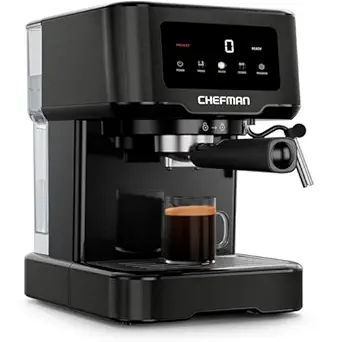 | Best for Households | Operation Mode: Semi-automatic | Output Pressure: 15 bar | Water Reservoir: 1.5 liters, removable | VIEW LATEST PRICE | See Our Full Breakdown |
| XIXUBX Compact Espresso Maker with Milk Frother, White |  | Best Small-Space Pick | Pressure: 20 bar | Type: Semi-automatic espresso machine | Temperature Control: PID | VIEW LATEST PRICE | See Our Full Breakdown |
| KEENSTAR 3.5-Bar Compact Espresso Machine, 800W, 4-Cup |  | Best Budget Starter | Pressure: 3.5 bar | Power: 800 W | Capacity: 1–4 cups (240 ml max) | VIEW LATEST PRICE | See Our Full Breakdown |
| Aromaster 1400W Espresso Machine with Milk Frother |  | Best Overall in This Batch | Power: 1400W | Pump pressure: 20 bar | Temperature control: PID and NTC | VIEW LATEST PRICE | See Our Full Breakdown |
| CHULUX Slim Espresso Machine with Milk Frother |  | Best Compact Pick | Pump pressure: 20 bar | Power: 1350 watts | Preheating time: 30 seconds | VIEW LATEST PRICE | See Our Full Breakdown |
| SHARDOR 3.5-Bar Espresso Machine with Milk Frother |  | Best Budget Starter | Power: 800 W | Pressure: 3.5 bar | Boiler material: Die-cast aluminum | VIEW LATEST PRICE | See Our Full Breakdown |
| CASABREWS CM5418 Compact Espresso Machine with Milk Frothing Wand |  | Best for Latte Practice | Model: CM5418 | Type: Semi-automatic espresso machine | Pump pressure: 20 bar | VIEW LATEST PRICE | See Our Full Breakdown |
| XIXUBX Compact Espresso Machine with Milk Frother |  | Best Value Bundle | Type: Semi-automatic espresso machine | Pressure: 20 bar | Temperature control: PID | VIEW LATEST PRICE | See Our Full Breakdown |
More Details on Our Top Picks
XIXUBX Espresso Machine with Milk Frother, Silver
This option stands out for combining nearly everything a home barista wants at this budget: a 20-bar pump, a visible pressure gauge, and a genuinely useful accessory bundle that includes a stainless steel frothing pitcher. Compared with the CASABREWS 3700, which skips the pressure gauge entirely, the XIXUBX gives beginners real feedback on whether their grind and tamp are in the right zone — the single biggest skill hurdle in espresso. Its 42 oz tank is nearly identical to the CASABREWS’ 43.9 oz, so you give up almost nothing in capacity. The tradeoff: this is a lesser-known brand, so long-term reliability is unproven, and there’s no established service network if something fails after the one-year warranty window.
Pros:- Visible pressure gauge helps you diagnose grind and tamping mistakes
- Includes a stainless steel frothing pitcher most rivals leave out
- Large 42 oz tank supports multiple drinks between refills
- Detachable 360° steam wand simplifies cleaning
Cons:- Newer brand with no established reliability record
- No track record of parts or service support beyond the 1-year warranty
Best for: Beginners who want pressure-gauge feedback while learning to dial in their first shots
Not ideal for: Buyers who prioritize brand track records — this newer label has no reliability history to lean on
- Pressure:20 bar
- Water tank capacity:42 oz
- Steam wand:360° rotating, detachable
- Body material:Stainless steel
- Included accessories:Stainless steel milk frothing pitcher
- Warranty:1 year
Our verdict“The most complete learning package under $200 — pick it if feedback tools matter more than brand recognition.”
Arecovas Espresso Machine with Touchscreen and Milk Frother
Where most budget machines rely on toggle switches, this model bets on a touchscreen interface with an LED display and a real-time pressure readout — an unusual combination at this price. The dedicated Americano setting sets it apart from the XIXUBX Silver and CASABREWS 3700, both of which stop at straight espresso shots, making it the stronger pick for households where black-coffee drinkers and latte lovers coexist. Its 1300W boiler sits between the CASABREWS’ 1350W and budget steam toys like the 3.5-bar four-cup makers, so heat-up is respectable without being class-leading. The compromises are real though: touch controls add a failure point that simple mechanical switches don’t have, and like every semi-automatic here, it demands ground coffee and hands-on effort every single morning.
Pros:- Dedicated single, double, and Americano presets cover more drink styles than rivals
- Touchscreen with real-time pressure gauge gives clearer feedback than dial-only machines
- Temperature controls aim for more stable brewing and steaming
- Compact footprint fits tight counters
Cons:- Touchscreen electronics are a potential long-term failure point
- Requires ground coffee and hands-on preparation for every drink
Best for: Tech-leaning buyers and mixed households who want both espresso drinks and one-touch Americanos
Not ideal for: Anyone wanting a grab-and-go morning routine — semi-automatic operation means active involvement every brew
- Machine type:Semi-automatic espresso machine
- Pressure:20 bar
- Wattage:1300 watts
- Water tank capacity:1.2 L (40 oz)
- Interface:Touchscreen with LED display
- Coffee options:Single shot, double shot, Americano
- Dimensions:12 × 5.2 × 11.9 in (D × W × H)
- Included accessories:One- and two-cup filters, portafilter, tamper with spoon
Our verdict“The most feature-dense interface in this lineup — choose it if presets and displays appeal more than mechanical simplicity.”
CASABREWS 3700 Essential Stainless Steel Espresso Machine with Steam Wand
This pick makes the most sense for buyers who want the safest bet rather than the flashiest one. CASABREWS has become one of the most recognizable names in budget espresso, and the 3700 delivers the proven formula: a 20-bar pump, a slightly larger 43.9 oz tank than either the XIXUBX Silver or the Arecovas, and a straightforward removable tank and drip tray. It lacks the XIXUBX’s pressure gauge and the Arecovas’ touchscreen, so you’re brewing more on feel — but that simplicity is exactly why it tends to hold up. The 1350W heating system is the most powerful in this batch, which translates to less waiting between brewing and steaming. Just plan for a rinse cycle before your first shot and accept there’s no gauge to confirm extraction pressure.
Pros:- Established budget-espresso brand with a broad user base
- Most powerful heater in this batch at 1350 watts
- Largest water tank here at 43.9 oz
- Steam wand capable of latte-art-quality microfoam
Cons:- No pressure gauge to monitor extraction
- Requires a full rinse cycle before first use
Best for: First-time espresso buyers who want a recognized brand with the fewest gadgets to break
Not ideal for: Data-driven learners who want a pressure gauge to verify their technique — this machine offers no readout
- Machine type:Semi-automatic espresso machine
- Pump pressure:20 bar
- Wattage:1350 watts
- Water tank capacity:43.9 oz, removable
- Coffee input:Ground coffee
- Milk frothing:Steam wand
- Included filters:One-cup and two-cup filters
Our verdict“The low-risk default of the roundup — buy it if brand familiarity and heating power outrank display features for you.”
3.5-Bar Espresso Machine, 4-Cup Compact Coffee Maker, 800W, Black
This is the honest floor of the category: a 3.5-bar, steam-driven machine that behaves more like a moka pot with a steam wand than true espresso equipment. Against the 20-bar CASABREWS 3700 or XIXUBX, it cannot produce the nine-plus bars of stable pressure that real crema requires — expect a darker, stronger coffee instead. But that misses the point of who this is for. For a dorm, office nook, or occasional cappuccino craving, its four-cup carafe and dead-simple controls do something none of the semi-automatics can: brew for several people at once with one button. The medium-coarse grind requirement cuts both ways — it’s forgiving to buy, but use the wrong grind and you’ll be unclogging the filter. Think of it as a milk-drink maker, not an espresso machine.
Pros:- Four-cup carafe serves multiple people in one brew
- Genuinely simple one-control operation
- Removable filter, holder, and carafe make cleanup easy
- Smallest footprint and lowest complexity in the lineup
Cons:- 3.5-bar steam pressure cannot produce true espresso extraction or crema
- Requires medium-coarse grounds to avoid clogging — wrong grinds cause problems
Best for: Students, dorm dwellers, and casual milk-coffee drinkers who want something cheap and effortless
Not ideal for: Espresso purists chasing crema and authentic shot quality — steam pressure simply can’t get there
- Pressure:3.5 bar
- Capacity:4 cups
- Power:800 watts
- Milk frother:Built-in steam wand
- Removable parts:Filter, filter holder, carafe, measuring spoon
- Recommended grind:Medium-coarse
- Color:Black
Our verdict“A cheap gateway for milk-based drinks only — skip it entirely if authentic espresso is the goal.”
Nespresso Vertuo Pop+ Coffee and Espresso Machine by De’Longhi, Black
The Vertuo Pop+ plays a completely different game from everything else here. Instead of grinding, tamping, and steaming, you drop in a Vertuo capsule, press a button, and get anything from a single espresso to a 12 oz coffee — hot or over ice — in about 30 seconds from heat-up. No semi-automatic in this roundup, not even the touchscreen Arecovas, matches that consistency, because the capsule removes every variable. The tradeoff is structural: you’re locked into Nespresso’s Vertuo ecosystem, with per-cup costs far above ground coffee and no third-party capsule options, and there’s no real steam wand — milk drinks require a separate frother. Its 25 oz tank is also the smallest in this batch. This pick makes sense for convenience-first buyers; everyone chasing the craft of espresso should stay with the CASABREWS or XIXUBX.
Pros:- One-touch brewing across five sizes, from single espresso to 12 oz coffee
- 30-second heat-up beats every semi-automatic here
- Iced drink options are unique in this roundup
- Compact body with side-access tank and adjustable drip tray for taller mugs
Cons:- Locked exclusively to Nespresso Vertuo capsules with higher per-cup cost
- No steam wand — milk-based drinks need a separate frother
Best for: Busy commuters and capsule loyalists who value speed and consistency over hands-on brewing
Not ideal for: Cost-conscious daily drinkers and latte lovers — capsule costs add up fast and there’s no steam wand
- Brand:Nespresso by De’Longhi
- Model:Vertuo Pop+
- Brew sizes:5, 8, 12 oz coffee; single and double espresso
- Water tank capacity:25 fl oz
- Heat-up time:30 seconds
- Capsule compatibility:Nespresso Vertuo capsules only
- Construction:Made from 35% recycled plastic
- Color:Black
Our verdict“The convenience champion if recurring capsule costs don’t bother you; craft brewers should look elsewhere.”
Atatix Espresso Machine with Milk Frother, 20 Bar Pressure
Most machines at this price make you choose between automatic convenience and manual control — the Atatix offers both, with programmed 28-second single shots and 42-second doubles alongside a manual mode that runs up to 102 seconds for larger, Americano-style pulls. That flexibility is why it stands apart from the Chefman CraftBrew, which caps out at touch-controlled shot volumes with no freehand option. The NTC temperature control (90–96°C) keeps extraction within the proper espresso window, and the steam wand generates microfoam dense enough for latte art — something the KEENSTAR simply cannot do at 3.5 bar. The tradeoff is real, though: manual mode demands practice, and dialing in grind and dose takes trial and error before shots taste consistent.
Pros:- Dual automatic and manual extraction modes for full control over strength
- NTC temperature control keeps extraction in the proper 90–96°C range
- Steam wand produces microfoam suitable for latte art
- Silicone suction cup base keeps the unit stable during brewing
Cons:- Manual extraction requires practice to dial in consistently
- Limited capacity for high-volume brewing compared to larger machines
Best for: Hobbyists who want to experiment with shot timing and strength, growing from presets into manual extraction
Not ideal for: Households brewing back-to-back drinks for guests — it’s built for one or two servings at a time, not high-volume entertaining
- Pressure:20 bar
- Temperature Control:NTC, 90–96°C
- Preheat Time:30 seconds
- Auto Extraction:28s single shot, 42s double shot
- Manual Extraction:Up to 102 seconds
- Materials:BPA-free ABS and stainless steel
- Included Accessories:Portafilter, funnel, scoop/tamper, manual
Our verdict“Choose the Atatix if you want room to grow into manual espresso skills without paying for a semi-pro machine.”
XIXUBX Espresso Machine with Milk Frother, Grey
The grey XIXUBX is the only machine in this batch that brews one-touch cold brew alongside hot espresso — a genuine differentiator when every competitor here, including its white XIXUBX Compact sibling, is hot-only. For anyone who alternates between an iced afternoon drink and a morning cappuccino, that dual function eliminates a separate cold brew setup. Its 1350W heater reaches brewing temperature in about 30 seconds, matching the Atatix for warm-up speed, and the adjustable steam wand plus included milk pitcher cover the milk-drink basics. The honest caveat: real-world track record is thin, so buyers are relying on specs rather than demonstrated longevity. Compared with the Chefman CraftBrew, you give up a larger 1.5-liter reservoir for the cold brew capability.
Pros:- One-touch cold brew plus hot espresso in a single machine
- 1350W system heats in about 30 seconds
- Adjustable steam wand with included milk pitcher
- NTC temperature control for consistent extraction
Cons:- Newer model with little real-world performance history available
- Smaller water capacity than reservoir-focused rivals like the Chefman CraftBrew
Best for: Drinkers who want hot espresso in the morning and iced coffee later without owning two machines
Not ideal for: Buyers who prioritize proven reliability and want a long track record before committing
- Type:Semi-automatic espresso machine
- Power:1350 W
- Pump Pressure:20 bar
- Heating Time:About 30 seconds
- Brew Options:Hot espresso and one-touch cold brew
- Temperature Control:NTC sensor
- Included Accessories:Milk pitcher
- Warranty:1 year
Our verdict“Worth picking if cold brew is a daily habit, but it’s a bet on specs rather than reputation.”
Chefman CraftBrew Espresso Machine with Steam Wand, 15-Bar Pump, and 1.5 L Reservoir
Where the KEENSTAR maxes out at 240 ml of water, the Chefman CraftBrew carries a 1.5-liter reservoir — enough for several drinks before refilling, which matters most when two or three people share a machine. Touch controls let you adjust shot volume to taste, and both single and double shot baskets are included, so the machine adapts to whoever’s pouring. The built-in steam wand handles milk drinks, though at 15 bar it sits below the 20-bar Atatix — in practice, a well-maintained 15-bar pump produces perfectly good espresso, so the difference is more spec-sheet than taste-bud. The automatic descaling alert is a practical touch for anyone who forgets maintenance. Drawbacks are straightforward: it takes ground coffee only (no pods, no grinder) and its 120-volt design limits use outside North America.
Pros:- Large 1.5-liter removable reservoir reduces refilling
- Adjustable shot volume via touch controls
- Single and double shot baskets included
- Automatic descaling alert simplifies upkeep
Cons:- Requires ground coffee with no pod or grinder option
- Limited to 120-volt North American power
Best for: Multi-person households making several milk drinks daily who want fewer refills and easy maintenance
Not ideal for: Travelers or overseas buyers — the 120-volt-only power limits where it can be used
- Operation Mode:Semi-automatic
- Output Pressure:15 bar
- Water Reservoir:1.5 liters, removable
- Wattage:1350 watts (120V)
- Dimensions:10.8 x 8.9 x 11.9 inches
- Coffee Input:Ground
- Shot Baskets:Single and double
Our verdict“The most sensible pick for shared kitchens where reservoir capacity and low-fuss maintenance matter more than raw pressure specs.”
XIXUBX Compact Espresso Maker with Milk Frother, White
This white XIXUBX takes a different approach to compactness than the KEENSTAR: instead of shrinking capability, it stacks full 20-bar espresso vertically, so apartments, offices, and RVs get real crema without surrendering the counter. The PID controller holds brewing temperature steady — a step up from the Atatix’s NTC sensor in stability terms — and pre-infusion soaks grounds evenly before full pressure hits, producing balanced shots from a single button in 22–30 seconds. The bundle is beginner-friendly too, with a stainless frothing pitcher, clear manual, and video tutorials. But it’s still semi-automatic: grind size and tamping technique determine the result, so unlike the pod-based Nespresso Vertuo Pop+, expect a learning curve before your drinks taste the same twice in a row.
Pros:- Vertical compact design fits tight counters in apartments, offices, and RVs
- PID temperature control with pre-infusion for balanced, crema-rich shots
- Microfoam-capable steam wand for latte art
- Includes frothing pitcher plus manual and video tutorials
Cons:- Requires proper grinding and tamping technique for best results
- Semi-automatic operation involves more steps than fully automatic or pod machines
Best for: Apartment, office, and RV dwellers who want genuine 20-bar espresso in a minimal footprint
Not ideal for: Anyone wanting zero-effort, push-button consistency without learning grind and tamping technique
- Pressure:20 bar
- Type:Semi-automatic espresso machine
- Temperature Control:PID
- Brew Time:22–30 seconds
- Controls:Single button (single/double shot)
- Steam Wand:Yes
- Included Accessories:Stainless steel frothing pitcher
- Design:Compact vertical, noise-reduction
- Warranty:1 year
Our verdict“The best balance of small footprint and serious espresso quality, provided you’re willing to learn the basics.”
KEENSTAR 3.5-Bar Compact Espresso Machine, 800W, 4-Cup
The KEENSTAR makes the list on simplicity and speed: four cups in about two minutes from a single knob, which is hard to beat for a first espresso machine or a dorm room. But honesty requires naming the gap — at 3.5 bar it operates far below true espresso pressure, so expect strong coffee with thin crema rather than the rich, syrupy shots the 20-bar Atatix or XIXUBX Compact produce. The steam wand froths milk for cappuccinos but takes about 40 seconds to heat and must be cleaned after every use to avoid blockages. With a 240 ml maximum, it’s strictly a one-or-two-drink machine, and it prefers medium grounds — fine espresso grinds aren’t recommended. Compared with the similar SHARDOR 3.5-bar, its marked glass cup and pause function make measuring and serving a bit easier.
Pros:- Brews up to four cups in about two minutes
- Steam wand supports cappuccino and latte frothing
- Simple single-knob operation with a pause function
- Lightweight 4.7 lb design fits small kitchens
Cons:- 3.5-bar pressure produces strong coffee rather than true espresso crema
- Tiny 240 ml water capacity limits it to one or two drinks
- Steam wand requires cleaning after each use to prevent blockage
Best for: First-time buyers and students who want an inexpensive, low-commitment intro to espresso-style coffee
Not ideal for: Espresso enthusiasts chasing authentic crema and 9-bar-style extraction — the 3.5-bar pressure won’t deliver it
- Pressure:3.5 bar
- Power:800 W
- Capacity:1–4 cups (240 ml max)
- Brewing Time:About 2 minutes
- Steam Wand Heat-Up:About 40 seconds
- Dimensions:13.1 x 7.7 x 10 in
- Weight:4.7 lb
- Material Safety:BPA-free
Our verdict“A fair entry point for casual drinkers, but anyone serious about espresso should step up to a 15–20 bar machine.”
Aromaster 1400W Espresso Machine with Milk Frother
The Aromaster earns the top spot because it is the only machine in this group pairing PID temperature control with pre-infusion and one-touch descaling — features usually reserved for pricier machines. Where the CHULUX Slim offers a pressure gauge but no brew customization, the Aromaster lets you stabilize temperature shot after shot, which matters more for repeatable flavor. The 1400W boiler also brings it to brewing temperature faster than the 800W SHARDOR. The tradeoff: this is a fully hands-on semi-automatic, so you will manage grind, dose, and tamping yourself, and the 2.4 oz listed brew capacity means back-to-back drinks take patience. Compared with the CASABREWS CM5418, the descaling function alone makes long-term maintenance less of a chore.
Pros:- PID and NTC temperature control for consistent, repeatable brewing
- Pre-infusion gently saturates grounds for better extraction
- One-touch descaling simplifies long-term maintenance
- Swivel steam wand plus cup warmer covers the full latte workflow
Cons:- Semi-automatic operation demands skill and attention for every shot
- Small 2.4 oz listed brew capacity slows down multiple-drink sessions
Best for: Home baristas who want the most precise extraction control available under $200 without stepping up to a prosumer machine
Not ideal for: Drinkers who want push-button convenience — every shot requires active involvement from grinding to tamping
- Power:1400W
- Pump pressure:20 bar
- Temperature control:PID and NTC
- Water tank capacity:37 oz
- Special features:Pre-infusion, one-touch descaling, cup warmer, auto shut-off
- Dimensions:13 × 7 × 14 in
- Design:Stainless steel
Our verdict“If you want café-level control at a budget price, this is the machine in this batch that gets you closest.”
CHULUX Slim Espresso Machine with Milk Frother
At just 5.5 inches wide, the CHULUX squeezes into spaces no other machine here can touch — a dorm counter, an office nook, a studio kitchenette. It does not sacrifice capability for size either: the built-in pressure gauge gives visual feedback on your extraction, something neither the CASABREWS CM5418 nor the XIXUBX Compact offers, and the 40 oz tank is the largest in this batch. Preheating in about 30 seconds, it beats the Aromaster for grab-and-go mornings. The compromise is control — no temperature adjustment or brew customization — so if your shots run sour or bitter, the only fix is changing your grind and dose rather than the machine’s settings.
Pros:- Ultra-slim 5.5-inch width fits cramped counters
- Pressure gauge provides useful extraction feedback
- 40 oz tank means fewer refills than any rival here
- 30-second preheating for fast morning routines
Cons:- No temperature or brew customization options
- Requires ground coffee with no flexibility for pods or capsules
Best for: Small-space dwellers and office users who need real 20-bar espresso in a minimal footprint
Not ideal for: Tinkering types who want to dial in temperature and brew variables — the controls are intentionally minimal
- Pump pressure:20 bar
- Power:1350 watts
- Preheating time:30 seconds
- Water tank capacity:40 oz
- Width:5.5 inches
- Auto shut-off:After 25 minutes of inactivity
- Features:Pressure gauge, pre-infusion, steam wand, removable drip tray
Our verdict“The narrowest full-featured machine in this lineup, ideal when counter space is the deciding factor.”
SHARDOR 3.5-Bar Espresso Machine with Milk Frother
The SHARDOR is the easiest entry point in this batch: one knob switches between brewing and steaming, and it heats in minutes thanks to a simple die-cast aluminum boiler. Be clear-eyed about what you are buying, though — 3.5 bar is not true espresso pressure. It brews a strong, moka-pot-style coffee rather than the concentrated, crema-topped shots the 20-bar CHULUX or Aromaster produce. For someone testing whether they even like making milk drinks at home, that limitation is acceptable; for anyone chasing authentic espresso, it is disqualifying. Compared with the XIXUBX Compact, you give up PID control and microfoam quality, but you also give up complexity — which is exactly the point.
Pros:- Single-knob operation makes brewing nearly foolproof
- Heats to brewing temperature in minutes
- Adjustable steam wand handles different milk textures
- Overheat and overpressure protection adds safety for beginners
Cons:- 3.5-bar system produces espresso-style coffee, not true espresso
- Small footprint limits brew capacity for multiple servings
Best for: Casual drinkers and first-timers who want cheap, simple milk-coffee drinks without a learning curve
Not ideal for: Espresso purists — 3.5 bar cannot produce genuine high-pressure espresso with proper crema
- Power:800 W
- Pressure:3.5 bar
- Boiler material:Die-cast aluminum
- Controls:Single knob for brewing and steaming
- Milk frother:Adjustable steam wand
- Dimensions:11.8 × 8.3 × 6 in (H × D × W)
- Safety features:Overheat and overpressure protection
Our verdict“A low-risk way to explore home milk drinks, as long as you accept it is not making real espresso.”
CASABREWS CM5418 Compact Espresso Machine with Milk Frothing Wand
The CM5418 occupies a middle ground that suits aspiring latte makers: full 20-bar pressure like the CHULUX, but with a brushed stainless finish and included accessories — one- and two-cup filters, a tamper with spoon — that feel like a starter kit rather than an afterthought. Its steam wand is positioned for foam art practice, a detail the SHARDOR’s simpler wand cannot match. The notable annoyance is thermal: you must let the machine cool down after steaming before brewing again, which stalls back-to-back drinks. And like most budget semi-automatics, expect a dialing-in period where grind size and tamping pressure make or break your shot. It is a step up from the SHARDOR in pressure, a step below the Aromaster in temperature control.
Pros:- True 20-bar pump for authentic espresso extraction
- Steam wand capable of microfoam suitable for latte art
- Includes both single and double shot filters plus a tamper
- Brushed stainless steel build looks better than plastic rivals
Cons:- Requires cool-down after frothing before brewing resumes
- Extraction quality depends heavily on getting grind and tamping right
Best for: Beginners who want genuine 20-bar shots and want to learn milk texturing and latte art
Not ideal for: Households making several drinks in a row — the mandatory cool-down between steaming and brewing slows everything down
- Model:CM5418
- Type:Semi-automatic espresso machine
- Pump pressure:20 bar
- Wattage:1350 W
- Water tank capacity:34 oz, removable
- Material/finish:Brushed stainless steel
- Included components:One-cup filter, two-cup filter, portafilter, tamper with spoon
Our verdict“The best package here for learning the craft of espresso and steamed milk together.”
XIXUBX Compact Espresso Machine with Milk Frother
XIXUBX wins on out-of-the-box completeness: it is the only machine in this batch that ships with a stainless steel frothing pitcher, sparing you an extra purchase that every other pick here assumes. Add PID temperature control — matched only by the Aromaster — plus gentle pre-infusion and one-button single or double shot brewing, and the package covers the entire workflow for less effort elsewhere. The 22–30 second brew time reflects properly paced extraction rather than rushed pressure. The realistic caveat: results hinge on your grind and tamping, and skipping that discipline produces under-extracted shots. Compared with the CASABREWS CM5418, you gain temperature consistency and the pitcher; you lose the second filter basket and the pressure feedback the CHULUX gauge provides.
Pros:- PID temperature control for consistent, repeatable shots
- Includes a stainless steel frothing pitcher no rival bundles
- One-button single or double shot brewing keeps things simple
- Compact vertical design preserves counter space
Cons:- Extraction quality depends heavily on proper grinding and tamping
- Smaller accessory kit than the CASABREWS despite the included pitcher
Best for: First-time buyers who want everything needed for lattes in one box without accessory shopping
Not ideal for: Buyers unwilling to invest in a decent grinder — poor grind preparation will waste this machine’s PID precision
- Type:Semi-automatic espresso machine
- Pressure:20 bar
- Temperature control:PID
- Brewing time:22–30 seconds
- Brewing options:Single or double shot
- Milk frother:Steam wand for microfoam
- Included accessory:Stainless steel frothing pitcher
- Warranty:1 year
Our verdict“The most complete starter bundle here — ideal if you want to unbox and brew without buying extras.”
How We Picked
I ranked these machines around one question: can it produce a shot you’d actually want to drink, and milk you’d actually want on top? Pump pressure came first — 15-bar and 20-bar machines consistently outperformed 3.5-bar steam-pressure models on extraction, crema, and flavor strength. Second, I weighed milk frothing capability, distinguishing between dedicated steam wands and weaker frother wands, since latte and cappuccino drinkers live or die by milk texture. Third, I scored build quality and capacity: stainless steel bodies, metal portafilters, and larger reservoirs earned higher marks than plastic-heavy builds.
Usability and value rounded out the criteria. I favored machines with short warm-up times, intuitive controls, and easy cleanup, because a cheap machine that’s a chore to use ends up in a cabinet. I also flagged redundancy — since several models share near-identical internals, I ranked them by finish, footprint, and features rather than pretending they’re meaningfully different brewers. Machines that punch above their price earned top spots; machines that trade performance purely for a lower sticker price landed lower.
Factors to Consider When Choosing Espresso Machines Under $200
Before picking a machine from this list, it helps to understand what actually drives espresso quality and daily satisfaction at this price. These are the factors I weighed most heavily — and the traps that catch first-time buyers.Pump Pressure vs. Steam Pressure
This is the most misunderstood spec in budget espresso. Machines advertising 15 or 20 bar pump pressure force water through finely ground coffee at proper espresso extraction levels, producing the concentrated, crema-topped shot espresso is known for. Machines rated at 3.5 bar rely on steam pressure, which maxes out well below true espresso range — the result is closer to strong moka pot coffee. A common mistake is assuming higher numbers always mean better; above 15 bar, differences are marketing more than taste. But below 9 bar of actual delivery, you’re not making espresso no matter what the box says. If authentic shots matter to you, eliminate 3.5-bar models from consideration before comparing anything else. If you mostly drink milk-heavy drinks, a steam-pressure machine can still produce a satisfying latte base.
Steam Wand vs. Frother Attachment
Not all milk systems are equal, and this is where cheap machines quietly cut corners. A true steam wand lets you texture milk manually, which means you can create microfoam for latte art and control temperature and density yourself. A basic frother wand or attachment aerates milk but rarely produces the silky texture that makes café drinks taste professional. Beginners often underestimate how much milk quality affects the final drink — a mediocre shot with great milk foam beats a great shot with bubbly, soapy foam for most people. Also check whether the wand swivels and whether the tip is removable for cleaning, because clogged wands are the number one maintenance complaint at this price. If cappuccinos are your daily order, prioritize wand quality over extra machine features.
Build Materials and Longevity
Under $200, manufacturers save money in predictable places: plastic portafilters, thin boiler walls, and flimsy drip trays. A stainless steel body like the CASABREWS 3700’s signals better heat retention and a longer lifespan than all-plastic housings. The portafilter material matters too — metal portafilters hold heat consistently, while plastic ones cool between shots and produce uneven extraction. Check the drip tray and water tank capacity as well; a small tank means refilling after every second drink, which gets old fast. A realistic expectation: machines in this range typically last two to five years with regular descaling, not a decade. Buying a slightly better-built machine at the top of your budget usually costs less per year of ownership than replacing a cheaper one twice.
Reservoir Size and Warm-Up Time
Capacity and speed shape your daily routine more than most spec sheets suggest. A 1.5-liter reservoir like the Chefman CraftBrew’s handles several drinks between refills, while sub-liter tanks suit single users only. Warm-up time is the hidden frustration — some budget machines need several minutes before they’re ready to extract, which kills the appeal of a quick morning shot. Thermoblock heaters generally warm faster than smaller boiler systems, so check which heating design a machine uses if speed matters to you. Also consider whether the machine switches between brew and steam modes or does both simultaneously, because mode-switching adds waiting time to every milk drink. Households with multiple coffee drinkers should weight these factors heavily; solo users can safely deprioritize them.
Pod Systems vs. Ground Espresso
The Nespresso Vertuo Pop+ represents a fundamentally different approach from every other machine on this list. Pod systems trade cost-per-cup and control for speed and consistency — you press a button and get the same drink every time, with no grinding, tamping, or dialing in. Ground-based machines have a steeper learning curve and require a decent burr grinder (an added expense many beginners forget to budget), but they cost far less per cup and let you use any beans you like. The mistake I see most often is buyers choosing a pod machine expecting café-quality espresso, or choosing a ground machine expecting pod-level convenience. Neither expectation holds. Decide honestly whether you want to practice a skill or press a button, then choose your camp before comparing models within it.
Counter Space and Footprint
At this price, compactness is often a genuine feature rather than a compromise — but know what you’re giving up. Slim machines like the CHULUX and compact 4-cup models fit under cabinets and in small kitchens, but smaller footprints usually mean smaller water tanks, lighter portafilters, and less stable group heads. A machine that wobbles when you lock in the portafilter will frustrate you daily. Measure your counter space and cabinet clearance before buying, including height with the lid open for refilling. Also check cup clearance under the spout — some compact machines can’t fit a standard mug, forcing you to brew into a tiny espresso cup and transfer. The sweet spot for most buyers is a mid-size machine that still leaves working room, rather than the absolute smallest option.
Frequently Asked Questions
Can a machine under $200 make real espresso, or do I need to spend more?
Yes, genuine espresso is achievable under $200, but only with pump-driven machines — the 15 and 20 bar models like the CASABREWS 3700, Atatix, and Chefman CraftBrew. These deliver enough pressure for proper extraction and crema, especially if you use freshly ground beans and a firm tamp. What you give up at this price is temperature stability, durability, and refined steam power, not the fundamental ability to pull a shot. Spending more buys consistency and longevity rather than a categorically different drink. The one caveat: budget machines punish bad technique and stale pre-ground coffee more harshly than premium machines do.
Is a 20-bar machine better than a 15-bar machine?
In practice, no — the difference is mostly marketing. Proper espresso extracts at roughly 9 bar, and machines rated 15 or 20 bar both regulate down during brewing. What actually separates them at this price is build quality, heating consistency, and steam wand performance, not the number on the box. A well-built 15-bar machine like the Chefman CraftBrew will outperform a flimsier 20-bar unit every time. Compare materials, reservoir size, and wand quality instead of chasing the bigger number. Treat pressure claims above 15 bar as a baseline qualification, not a ranking criterion.
Are the 3.5-bar compact machines a waste of money?
Not necessarily — they’re just a different tool. Models like the KEENSTAR, SHARDOR, and the 4-cup compact units produce coffee closer to a moka pot than true espresso, which is perfectly fine for milk-based drinks and people who find real espresso too intense. They’re also cheaper, simpler, and often faster to brew with. Where they disappoint is straight shots: expect thinner body and little to no crema. If your daily drink is a latte with flavored syrup, a 3.5-bar machine may honestly serve you well. If you sip espresso neat or want to learn barista technique, skip them entirely.
The XIXUBX appears four times on this list — which one should I choose?
They share essentially the same brewing system, so performance won’t differ between them — your choice comes down to color, size, and small feature variations. The silver and grey full-size versions suit standard counters, while the compact white model targets small kitchens and dorm use. If two XIXUBX options are similarly priced, pick the finish that matches your kitchen and the footprint that fits your space. There’s no performance reason to pay noticeably more for one color over another. If you’re torn between a XIXUBX and a similarly priced CASABREWS, the CASABREWS generally offers the stronger stainless steel build.
Do I need to buy a grinder too, or can I use pre-ground coffee?
You can start with pre-ground espresso-roast coffee, and most beginners do, but fresh grinding is the single biggest upgrade you can make to shot quality. Coffee loses its volatile aromatics within minutes of grinding, and stale grounds produce flat, crema-poor shots even on a good machine. If your budget is tight, a basic burr grinder — often under $50 — improves flavor more than upgrading the machine itself. Avoid blade grinders, though, because their inconsistent particle sizes cause uneven extraction. A practical path: buy the machine first, learn your routine, then add a grinder within a few weeks.
Conclusion
Matching the right machine to your habits matters more than any single spec on this list. For the best overall pick, the CASABREWS 3700 Essential combines true pump pressure, a stainless steel body, and a real steam wand — the most complete espresso experience available under $200. The Chefman CraftBrew earns best value for buyers who want pump-driven brewing and a 1.5-liter reservoir at a practical price, while the Arecovas touchscreen model works as the best premium-style option for those who want modern controls without leaving the budget tier.
Beginners who want forgiving, low-effort brewing should look at the Nespresso Vertuo Pop+ — pods remove the learning curve entirely. Small-space buyers and dorm users get the most from the CHULUX Slim or the compact XIXUBX white model, while latte-first drinkers on the tightest budgets can happily settle for the SHARDOR or KEENSTAR 3.5-bar machines, knowing their shots won’t be true espresso but their milk drinks will still satisfy. Whatever you choose, remember that fresh beans and a little practice will do more for your cup than any price difference on this list.