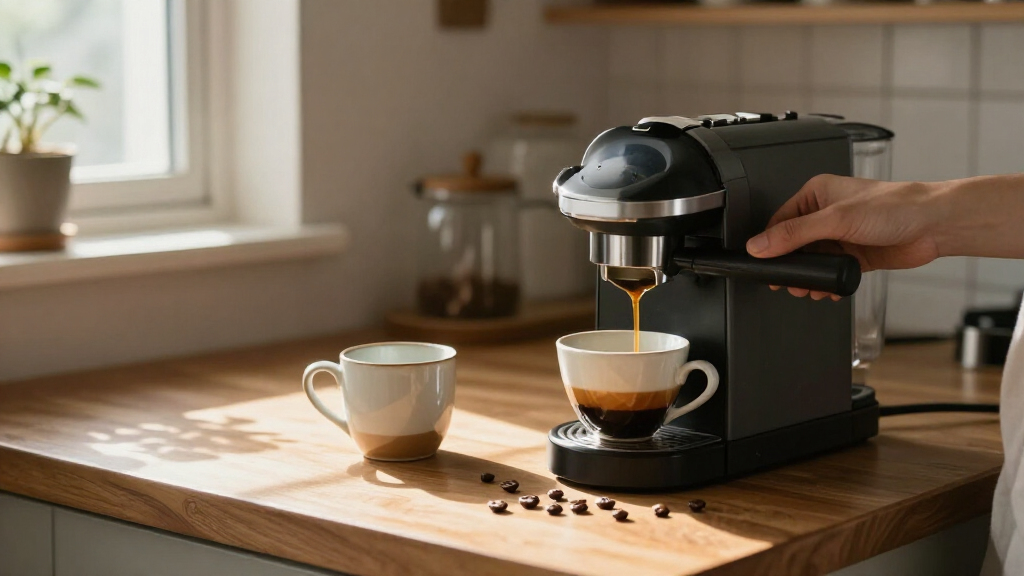
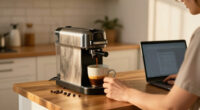
Choosing the right bean-to-cup coffee machine often comes down to balancing convenience with the ability to customize your brew. The Philips 2300 Series stands out as the best overall pick for most households because its LatteGo system delivers consistent milk drinks with almost zero cleanup effort. For those prioritizing compact size without sacrificing build quality, the Jura ENA 4 offers a sleek, space-saving design that fits tight countertops. However, if you prefer hands-on control over your espresso extraction, the Ninja Luxe Café Premier provides a unique hybrid experience that bridges the gap between automatic and manual brewing. This guide breaks down nine distinct models to help you identify which tradeoffs in maintenance, footprint, and drink variety suit your daily routine.

Get coffee and tea gear delivered free with Prime
- Fast, free delivery on millions of items
- Prime Video, Amazon Music and more included
- Member-only deals all year
Complete the kit

Key Takeaways
- Philips LatteGo systems eliminate milk tube cleaning, offering a significant hygiene advantage over internal hose systems found in most competitors.
- The Jura ENA series proves that a narrow footprint does not require compromising on grinder quality or drink customization options.
- De’Longhi Dinamica remains the go-to for users who want a manual steam wand paired with automatic grinding, offering a middle ground for latte art enthusiasts.
- Compact semi-automatic hybrids like the Philips Baristina sacrifice drink variety (no automatic cappuccino) for a much smaller physical footprint and lower price entry.
- Milk system maintenance is the primary differentiator in long-term satisfaction; automatic wash cycles are less effective than removable, dishwasher-safe components.
| Philips 2300 Series Fully Automatic Espresso Machine with LatteGo |  | Best for Easy Milk Drink Cleanup | Model: EP2330/14 | Machine type: Fully automatic espresso machine | Beverage presets: Espresso, coffee, latte, hot water | VIEW LATEST PRICE | See Our Full Breakdown |
| Jura ENA 8 Fully Automatic Espresso Machine, Full Metropolitan Black |  | Best for Specialty Drink Variety | Model: ENA 8 (15496) | Machine type: Fully automatic espresso machine | Coffee specialties: 15 | VIEW LATEST PRICE | See Our Full Breakdown |
| Ninja Luxe Café Premier 3-in-1 Espresso Machine, Stainless Steel, ES601 |  | Best for Brewing Beyond Espresso | Model: ES601 | Brew types: Espresso, drip coffee, rapid cold brew | Grinder: Built-in conical burr grinder with 25 settings | VIEW LATEST PRICE | See Our Full Breakdown |
| Jura ENA 4 Automatic Espresso Machine, Metropolitan Black |  | Best for Straightforward Black Coffee | Model: ENA 4 (15374) | Machine type: Fully automatic espresso machine | Coffee specialties: Espresso, espresso doppio, coffee, coffee doppio | VIEW LATEST PRICE | See Our Full Breakdown |
| Zulay Kitchen Magia Ultra LUX Super Automatic Espresso Machine |  | Best for Personalized Milk Drinks | Machine type: Fully automatic espresso machine | Drink options: 19 one-touch specialty drinks | Grinder: Built-in burr grinder with adjustable grind control | VIEW LATEST PRICE | See Our Full Breakdown |
| De’Longhi Dinamica Fully Automatic Espresso Machine with Burr Grinder and Manual Frother |  | Best for Customization & Iced Coffee | Grinder Type: Built-in burr grinder | Milk System: Manual steam wand | Controls: Touchscreen | VIEW LATEST PRICE | See Our Full Breakdown |
| Philips Baristina Espresso Machine with Milk Frother, Automatic Grinding, Tamping & Brewing, 16 Bar, Compact, Natural White, White Portafilter (BAR308/00) |  | Best Compact & Space-Saving Option | Pressure: 16 Bar | Operation: Automatic grinding, tamping, brewing | Milk Frother: Integrated (hot/cold foam) | VIEW LATEST PRICE | See Our Full Breakdown |
| De’Longhi Magnifica Duo Fully Automatic Espresso Machine with Milk Frother, Silver |  | Best for Drink Variety & Cold Brew | Preset Recipes: 20 | Cold Brew Time: Under 3 minutes | Milk Frothing: Hot and cold automatic | VIEW LATEST PRICE | See Our Full Breakdown |
| AMZCHEF Semi-Automatic Espresso Machine with Built-In Grinder |  | Best for Hands-On Control & Grind Precision | Grind Settings: 44 | Temp Range: 190°F–201°F | Water Tank: 60 oz | VIEW LATEST PRICE | See Our Full Breakdown |
| bean-to-cup coffee machine | Dimensions | Grinder | Weight |
|---|---|---|---|
| Philips 2300 Series Fully Auto | 17.05 x 9.69 x 14.61 in (D x W x H) | Built-in ceramic grinder | 17.6 lbs |
| Jura ENA 8 Fully Automatic Esp | 10.7 × 17.5 × 12.7 in (D × W × H) | — | 21 lb |
| Ninja Luxe Café Premier 3-in-1 | 12.99 x 13.39 x 14.57 in (D x W x H) | Built-in conical burr grinder with 25 settings | 31.6 lbs |
| Jura ENA 4 Automatic Espresso | 17.5 × 10.7 × 12.7 in | Integrated Aroma G3 grinder | — |
| Zulay Kitchen Magia Ultra LUX | 19 x 25 x 34 inches (D x W x H) | Built-in burr grinder with adjustable grind control | — |
| De’Longhi Dinamica Fully Autom | 9.3 × 16.9 × 13.7 in | — | — |
| Philips Baristina Espresso Mac | — | — | — |
| De’Longhi Magnifica Duo Fully | 19.69 × 12.2 × 16.14 inches | Integrated conical burr | 20.8 pounds |
| AMZCHEF Semi-Automatic Espress | 12.5 × 10.82 × 13.38 in | — | 13.9 lb |
More Details on Our Top Picks
Philips 2300 Series Fully Automatic Espresso Machine with LatteGo
The Philips 2300 Series suits buyers who want bean-to-cup latte convenience without a milk system full of hard-to-reach tubing. Its three-part LatteGo unit rinses quickly, and the removable brew group gives owners a direct way to clean a key part of the machine. Compared with the Jura ENA 8, which offers a broader menu and two-cup brewing, the Philips keeps the drink selection to espresso, coffee, latte, and hot water. That simpler menu may be a plus if those are the drinks you actually make. Strength and cup size are adjustable, while SilentBrew is designed to reduce operating noise. The tradeoffs are its one-cup listed capacity and relatively heavy body; it is a better fit for a small household than for serving several drinks back-to-back.
Pros:- LatteGo has three parts and no internal tubes, making the milk system straightforward to rinse.
- Makes espresso, coffee, latte, and hot water from one-touch controls.
- Customizable strength and cup size let buyers adjust familiar drinks.
- Removable brew group and AquaClean filter support routine maintenance.
Cons:- Listed capacity is one cup, which limits serving several people in quick succession.
- At 17.6 pounds, it is relatively heavy to move for cleaning or counter rearrangement.
- The drink menu is narrower than the Jura ENA 8’s 15 specialties.
Best for: One- or two-person households that regularly make lattes and want a milk system that is quick to rinse.
Not ideal for: Households that often prepare multiple drinks at once or want a wide range of specialty presets.
- Model:EP2330/14
- Machine type:Fully automatic espresso machine
- Beverage presets:Espresso, coffee, latte, hot water
- Milk system:LatteGo, 3 parts, no internal tubes
- Grinder:Built-in ceramic grinder
- Dimensions:17.05 x 9.69 x 14.61 in (D x W x H)
- Weight:17.6 lbs
- Cleaning:Dishwasher-safe LatteGo parts; removable brew group
Our verdict“Choose the Philips 2300 if easy LatteGo cleanup matters more than a large drink menu or two-cup brewing.”
Jura ENA 8 Fully Automatic Espresso Machine, Full Metropolitan Black
The Jura ENA 8 is the lineup’s variety pick: it prepares 15 coffee specialties and can make two cups at once, giving it more range than the simpler Jura ENA 4. Touchscreen controls allow adjustments to strength, volume, and temperature, while its milk functions broaden the menu beyond straightforward black coffee. The compact description may appeal to buyers with limited counter width, though its 21-pound weight and 17.5-inch depth still call for a measured spot. Compared with the Philips 2300 Series, the ENA 8 offers far more drink choices and two-cup brewing, but the Philips provides clearly specified removable-brew-group and milk-system cleaning details. The ENA 8’s 37 fl oz tank may need frequent refilling, and the supplied product information does not specify automatic cleaning or descaling features.
Pros:- Offers 15 coffee specialties from freshly ground beans.
- Two-cup function can prepare a pair of drinks at once.
- Strength, volume, and temperature are programmable.
- Touchscreen controls and milk specialty functions support varied drink preferences.
Cons:- The 37 fl oz water capacity can mean frequent refills with regular use.
- Automatic cleaning and descaling features are not specified in the product data.
- At 21 pounds, it is less convenient to move than lighter machines.
Best for: Coffee drinkers who want one-touch access to a broad selection of coffee and milk drinks, including two cups at once.
Not ideal for: Buyers who prioritize low-maintenance cleaning or need a large water reservoir for frequent serving.
- Model:ENA 8 (15496)
- Machine type:Fully automatic espresso machine
- Coffee specialties:15
- Capacity:37 fl oz
- Coffee input:Whole beans or optional preground coffee
- Controls:Touchscreen and buttons
- Dimensions:10.7 × 17.5 × 12.7 in (D × W × H)
- Weight:21 lb
Our verdict“Pick the Jura ENA 8 if drink variety and two-cup brewing matter more than a larger tank or clearly documented cleaning routines.”
Ninja Luxe Café Premier 3-in-1 Espresso Machine, Stainless Steel, ES601
The Ninja Luxe Café Premier stands apart from the fully automatic espresso-focused options by making espresso, drip coffee, and rapid cold brew in one appliance. That range suits households where one person wants espresso and another prefers a larger mug of drip coffee. Its guided, weight-based dosing and assisted tamping help reduce guesswork, while the automatic frother offers preset textures plus manual control. Against the Jura ENA 8, the Ninja trades a broader set of named coffee specialties and two-cup function for three distinct brew types and a much larger 70 oz reservoir. It also takes more counter space and weighs 31.6 pounds, so it is not an easy machine to shift around. Buyers seeking a compact, simple bean-to-cup unit may find its range and accessories more involved than they need.
Pros:- Combines espresso, drip coffee, and rapid cold brew in one machine.
- 25 grinder settings and weight-based dosing help tailor each brew.
- Automatic and manual frothing options cover several milk textures.
- Removable 70 oz reservoir reduces the need for frequent refills.
Cons:- At 31.6 pounds, it is heavy to move or reposition.
- Its roughly 13-inch depth and width require substantial counter space.
- The range of brew styles and included accessories may be more involved than a simple espresso routine requires.
Best for: Households with mixed coffee preferences that want espresso, drip coffee, and cold brew from a single machine.
Not ideal for: Buyers with limited counter space who want a light, espresso-only machine with minimal setup.
- Model:ES601
- Brew types:Espresso, drip coffee, rapid cold brew
- Grinder:Built-in conical burr grinder with 25 settings
- Water reservoir:70 oz, removable
- Frothing system:Dual Froth System with automatic steamer and whisk
- Froth presets:Steamed milk, thin froth, thick froth, cold foam
- Dimensions:12.99 x 13.39 x 14.57 in (D x W x H)
- Weight:31.6 lbs
Our verdict“Choose the Ninja if your household wants several brewing styles in one machine and has room for its larger, heavier setup.”
Jura ENA 4 Automatic Espresso Machine, Metropolitan Black
The Jura ENA 4 focuses on four drinks: espresso, espresso doppio, coffee, and coffee doppio. That narrower menu makes it a natural fit for buyers who mainly drink black coffee and do not need an automatic milk system. Its integrated Aroma G3 grinder handles whole beans, while the option to use ground coffee gives some flexibility for decaf or a different roast. Compared with the Jura ENA 8, the ENA 4 gives up specialty drinks, milk functions, and two-cup preparation in favor of a simpler coffee routine. Its 37 fl oz tank and 4.4 oz bean container are modest, so frequent drinkers should expect to refill them. This is a focused bean-to-cup choice, but buyers wanting lattes or a wider menu should look at the Philips 2300 or ENA 8 instead.
Pros:- Integrated Aroma G3 grinder prepares drinks from whole beans.
- Accepts pre-ground coffee for occasional alternate or decaf drinks.
- Four presets cover espresso and coffee in single and double styles.
- Programmable strength allows adjustment within its focused menu.
Cons:- The four listed specialties offer less variety than the Jura ENA 8’s 15.
- The 37 fl oz water tank and 4.4 oz bean container require regular replenishment.
- No milk system is listed for making automatic milk drinks.
Best for: Black coffee drinkers who want freshly ground espresso or coffee with a small, uncomplicated preset menu.
Not ideal for: Latte and cappuccino drinkers, or households that need two drinks prepared simultaneously.
- Model:ENA 4 (15374)
- Machine type:Fully automatic espresso machine
- Coffee specialties:Espresso, espresso doppio, coffee, coffee doppio
- Grinder:Integrated Aroma G3 grinder
- Water tank capacity:37 fl oz
- Bean container capacity:4.4 oz
- Coffee input:Whole bean or ground
- Dimensions:17.5 × 10.7 × 12.7 in
Our verdict“Pick the Jura ENA 4 if you mainly drink espresso or black coffee and prefer a focused machine over milk-drink variety.”
Zulay Kitchen Magia Ultra LUX Super Automatic Espresso Machine
The Zulay Kitchen Magia Ultra LUX is aimed at households that want a broad one-touch menu and saved preferences. It lists 19 specialty drinks, up to 10 user profiles, and dual brewing, giving it a more group-oriented feature set than the Philips 2300 Series, which centers on four presets and one-cup capacity. Its automatic milk system and included jug with gel ice pack support milk drinks, while self-cleaning programs and removable parts address routine upkeep. However, the supplied capacity is only 3 ounces, and the listed dimensions—19 x 25 x 34 inches—suggest a substantial footprint. Those figures make it hard to recommend for a compact kitchen or frequent multi-person use without confirming what the capacity refers to. The touchscreen and personalization options are appealing, but buyers should weigh them against the unusually large listed dimensions.
Pros:- Offers 19 one-touch specialty drinks and up to 10 user profiles.
- Dual-brewing function can prepare two coffees at once.
- Automatic milk system includes a jug and gel ice pack.
- Self-cleaning programs and removable components support routine care.
Cons:- Listed dimensions of 19 x 25 x 34 inches require substantial space if accurate.
- The stated 3-ounce capacity is limited and its meaning is unclear in the product data.
- Its feature set is more complex than the Philips 2300’s simpler four-drink approach.
Best for: Multi-user households that want saved drink preferences, automatic milk drinks, and the option to brew two coffees together.
Not ideal for: Small-kitchen buyers or anyone who needs confidently specified reservoir capacity before choosing a machine.
- Machine type:Fully automatic espresso machine
- Drink options:19 one-touch specialty drinks
- Grinder:Built-in burr grinder with adjustable grind control
- Milk system:Automatic; milk jug with gel ice pack
- Display:7-inch touchscreen
- User profiles:Up to 10
- Dimensions:19 x 25 x 34 inches (D x W x H)
- Listed capacity:3 ounces
Our verdict“Consider the Zulay if personalized milk drinks and two-cup brewing suit your household, after confirming its dimensions and capacity.”
De’Longhi Dinamica Fully Automatic Espresso Machine with Burr Grinder and Manual Frother
This machine stands out for its versatile drink options, specifically its ability to produce high-quality iced coffee and long espresso alongside standard shots. Compared to the Philips Baristina, the Dinamica offers far more control over strength and volume via its touchscreen interface, though it demands more counter space. The manual steam wand is a key differentiator here; unlike the automatic frothers found on the De’Longhi Magnifica Duo, this wand allows for microfoam creation, which is preferable for latte art enthusiasts who want texture control. However, this comes with a tradeoff: you must manually manage milk, which adds a step to your morning routine. The dishwasher-safe drip tray simplifies maintenance, a practical benefit over models with fixed trays. It is a robust choice for those who want automation for coffee but prefer manual control for milk.
Pros:- Touchscreen allows granular customization of drink size and strength.
- Manual frother creates dense microfoam suitable for latte art.
- Includes accessories for iced coffee and plant-based milk options.
- Removable drip tray is dishwasher-safe for easy cleaning.
Cons:- Manual frothing requires active participation and technique.
- Plastic exterior may feel less premium than stainless steel competitors.
- Larger footprint than compact alternatives like the Philips Baristina.
Best for: Home baristas who want automated grinding and brewing but prefer manual milk frothing for better texture and latte art.
Not ideal for: Users with limited counter space or those who want a completely hands-off milk experience, as the manual wand requires attention.
- Grinder Type:Built-in burr grinder
- Milk System:Manual steam wand
- Controls:Touchscreen
- Bean Capacity:10.6 oz
- Water Tank:60.9 fl oz
- Dimensions:9.3 × 16.9 × 13.7 in
- Warranty:2 years
Our verdict“Choose this if you value drink customization and manual milk control over fully automated convenience.”
Philips Baristina Espresso Machine with Milk Frother, Automatic Grinding, Tamping & Brewing, 16 Bar, Compact, Natural White, White Portafilter (BAR308/00)
The Philips Baristina is engineered for kitchens where counter real estate is scarce. Its compact footprint allows it to sit comfortably in tight spaces where the De’Longhi Dinamica would feel cramped. This machine handles the entire process—grinding, tamping, and brewing—automatically, making it ideal for users who want espresso without the learning curve. However, the tradeoff for this small size is a single pressure level and a basic milk frother that produces simpler foam compared to the steam wands on larger machines. While the AMZCHEF offers more grind settings and temperature control, the Baristina wins on simplicity and speed. It is not for those seeking nuanced espresso adjustments, but for those prioritizing convenience and fit.
Pros:- Fully automatic grind-tamp-brew cycle requires minimal user input.
- Compact design fits easily on small countertops.
- Integrated frother handles hot and cold foam automatically.
- Easy-to-clean portafilter simplifies daily maintenance.
Cons:- Fixed 16-bar pressure limits espresso customization options.
- Milk frother produces basic foam, not suitable for advanced latte art.
- Fewer drink presets compared to premium models like the De’Longhi Magnifica Duo.
Best for: Apartment dwellers or small kitchen owners who need a fully automatic machine that fits in tight spaces.
Not ideal for: Espresso purists who want to adjust pressure, temperature, or grind settings, as this model is fixed and basic.
- Pressure:16 Bar
- Operation:Automatic grinding, tamping, brewing
- Milk Frother:Integrated (hot/cold foam)
- Color:Natural White
- Size Profile:Compact
- Cleaning:Removable portafilter
Our verdict“This is the ideal choice for small spaces where convenience and size matter more than customization.”
De’Longhi Magnifica Duo Fully Automatic Espresso Machine with Milk Frother, Silver
This machine distinguishes itself with its 20 preset recipes and ability to make cold brew in under three minutes, a feature most competitors lack. While the Philips Baristina is more compact, the Magnifica Duo offers significantly more versatility, handling everything from drip coffee to iced lattes. The hot and cold milk frothing system works with both dairy and plant-based milks, offering more flexibility than the manual wand on the De’Longhi Dinamica. The tradeoff is its substantial size; at nearly 20 inches deep, it requires a dedicated spot on the counter. It is a powerhouse for households with varied coffee preferences, but it sacrifices space efficiency for this breadth of capability. If you drink iced coffee regularly, this model’s speed is a major advantage.
Pros:- Makes cold brew in under 3 minutes, faster than most competitors.
- 20 preset drinks cover espresso, drip, latte, and iced variations.
- Automatic hot and cold frothing works with plant-based milks.
- Dishwasher-safe removable parts simplify cleanup.
Cons:- Large footprint requires significant counter space.
- Heavier weight makes moving or cleaning around it more difficult.
- Plastic and stainless steel mix may not appeal to all aesthetic preferences.
Best for: Households with diverse coffee tastes who want hot, iced, and cold brew options from a single machine.
Not ideal for: Users with narrow countertops, as its large depth and height make it difficult to fit in compact kitchens.
- Preset Recipes:20
- Cold Brew Time:Under 3 minutes
- Milk Frothing:Hot and cold automatic
- Grinder:Integrated conical burr
- Dimensions:19.69 × 12.2 × 16.14 inches
- Weight:20.8 pounds
- Warranty:2 years + 1 year registration
Our verdict“Select this if you want maximum drink variety, including rapid cold brew, and have ample counter space.”
AMZCHEF Semi-Automatic Espresso Machine with Built-In Grinder
The AMZCHEF appeals to those who want to dial in their espresso, offering 44 grind settings and adjustable temperatures from 190°F to 201°F. This level of control contrasts sharply with the Philips Baristina, which locks you into fixed parameters. The steam wand here produces genuine microfoam, similar to the De’Longhi Dinamica, but the machine’s semi-automatic nature means you must manage the brewing process manually. The touch screen displays real-time data, helping users learn the relationship between grind size, temperature, and extraction. However, the wattage discrepancy in the specs suggests potential quality control oversights, and the semi-automatic workflow is slower than the fully automatic De’Longhi Magnifica Duo. It is a tool for hobbyists, not for those seeking a quick button-press solution.
Pros:- 44 grind settings allow precise adjustment for different beans.
- Adjustable brewing temperature accommodates various roast levels.
- Steam wand creates high-quality microfoam for latte art.
- Touch screen provides real-time feedback on brew settings.
Cons:- Semi-automatic operation requires more skill and time than fully automatic models.
- Inconsistent wattage specifications raise reliability concerns.
- Lacks the one-touch convenience of competitors like the Philips Baristina.
Best for: Enthusiasts who enjoy adjusting grind size and temperature to perfect their espresso extraction.
Not ideal for: Users who want a fully automatic, one-touch experience, as this requires manual dosing and brewing control.
- Grind Settings:44
- Temp Range:190°F–201°F
- Water Tank:60 oz
- Steam Wand:8 mm stainless steel
- Material:Stainless steel
- Dimensions:12.5 × 10.82 × 13.38 in
- Weight:13.9 lb
Our verdict“Buy this if you prioritize grind precision and temperature control over speed and automation.”
How We Picked
I evaluated these nine machines based on three core pillars: brew consistency, milk texturing capability, and user maintenance burden. While many machines boast identical pressure ratings and grinder types, the real differentiator lies in how easily a user can replicate a café-quality drink without professional training. I prioritized machines with accessible water tanks, clear descaling indicators, and intuitive interfaces that reduce the learning curve. Build materials were also a key factor; machines with heavy plastic housings that flex under pressure were ranked lower than those with solid metal chassis or high-density composites.
The ranking logic also considered the specific use case of each machine. A ‘best’ machine for a single person living in a studio apartment is different from a ‘best’ machine for a family of four. Therefore, footprint and capacity were weighed against drink variety. Machines that attempted to do everything poorly were excluded in favor of those that excelled at their specific niche, whether that was ultra-compact design, automatic milk handling, or manual control integration.
| bean-to-cup coffee machine | Grinder |
|---|---|
| Philips 2300 Series Fully Auto | Built-in ceramic grinder |
| Jura ENA 8 Fully Automatic Esp | — |
| Ninja Luxe Café Premier 3-in-1 | Built-in conical burr grinder with 25 settings |
| Jura ENA 4 Automatic Espresso | Integrated Aroma G3 grinder |
| Zulay Kitchen Magia Ultra LUX | Built-in burr grinder with adjustable grind control |
| De’Longhi Dinamica Fully Autom | — |
| Philips Baristina Espresso Mac | — |
| De’Longhi Magnifica Duo Fully | Integrated conical burr |
| AMZCHEF Semi-Automatic Espress | — |
Factors to Consider When Choosing Best Bean-to-cup Coffee Machines
Selecting a bean-to-cup machine requires looking beyond marketing terms like ’15 bar’ or ‘ceramic grinder,’ which are often standard across the category. The following factors highlight where these machines actually diverge in real-world performance and daily usability.
Milk System Architecture and Cleanup
The most common reason users abandon their automatic machines is the hassle of cleaning milk components. Internal tube systems, found in many older De’Longhi and Jura models, require frequent backflushing and can harbor bacteria if not maintained rigorously. In contrast, removable carafe systems like Philips LatteGo or the external containers on some Ninja models allow you to rinse parts under running water or place them in the dishwasher. If you drink milk-based beverages daily, prioritize a machine with a detachable, dishwasher-safe milk unit to avoid daily descaling and sanitizing rituals.
Grinder Type and Noise Levels
While most machines use conical or ceramic burr grinders, the housing insulation varies widely. A quiet grinder is essential if your kitchen is open-plan or adjacent to bedrooms. Cheaper machines often expose the grinder mechanism, resulting in a high-pitched whine that can disturb household members during early morning brews. Look for models with sound-dampening casings or isolated grinder mounts. Additionally, adjustability matters; a grinder with 12+ settings allows you to fine-tune extraction for different roast levels, whereas basic grinders with 3-5 settings limit your ability to dial in light roasts.
Footprint vs. Drink Variety Tradeoff
There is an inverse relationship between machine size and the number of one-touch drinks it can produce. Ultra-compact machines like the Jura ENA 4 often skip automatic hot water dispensing or steam wand options to save space. Conversely, larger units with dual boilers or advanced heating blocks offer more drink options but require significant counter real estate. Measure your available width, height, and depth, including door clearance for water tank access. A machine that fits physically but has a water tank you cannot remove without sliding the entire unit off the counter will become a daily frustration.
Maintenance and Descaling Frequency
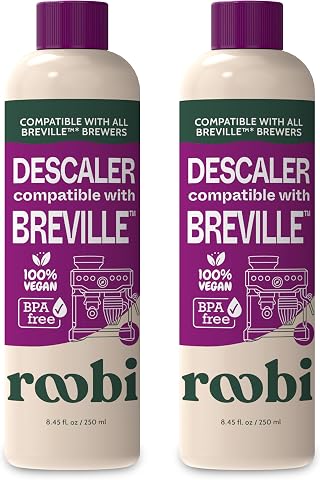
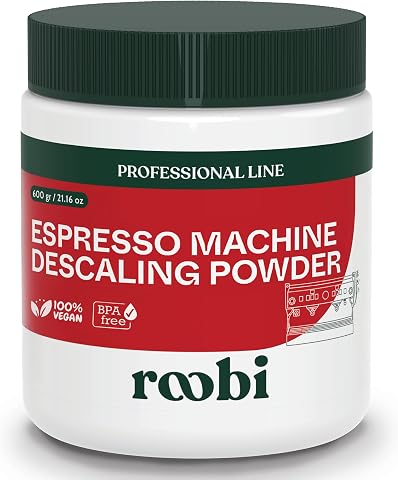
Every automatic machine requires descaling, but the frequency and complexity vary. Machines with integrated water filters (like Philips and De’Longhi) can extend the time between descales to 3-4 months, depending on water hardness. Models without filter compatibility may require descaling every 6-8 weeks. Check if the descaling process requires buying proprietary tablets or if it accepts generic citric acid solutions. Proprietary tablets lock you into a specific brand’s ecosystem and increase the long-term cost of ownership, whereas open systems offer more flexibility.
Interface Complexity and Customization
Do you want to adjust coffee strength, volume, and temperature for every drink, or do you prefer preset buttons? Touchscreen interfaces allow for granular user profiles, which is ideal for households with varying preferences. However, complex menus can be frustrating to navigate while half-awake. Physical button interfaces are often more durable and intuitive for single-user households. If you plan to use pre-ground coffee occasionally, ensure the machine has a dedicated bypass chute; some premium models omit this feature entirely to maintain a streamlined design.
Frequently Asked Questions
Is a bean-to-cup machine better than buying a separate grinder and espresso maker?
A bean-to-cup machine is generally better for convenience and speed, but a separate setup offers superior control and easier maintenance. With a separate grinder and portafilter machine, you can clean each component individually and adjust grind size with professional precision. However, this setup requires more counter space, a steeper learning curve, and more time per drink. For most home users who want a consistent latte in under two minutes, the integrated workflow of a bean-to-cup machine is the more practical choice, despite the higher upfront cost and limited customization.How often do I really need to descale my automatic coffee machine?
Descaling frequency depends entirely on your local water hardness and whether you use a water filter. With a high-quality water filter and soft tap water, you might only need to descale every 3 to 4 months. Without a filter in hard water areas, scale buildup can occur within 6 weeks, leading to clogged valves and bitter-tasting coffee. Most modern machines have smart sensors that prompt you, but ignoring these alerts can permanently damage the heating element. Always follow the manufacturer’s specific descaling solution instructions to avoid voiding the warranty.Can I use pre-ground coffee in all bean-to-cup machines?
No, not all bean-to-cup machines have a bypass chute for pre-ground coffee. Many premium compact models, such as certain Jura or Philips series, omit this feature to keep the internal mechanism sealed and simple. If you occasionally want to use decaf, flavored blends, or old beans without grinding them, you must verify the product specs for a pre-ground bypass. Using the main hopper for pre-ground coffee will jam the grinder and cause significant damage to the internal gears.Why is my milk froth too thin or too thick on an automatic machine?
Thin froth usually results from milk that is too warm or not cold enough when it enters the system. Automatic machines rely on fresh, cold milk (ideally 4°C) to create texture; if the milk is room temperature, it will not aerate correctly. Conversely, overly thick, bubble-like froth often indicates that the milk nozzle is positioned too high above the surface of the liquid in the container. Check your machine’s manual for specific nozzle positioning guides, and ensure you are using whole milk or a barista-style plant milk with sufficient protein content for stability.Do expensive bean-to-cup machines actually taste better than cheaper ones?
Expensive machines do not necessarily produce better-tasting espresso; they produce it with less effort and more consistency. A $200 manual espresso machine with a good grinder can match the cup quality of a $2,000 automatic machine if used by a skilled operator. The premium price tag on automatic machines pays for automation, build durability, and advanced milk texturing. If you are willing to learn the craft, a manual setup offers better value. If you value time and repeatability, the premium automatic machines are worth the investment for their reliability and convenience.Conclusion
The best bean-to-cup coffee machine for you depends on how much friction you are willing to tolerate in your morning routine. For the best overall balance of convenience, taste, and easy cleaning, the Philips 2300 Series with LatteGo is the clear winner, particularly for households that enjoy milk-based drinks. If you have limited counter space but refuse to compromise on build quality, the Jura ENA 4 is the ideal compact premium choice. For those who want the best value and don’t mind manual milk steaming, the De’Longhi Dinamica offers robust performance at a more accessible price point. Finally, if you are a beginner or someone who enjoys the ritual of brewing, the Ninja Luxe Café provides a unique hybrid experience that grows with your skills. Evaluate your counter space, water hardness, and milk consumption habits to make the final decision.
Black Friday Picks

Vitamix 5200 Blender with 64 oz. Container, Black
As an affiliate, we earn on qualifying purchases.