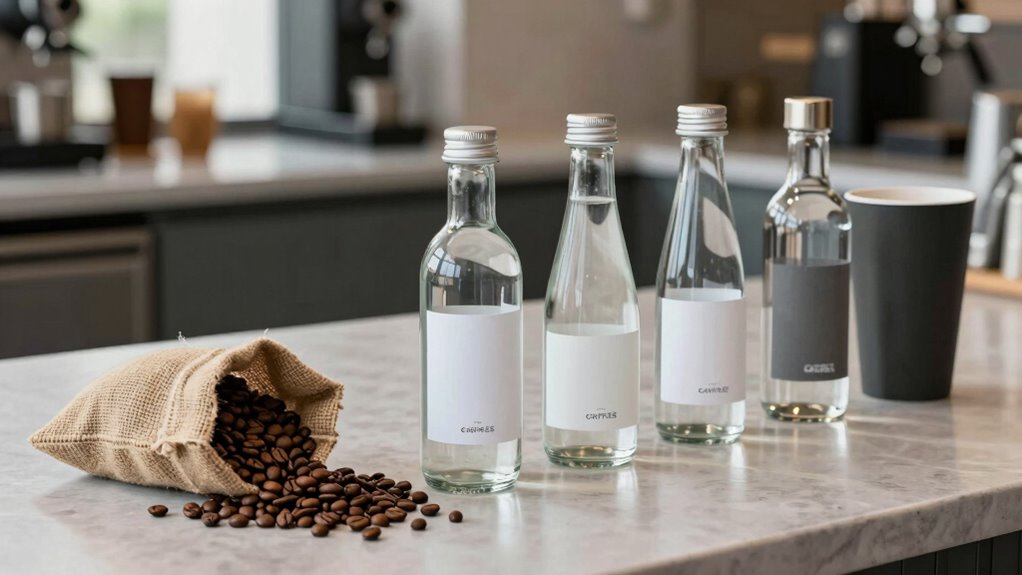

For coffee, the best bottled water alternative is a consistent, neutral-tasting option that suits your brewer and does not overpower the beans. Pure Life Purified Water is my best overall pick for its straightforward purified-water profile and widely available bottle formats, while Saratoga Still Spring Water stands out for buyers who want spring water in a smaller pack, and Boxed Water offers a carton format for those avoiding conventional plastic bottles. The main tradeoffs are consistency versus mineral character, bottle size and storage, and packaging preference. Water mineral content can affect extraction and taste, so a label saying “spring” or “alkaline” alone does not tell you exactly how it will brew. Read on for the full breakdown and picks by buyer type.

Get coffee and tea gear delivered free with Prime
- Fast, free delivery on millions of items
- Prime Video, Amazon Music and more included
- Member-only deals all year
Complete the kit


Key Takeaways
- Pure Life Purified Water is the most practical starting point in this lineup: it appears in both 15-pack and 24-pack formats, giving buyers a choice between larger bottles and smaller servings.
- Saratoga Still Spring Water and Icelandic Glacial offer spring-water options, while the alkaline-labeled Alaska Glacier and Eternal Water make a more specific mineral-style choice; the labels alone do not establish which will taste best in a particular coffee.
- Boxed Water is the packaging outlier, with both 16.9-ounce and 11.2-ounce cartons; its smaller format suits portioning, while cartons may take different storage space than bottles.
- Spirit Water is the only aluminum-bottle option here, making it the clearest fit for shoppers who want to avoid single-use plastic bottle packaging.
- None of these product names or package details provide a full mineral analysis, so buyers seeking repeatable brew results should check the water’s mineral information or compare a small amount before stocking up.
| Saratoga Still Spring Water, 16 fl oz Bottles, 6-Pack |  | Best for a Light-Tasting Cup | Water type: Still spring water | Bottle size: 16 fl oz | Pack quantity: 6 bottles | VIEW ON AMAZON | See Our Full Breakdown |
| Pure Life Purified Water, 15 Pack, 16.9 fl oz Bottles |  | Best for Everyday Convenience | Water type: Purified water | Enhancement: Minerals added | Bottle size: 16.9 fl oz (500 mL) | VIEW ON AMAZON | See Our Full Breakdown |
| Alaska Glacier Water, Naturally Alkaline, 16 fl oz Bottles, Pack of 12 |  | Best Aluminum Bottle Option | Water type: Naturally alkaline drinking water | Source: Eklutna Glacier and Lake, Alaska | Carbonation: Non-carbonated | VIEW ON AMAZON | See Our Full Breakdown |
| Eternal Water Naturally Alkaline Mineral Spring Water, 1.0 L Bottles, 12 Count |  | Best for Mineral and pH Details | Product type: Naturally alkaline mineral spring water | Quantity: 12 bottles | Bottle size: 1.0 L (33.8 oz) | VIEW ON AMAZON | See Our Full Breakdown |
| Boxed Water Purified Water, Plant-Based Cartons, 16.9 fl oz, 12-Pack |  | Best Carton-Packed Pick | Water type: Purified drinking water | Added minerals: None | Volume per carton: 16.9 fl oz | VIEW ON AMAZON | See Our Full Breakdown |
| Pure Life Purified Water, 8 fl oz Bottles, 24-Pack |  | Best for Single-Cup Brewing | Brand: Pure Life | Product type: Purified bottled water | Bottle size: 8 fl oz | VIEW ON AMAZON | See Our Full Breakdown |
| Icelandic Glacial Natural Spring Water, 16.9 fl oz, Pack of 6 |  | Best Spring-Water Pick | Type: Natural spring water | Volume per bottle: 16.9 fl oz | Pack size: 6 bottles | VIEW ON AMAZON | See Our Full Breakdown |
| Spirit Water Microplastic-Free Spring Water, 16 oz Aluminum Bottles, 12 Pack |  | Best Aluminum-Packaged Pick | Product type: Spring water | Bottle size: 16 oz | Pack quantity: 12 bottles | VIEW ON AMAZON | See Our Full Breakdown |
| Boxed Water Purified Water, Plant-Based Cartons, 11.2 oz, 24-Pack |  | Best for No Added Minerals | Product type: Purified drinking water | Volume per carton: 11.2 oz | Pack size: 24 cartons | VIEW ON AMAZON | See Our Full Breakdown |
| bottled water alternatives for coffee | Bottle size |
|---|---|
| Saratoga Still Spring Water | 16 fl oz |
| Pure Life Purified Water | 16.9 fl oz (500 mL) |
| Alaska Glacier Water | 16 fl oz (473 mL) |
| Eternal Water Naturally Alkali | 1.0 L (33.8 oz) |
| Boxed Water Purified Water | — |
| Pure Life Purified Water | 8 fl oz |
| Icelandic Glacial Natural Spri | — |
| Spirit Water Microplastic-Free | 16 oz |
| Boxed Water Purified Water | — |
More Details on Our Top Picks
Saratoga Still Spring Water, 16 fl oz Bottles, 6-Pack
Saratoga’s light, slightly sweet taste makes it the easiest fit here for coffee drinkers who want bottled spring water without an assertive mineral profile. That can suit a delicate brew where a stronger-tasting water might distract from the coffee. Compared with Eternal Water, which has a stated alkaline range and naturally occurring minerals, Saratoga offers less information about its mineral content, so it is harder to predict how it will affect extraction from cup to cup. Its six 16 fl oz recycled-plastic bottles are convenient for carrying, but the small pack means more frequent repurchasing than the 12-bottle options. The bottles’ recycling depends on local facilities, and the cap and label are excluded from the recyclability claim. I’d choose it for portability and a gentle taste, not for precise control of brewing water.
Pros:- Light, slightly sweet taste may suit coffee drinkers who prefer water without a pronounced flavor
- 16 fl oz bottles are easy to carry for travel or a small coffee setup
- Bottles are made from recycled plastic
- Still spring water offers a simple alternative to water with added minerals
Cons:- Mineral content is not specified, making brewing results harder to predict
- Six-bottle pack provides less supply than the 12- and 15-bottle options
- Recycling availability varies, and the cap and label are excluded from the recyclability claim
Best for: Coffee drinkers who want portable still spring water with a light taste for occasional brewing away from home
Not ideal for: Home brewers seeking a repeatable mineral profile, since no specific mineral composition is provided
- Water type:Still spring water
- Bottle size:16 fl oz
- Pack quantity:6 bottles
- Bottle material:100% recycled and recyclable plastic
- Bottle color:Cobalt blue
- Recycling note:Availability varies by area; cap and label excluded
Our verdict“Choose Saratoga for portable, lightly flavored spring water, but pick a water with stated mineral details if repeatable coffee brewing is your priority.”
Pure Life Purified Water, 15 Pack, 16.9 fl oz Bottles
Pure Life’s added minerals give this purified water a crisp taste, while its 15 bottles make it a practical stash for work, travel, or an everyday coffee routine. For brewing, though, “enhanced with minerals” does not specify the mineral amounts, so I can’t treat it as a precise recipe for dialing in extraction. That leaves it less predictable than Eternal Water, which at least lists a natural pH range and describes its mineral content, though its source-region variation also matters. Each 16.9 fl oz bottle is a convenient single-use size, but the packaging is still plastic and recycling depends on local acceptance; the cap and label are excluded. I’d rank Pure Life for easy availability and portable portions, rather than for coffee makers who want detailed water chemistry.
Pros:- Added minerals create a crisp, refreshing taste
- 15-bottle pack offers more individual portions than Saratoga’s six-pack
- 16.9 fl oz size works for travel, work, or lunch bags
- Purified water provides an alternative to naturally sourced spring water
Cons:- Mineral types and amounts are not specified for controlled coffee brewing
- Plastic bottle recycling depends on local facilities
- Caps and labels are excluded from the recyclability claim
Best for: Commuters and office coffee drinkers who want a larger supply of portable purified water with a crisp taste
Not ideal for: Coffee enthusiasts who need disclosed mineral levels to reproduce a specific brew profile
- Water type:Purified water
- Enhancement:Minerals added
- Bottle size:16.9 fl oz (500 mL)
- Pack size:15 bottles
- Recyclability:Bottles recyclable where accepted
- Recycling exclusions:Caps and labels
Our verdict“Pick Pure Life for a convenient supply of crisp-tasting bottled water, but look elsewhere if you want detailed mineral data for brewing.”
Alaska Glacier Water, Naturally Alkaline, 16 fl oz Bottles, Pack of 12
Aluminum packaging gives Alaska Glacier Water a distinct role among this lineup, especially for buyers who prefer a rigid container to the plastic used for Pure Life or Saratoga. Its non-carbonated water comes from Alaska’s Eklutna Glacier and Lake, and the sport cap is aimed at on-the-go drinking. For coffee, the limitation is the vague chemistry: it is described as naturally alkaline, but no exact pH or mineral profile is supplied. That makes it a weaker choice for repeatable brewing than Eternal Water, whose pH range is stated, although Eternal’s mineral character can vary by source region. The 12-pack supplies more bottles than Saratoga’s six-pack, but the sport-cap format and glacier sourcing don’t answer the key brewing question of how the water’s minerals will interact with coffee.
Pros:- Aluminum bottles can be recycled or repurposed
- Sport caps are designed for on-the-go use
- 12-bottle pack provides a larger supply than Saratoga’s six-pack
- Water is sourced from Eklutna Glacier and Lake in Alaska
Cons:- Exact pH and mineral content are not specified for brewing consistency
- Non-carbonated format may not suit buyers seeking sparkling water
- The sport-cap packaging is oriented toward drinking convenience rather than measured coffee preparation
Best for: Travelers and coffee drinkers who prioritize aluminum bottles and want water for drinking alongside coffee
Not ideal for: Brewers who tune recipes around known pH and mineral levels, since the exact pH and mineral profile are not given
- Water type:Naturally alkaline drinking water
- Source:Eklutna Glacier and Lake, Alaska
- Carbonation:Non-carbonated
- Bottle size:16 fl oz (473 mL)
- Quantity:12 bottles
- Packaging:Aluminum bottles
- Cap:Sport cap
- pH:Described as naturally high; exact value not specified
Our verdict“Choose Alaska Glacier Water for its aluminum bottle format and portability, while coffee brewers seeking predictable results should favor water with clearer mineral specifications.”
Eternal Water Naturally Alkaline Mineral Spring Water, 1.0 L Bottles, 12 Count
Eternal Water provides the clearest brewing-relevant detail in this group: its natural pH is listed as 7.8–8.2, and its spring water gains minerals and electrolytes through natural filtration. That gives coffee drinkers more context than Alaska Glacier Water, whose pH is described only as high, though neither listing supplies a full mineral analysis. The larger 1.0 L bottles suit a home brewing station better than Saratoga’s portable 16 fl oz bottles, but they are less convenient to carry. Eternal also draws from aquifers in several regions, and its mineral content and flavor may vary by source. I’d choose it when the stated pH range is useful context and bottle volume matters; I’d skip it if a consistent, fully specified water profile is essential to dialing in coffee.
Pros:- Natural pH range of 7.8–8.2 is disclosed
- Naturally contains minerals and electrolytes through filtration
- 1.0 L bottles offer more volume per container than the 16.9 fl oz options
- BPA-free bottle is shaped for gripping and can lie flat
Cons:- Mineral content and flavor can vary by source region
- No detailed mineral concentrations are provided
- Larger bottles are less portable than the single-serving options
Best for: Home coffee brewers who want larger bottles and a stated natural pH range as a starting point for choosing water
Not ideal for: Brewers who require consistent mineral levels between bottles or a full mineral analysis for precise recipe control
- Product type:Naturally alkaline mineral spring water
- Quantity:12 bottles
- Bottle size:1.0 L (33.8 oz)
- Source:Aquifers in the Smoky Mountains, Shasta Trinity Alps, and Allegheny Mountains, USA
- Natural pH:7.8–8.2
- Minerals and electrolytes:Naturally present through filtration; none added or removed
- Bottle material:BPA-free
Our verdict“Eternal suits home brewers who value a stated pH range and larger bottles, provided they can accept source-related variation in mineral character.”
Boxed Water Purified Water, Plant-Based Cartons, 16.9 fl oz, 12-Pack
Boxed Water stands out for its carton packaging, made from 95% renewable materials, which gives it a different footprint and feel from the plastic bottles used for Pure Life and Saratoga. Its purified water has no added minerals, so the taste profile avoids deliberate mineral enhancement, but the listing does not provide water chemistry that would make it a controlled brewing choice. Compared with Eternal Water, Boxed Water has no stated natural pH range or mineral content, trading that brewing context for a portable carton format. The BPA-free cartons are designed to be recyclable and refillable, though carton durability may be lower than a rigid bottle. I’d choose this for buyers who value renewable-material packaging for work or travel; coffee brewers focused on repeatability will need more detailed water specifications.
Pros:- Carton is made from 95% renewable materials
- BPA-free packaging uses a plant-based bioplastic cap
- Cartons are designed to be recyclable and refillable
- 12-pack offers more individual containers than Saratoga’s six-pack
Cons:- Carton may be less durable than a rigid bottle
- No added minerals and no detailed mineral profile are specified
- Recyclability depends on the available facilities and local acceptance
Best for: Work and travel coffee drinkers who prefer portable packaging made mostly from renewable materials
Not ideal for: Coffee brewers who need a rigid container or disclosed mineral and pH details to tune brewing
- Water type:Purified drinking water
- Added minerals:None
- Volume per carton:16.9 fl oz
- Pack size:12 cartons
- Renewable materials:95%
- Packaging:Paper carton with plant-based bioplastic cap
- BPA-free:Yes
- Recyclable and refillable:Designed to be recyclable and refillable
Our verdict“Choose Boxed Water for renewable-material carton packaging and portable purified water, but look to a more fully specified water if brewing consistency comes first.”
Pure Life Purified Water, 8 fl oz Bottles, 24-Pack
The small bottle size makes this pack a practical fit for coffee drinkers who want a measured amount of water for a single cup or a small brewer. Compared with the Pure Life 15-Pack of 16.9-ounce bottles, these are easier to portion for one brew, though you will open more containers to make a full pot. The water is purified and enhanced with minerals, so its composition may not suit buyers seeking the no-added-mineral profile of Boxed Water. The pack’s 24 bottles offer ready-to-use portions for travel or occasional brewing, but create more packaging to store and dispose of. Recycling is limited to the bottles, excluding caps and labels, and depends on local availability.
Pros:- 8-ounce bottles provide a small, convenient portion for one cup
- Added minerals give the purified water a crisp taste
- Compact bottles fit lunchboxes and backpacks
- Bottles can be recycled where local programs accept them
Cons:- Small portions mean opening several bottles for a full pot
- Caps and labels are excluded from the stated recyclability
- Recycling availability varies by area
Best for: Single-cup coffee drinkers who want small, pre-portioned bottles for occasional brewing or travel
Not ideal for: Daily full-pot brewers who want fewer containers to open and store
- Brand:Pure Life
- Product type:Purified bottled water
- Bottle size:8 fl oz
- Pack quantity:24 bottles
- Added minerals:Yes
- Recyclability:Bottles, excluding cap and label; availability varies by area
Our verdict“Choose this pack for occasional single-cup brewing when small portions matter more than minimizing containers.”
Icelandic Glacial Natural Spring Water, 16.9 fl oz, Pack of 6
Natural spring sourcing sets this option apart from purified choices such as the Pure Life 15-Pack. Icelandic Glacial comes from Ölfus Spring and is naturally alkaline with a stated pH of 8.4; those details may appeal to buyers who prefer spring water’s source profile for coffee. They do not, on their own, establish how the water will affect extraction or flavor, so coffee drinkers focused on repeatable brewing may prefer a water with more specific mineral composition data. The 16.9-ounce bottles are larger than the 8-ounce Pure Life bottles, which means fewer are needed for a brew, but a six-bottle pack offers less stock for frequent use. Its BPA-free rPET packaging is recyclable.
Pros:- Sourced from Ölfus Spring in Iceland
- Naturally alkaline water with a stated pH of 8.4
- BPA-free rPET bottles
- Packaging is described as recyclable
Cons:- Six-bottle pack may run short for frequent brewing
- pH alone does not specify the mineral profile relevant to brewing
- The still-water pack does not include sparkling varieties
Best for: Coffee drinkers who prefer naturally alkaline spring water and want a small pack of full-size bottles
Not ideal for: Brewers seeking detailed mineral composition data or a larger supply for regular use
- Type:Natural spring water
- Volume per bottle:16.9 fl oz
- Pack size:6 bottles
- pH:8.4
- Source:Ölfus Spring, Iceland
- Bottle material:rPET
- BPA-free:Yes
- Packaging:Recyclable
Our verdict“Pick Icelandic Glacial if spring sourcing and a stated alkaline pH matter more to you than detailed brewing-water composition.”
Spirit Water Microplastic-Free Spring Water, 16 oz Aluminum Bottles, 12 Pack
Aluminum packaging is the defining reason to choose Spirit Water over plastic-bottled options such as Icelandic Glacial, which uses rPET. The water is described as spring water naturally filtered through granite, and the bottles are presented as reusable and 100% recyclable. For coffee, the 16-ounce format gives a manageable amount for a small brew, while the 12-bottle pack can support more regular use than Icelandic Glacial’s six-pack. The available product details do not specify mineral content or pH, however, so buyers cannot compare its brewing-water profile closely with options that provide a pH figure. A dozen individual containers also take storage space and still require handling one bottle at a time.
Pros:- Aluminum packaging avoids plastic bottles
- Bottles are described as reusable and 100% recyclable
- Spring water is naturally filtered through granite deposits
- 12-bottle pack offers more supply than Icelandic Glacial’s six-pack
Cons:- No pH or mineral composition is provided in the product details
- Individual bottles require storage and handling
- 16-ounce portions may require multiple bottles for larger brews
Best for: Coffee drinkers who prioritize aluminum packaging and want individual 16-ounce portions
Not ideal for: Brewers who need a stated pH or mineral profile to guide repeatable coffee recipes
- Product type:Spring water
- Bottle size:16 oz
- Pack quantity:12 bottles
- Packaging material:Aluminum
- Filtration:Natural granite filtration
- Recyclability:Described as 100% recyclable
- Reuse:Bottles described as reusable
Our verdict“Choose Spirit Water if aluminum packaging is your priority and you do not need published brewing-water chemistry.”
Boxed Water Purified Water, Plant-Based Cartons, 11.2 oz, 24-Pack
No added minerals makes this purified water a different choice from mineral-enhanced Pure Life, though the available details do not give a full mineral analysis for either. For coffee drinkers comparing packaging, these 11.2-ounce cartons offer a portable alternative to Spirit Water’s aluminum bottles and are made from 95% renewable materials, including forest-sourced paper and a plant-based cap. The 24-carton pack provides more individual portions than the 12-pack of 16.9-ounce Boxed Water, but each carton holds less water, so a larger brew may take more than one. Cartons are designed to be recyclable and refillable, though the product details do not specify local recycling access. The carton may also be less durable than a rigid bottle.
Pros:- Purified water has no added minerals
- Carton is made from 95% renewable materials
- Plant-based bioplastic cap
- BPA-free cartons are designed to be recyclable and refillable
Cons:- Cartons may be less durable than rigid bottles
- 11.2-ounce portions may be small for larger brews
- The water has no added minerals, which may not match buyers seeking a mineral-enhanced profile
Best for: Coffee drinkers who want purified water without added minerals in portable, renewable-material packaging
Not ideal for: People who need rigid, durable containers or larger individual portions for brewing
- Product type:Purified drinking water
- Volume per carton:11.2 oz
- Pack size:24 cartons
- Packaging:Carton made from 95% renewable materials
- Cap:Plant-based bioplastic
- BPA-free:Yes
- Recyclable:Designed to be recyclable
- Refillable:Designed to be refillable
Our verdict“Choose this Boxed Water pack for portable purified water without added minerals and cartons made largely from renewable materials.”
How We Picked
I ranked these options around their usefulness for brewing coffee: how clearly the water type is described, how easy the package is to use and store, and whether the format gives buyers a practical way to find a repeatable routine. Purified water leads as a neutral starting point for people who want to avoid a pronounced spring or alkaline character. Spring and alkaline-labeled waters follow for buyers who prefer those profiles, though the product names do not provide enough mineral detail to predict extraction precisely. Packaging earns a separate place in the ranking: cartons and aluminum can suit buyers reducing conventional plastic bottle use, while bottle size and count affect portioning and storage.
I treated pack size and container material as practical differences rather than evidence of better-tasting coffee. No listed product includes a complete mineral breakdown here, so I did not rank a water as superior for extraction based on “alkaline,” “glacial,” or “spring” labeling alone. The top picks reflect a balance of clear everyday use and useful format choices; more specialized picks rank lower when their main advantage depends on a buyer preference rather than a demonstrated brewing benefit.
Factors to Consider When Choosing Bottled Water Alternatives For Coffee
Choosing water for coffee is partly a taste decision and partly a consistency decision. I would start by matching the water to your brewer, storage habits, and willingness to compare mineral information, then buy a format that makes repeat use easy.
Start With the Water’s Mineral Information
Water minerals influence how coffee compounds dissolve, so two clear waters can produce different cups. Product labels such as purified, spring, and alkaline describe broad categories, but they do not necessarily show the mineral concentrations that matter for brewing. If a manufacturer publishes a mineral analysis, check it before assuming an alkaline label means the water will suit your beans. Buyers who cannot find those details can compare a small quantity with their usual water and keep the rest of the recipe fixed. This approach helps distinguish a water change from changes in grind, dose, or brew temperature. Avoid buying a large case solely on a broad label claim.
Choose a Repeatable Baseline Before Chasing Flavor
If your coffee tastes inconsistent from week to week, start with a water option that is easy to source in the same format. A steady baseline makes it easier to tell whether a change in beans or brewing technique is responsible for a different cup. Switching between spring, purified, and mineral-style waters can alter taste enough to muddy that comparison. Once you have a baseline you like, change one water variable at a time. This is especially useful for pour-over and espresso, where small changes may be more noticeable. Buyers who prefer variety may accept that tradeoff, but should keep notes if they want to reproduce a favorite cup.
Match the Container to Your Brewing Routine
Package size affects freshness, storage, and how much water is left after brewing. Smaller bottles or cartons can help with portioning and fit more easily into a work bag, though they create more individual containers to handle. Larger bottles reduce the number of containers needed for frequent coffee making but take more room in a refrigerator or pantry. Think about whether you brew one cup at a time, make a full carafe, or prepare water for several days. For espresso, where water use may be modest but frequent, a manageable bottle can be more convenient than a bulky pack. Choose a format you can store cleanly and use without leaving opened containers around for long periods.
Treat Packaging as a Separate Buying Decision
Plastic bottles, cartons, and aluminum bottles have different handling and disposal characteristics, but container material does not predict how the coffee will taste. Buyers focused on reducing conventional plastic bottle use may prefer cartons or aluminum, while others may prioritize familiar bottle shapes and easy pouring. Check local recycling guidance because acceptance varies by location and packaging components. Also consider whether the container can be resealed securely after opening. A package that fits your storage and disposal habits is more likely to work as a regular coffee supply. Make that choice separately from your water’s mineral profile.
Test Water With Your Own Beans and Brewer
A water that suits one coffee may not flatter another, since roast level, processing, and brewing method all affect the cup. Compare options using the same beans, grind, dose, and brew method so the water is the main variable. Begin with a single serving or small purchase where possible, then look for changes in bitterness, acidity, aroma, and body. Dark roasts may make differences less obvious than delicate light roasts, while espresso can reveal changes in balance and texture. Do not assume that a more mineral-tasting water will produce a richer cup. Your preferred result matters more than a category label.
Frequently Asked Questions
Is purified water or spring water a safer starting point for coffee?
Purified water is often the simpler starting point when you want a neutral taste, while spring water can bring a more distinct mineral character. Neither label alone guarantees a particular brewing result because mineral content varies by source and treatment. Check published water analysis when available, especially if you are dialing in espresso or trying to reproduce a specific cup. If those details are missing, compare a small amount against your current water using the same recipe. Pick the result you prefer and can buy consistently.
Can alkaline water make coffee taste better?
“Alkaline” does not by itself tell you whether a water will improve your coffee. The mineral composition and your brewing recipe matter, and two alkaline-labeled products may behave differently. A water that tastes smooth on its own could still make a particular coffee seem muted or unbalanced. Try a small quantity with the beans you drink most often before committing to a larger pack. Compare it with a neutral baseline and keep your grind and brew ratio unchanged.
Should I buy a large pack before I know which water I like?
I would avoid stocking up before you have compared the water with your usual coffee. A large pack can be convenient once you know the taste works for your beans and the container fits your storage space. First test a small amount, paying attention to whether the cup tastes brighter, flatter, or more bitter. Keep the brewing method constant so the comparison is useful. Then choose the pack size that matches how quickly you use it and how much room you have.
Does bottled water remove the need to maintain my coffee machine?
No. Bottled water does not remove the need to clean your brewer, and some water can still leave mineral deposits over time. Check the machine maker’s guidance for suitable water and descaling intervals. If you use a spring or mineral-style option, pay particular attention to maintenance instructions because its mineral content may differ from purified water. Water choice can affect scale buildup as well as taste. Regular cleaning remains part of keeping coffee and equipment consistent.
Which package format makes the most sense for daily coffee?
The best format depends on how much you brew and where you store water. Larger bottles can be convenient for multiple cups, while smaller bottles or cartons are easier to portion for occasional brewing or travel. Cartons and aluminum bottles offer alternatives to conventional plastic bottle packaging, but check resealing and local recycling options. Consider the total amount you will use before the containers need to be stored or handled. For daily coffee, convenience and a consistent supply often matter as much as the container material.
Conclusion
Best overall: I’d start with Pure Life Purified Water for its straightforward everyday role and choice of pack formats. Best value in convenience: the 15-pack Pure Life format suits regular brewing, while the 24-pack of 8-ounce bottles is better for small portions and limited storage. Best premium-style spring pick: Icelandic Glacial is the choice for buyers drawn to natural spring water, though I would check mineral details before expecting a particular brew result. Best for beginners: Pure Life offers a simple baseline for comparing coffee waters. For specific needs, choose Boxed Water for cartons or Spirit Water for aluminum bottles; select Saratoga, Alaska Glacier, or Eternal when their spring or alkaline-labeled profile matches your preference. The right choice is the one that tastes good with your beans, fits your routine, and is easy to buy consistently.