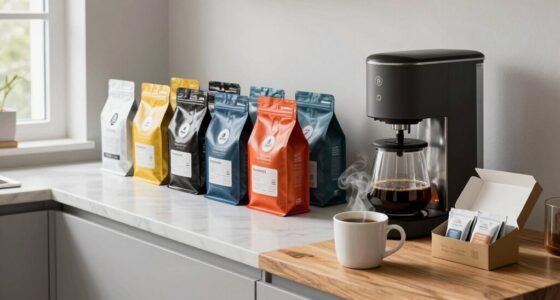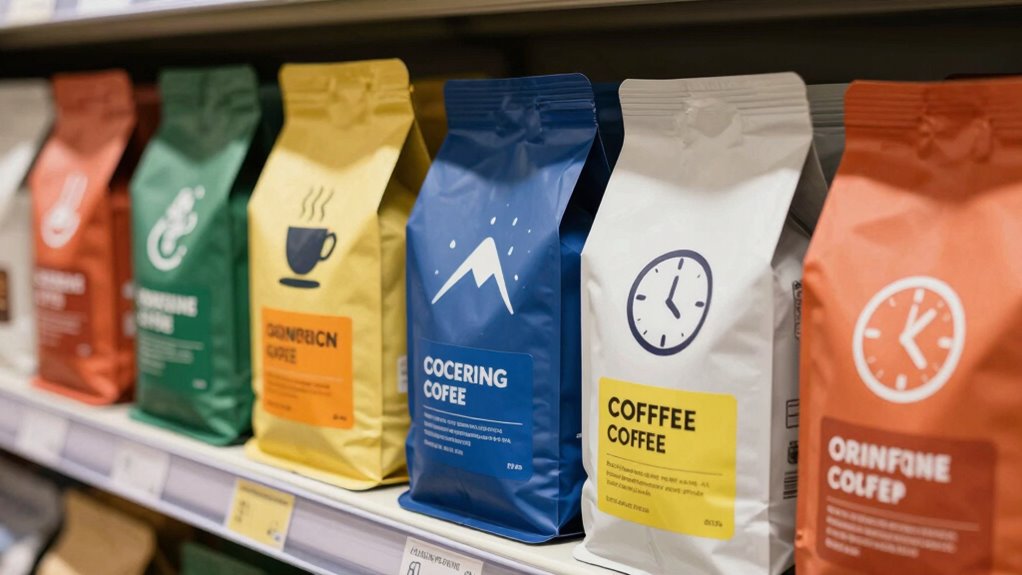

Grocery store coffee labels can seem confusing, but they’re designed to tell you about flavor, quality, and values. Terms like “Single Origin” mean coffee from one place, while “Blend” combines different regions. Certifications like “Fair Trade” or “Organic” show how beans are grown responsibly. Roast levels indicate flavor intensity—from light for brighter taste to dark for boldness. Knowing what these labels mean helps you choose the best coffee for your preferences—there’s plenty more to discover if you want to get the most out of your brew.
Key Takeaways
- Look for labels like “Single Origin” for unique regional flavors or “Blend” for mixed beans.
- Certifications such as “Fair Trade” and “Organic” indicate ethical sourcing and environmentally friendly practices.
- Roast levels (Light, Medium, Dark) affect flavor, with light preserving original bean characteristics.
- Labels like “Craft” or “Small Batch” suggest artisanal roasting and higher quality control.
- Check for freshness indicators such as roast date or valve-sealed packaging for optimal flavor.

Amazon Fresh, Organic Fair Trade Peru Whole Bean Coffee, Medium Roast, 12 Oz
- Fragrant Medium Roast Coffee: Smooth finish and rich aroma
- 12-Ounce Whole Bean Bag: Freshly roasted coffee beans
- 100% Arabica Coffee: Grown in Peru for quality
As an affiliate, we earn on qualifying purchases.
As an affiliate, we earn on qualifying purchases.
What Do Coffee Labels Like “Single Origin” and “Blend” Actually Mean?

Have you ever wondered what labels like “Single Origin” and “Blend” really mean on your coffee? These labels influence your coffee brewing choices and how you store your beans. “Single Origin” indicates the coffee comes from one specific region or farm, often offering unique flavors tied to that area. “Blend” combines beans from different regions or farms, creating a balanced taste. When you buy coffee labeled “Single Origin,” it’s best to store it in an airtight container away from light and heat to preserve its freshness and flavor. For “Blends,” proper coffee storage keeps the diverse flavors intact. Understanding coffee labels helps you choose the right coffee and maintain its quality from the moment you buy it to when you brew. Additionally, knowing about flavor profiles can enhance your appreciation for the subtle differences between single origin and blended coffees. Proper storage techniques are especially important for freshness preservation, ensuring your coffee remains flavorful for as long as possible.
What Do Fair Trade and Ethical Coffee Labels Mean?
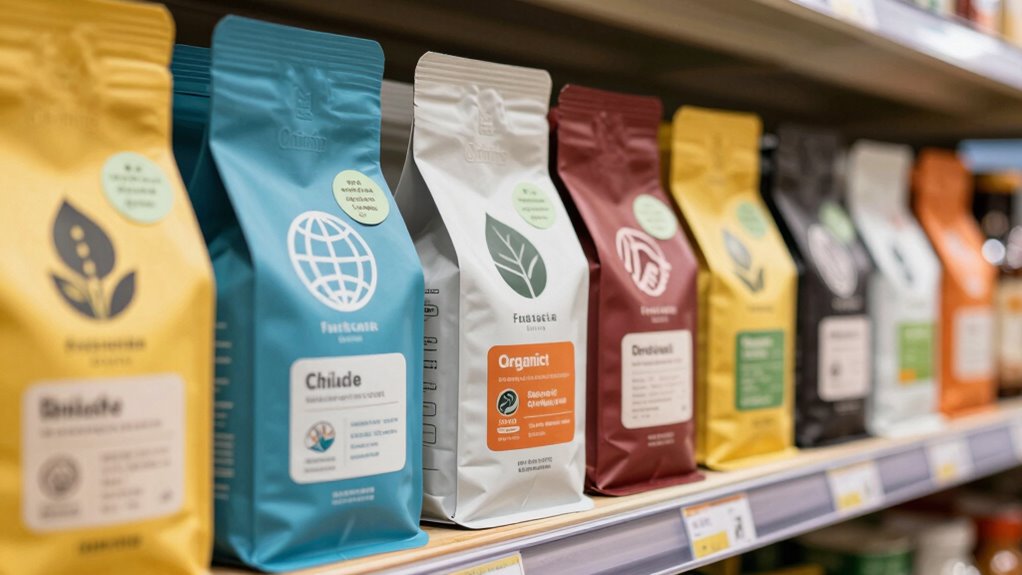
When choosing coffee, understanding labels like “Fair Trade” and “Ethical” can help you make more informed decisions about where your money goes. Fair trade certifications guarantee that farmers receive fair prices and work under safe conditions, supporting sustainable communities. Ethical sourcing practices focus on minimizing environmental impact and promoting social responsibility throughout the supply chain. When a coffee label indicates it’s Fair Trade or Ethical, it means the company prioritizes fairness, transparency, and sustainability. These labels aim to improve farmers’ livelihoods and reduce exploitation. By choosing coffee with these certifications, you support more equitable and environmentally friendly practices. It’s a way to enjoy your coffee while promoting social justice and sustainability worldwide.
How Do You Decode Coffee Roast Levels: Light, Medium, Dark?
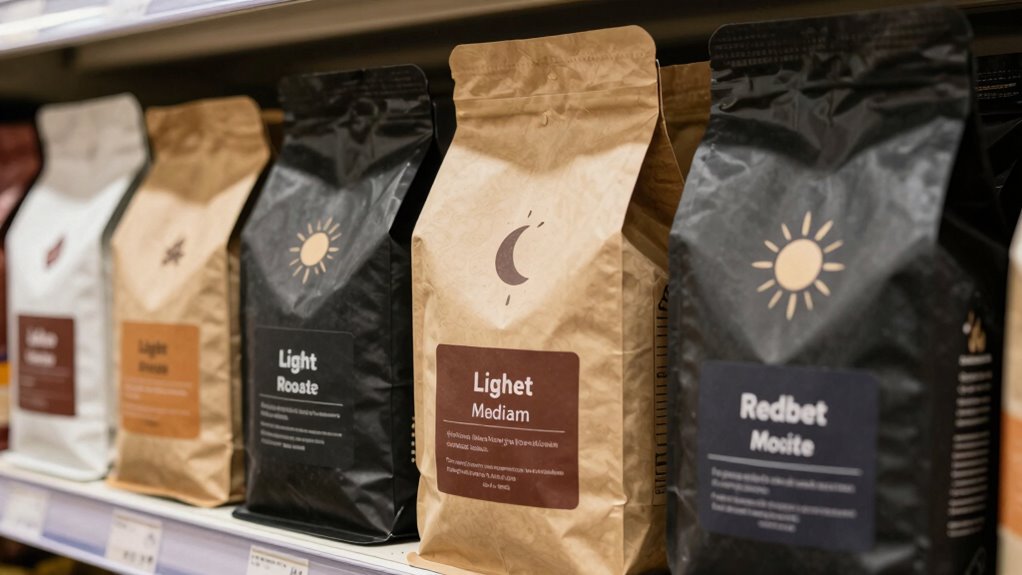
Decoding coffee roast levels can seem confusing at first, but understanding the differences helps you choose the flavor profile you prefer. Light roasts retain more of the bean’s original flavor and are best for brewing methods that highlight delicate notes, like pour-over or drip coffee. Medium roasts offer a balanced flavor, suitable for most brewing methods, and store well if kept in an airtight container. Dark roasts have a bold, smoky taste, ideal for espresso or French press. Proper coffee storage preserves freshness and flavor, especially for lighter roasts. Additionally, the contrast ratio of a home theatre projector can significantly impact the vibrancy and depth of your coffee-related viewing experience, highlighting how image quality factors into overall enjoyment. The same principle applies to roast level differentiation, where subtle distinctions can greatly influence your drinking experience. Understanding these flavor profiles can help you select the perfect roast for your taste preferences. Moreover, many consumers consider astrological signs when choosing their favorite coffee blends, believing that certain signs may be associated with specific flavor preferences. Recognizing the capacity of your coffee beans or grounds can also impact your brewing results and overall satisfaction.
What Is Specialty Coffee and Why Is It Important?
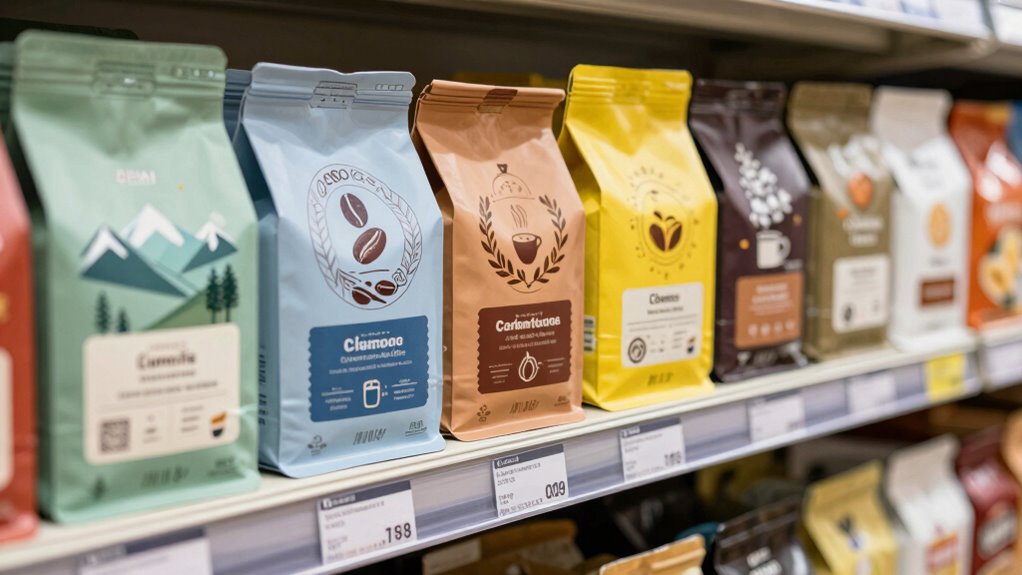
Specialty coffee is high-quality beans that meet strict standards for flavor and defect levels, making each cup more enjoyable. Choosing specialty can considerably boost the overall taste and aroma, elevating your coffee experience. By selecting these beans, you support better farming practices and get a more consistent, satisfying brew. Additionally, understanding secure financial planning can help you make informed choices about how to protect your investments and personal assets. Recognizing the importance of quality control standards in coffee production ensures you receive a superior product with every purchase. Paying attention to early warning signs in coffee quality can help maintain high standards from farm to cup. Incorporating NEAT strategies can also enhance your overall health and well-being, which is beneficial alongside your coffee routine.
What Defines Specialty Coffee
Have you ever wondered what sets truly exceptional coffee apart from the rest? Specialty coffee is defined by its high quality, unique flavor profiles, and meticulous production standards. It starts with the coffee beans, which are carefully grown, harvested, and processed. For ideal flavor, proper coffee brewing techniques are essential, highlighting the bean’s distinct characteristics. Additionally, how you store your coffee impacts its freshness and taste—poor coffee storage can diminish quality quickly. Regular cleaning of coffee equipment helps maintain the optimal performance and flavor of your brew. To truly enjoy the nuances of specialty coffee, using proper storage methods is crucial to preserve freshness and prevent staleness.
Understanding production standards ensures you recognize the efforts behind quality coffee and what makes it stand out.
Here are key features of specialty coffee:
- Grown at specific elevations for better flavor
- Hand-picked to ensure ripeness
- Carefully processed to preserve quality
- Graded with high scores (80+)
- Consumed fresh, stored properly
These factors guarantee you’re getting a premium product with exceptional flavor.
Impact on Coffee Quality
Ever wondered how the quality of your coffee is affected by what goes into it? Proper coffee storage plays an essential role, keeping beans fresh and preserving flavor. Storing coffee in airtight containers away from heat, light, and moisture prevents staleness and aroma loss. Brewing techniques also impact coffee quality; using the right grind size, water temperature, and extraction time guarantees ideal flavor. When beans are stored poorly or brewed incorrectly, even high-quality beans can taste flat or bitter. Specialty coffee, which emphasizes freshness and processing, naturally leads to better results. By paying attention to storage and brewing methods, you enhance each cup’s richness and complexity, making your coffee experience more enjoyable and consistent. Additionally, understanding how AI developments influence coffee quality and production methods can provide insights into future improvements. The processing methods used for beans also significantly affect flavor profiles and overall quality. Quality depends on these small but indispensable details, including storage techniques that maintain bean integrity over time. Properly integrating advanced processing techniques can further elevate the flavor and aroma of specialty coffees. Incorporating quality control measures can also ensure that each batch maintains high standards from farm to cup.
Benefits of Choosing Specialty
Choosing specialty coffee means opting for beans that meet strict quality standards from farm to cup. This guarantees you’re getting a richer flavor profile, better aroma, and a more consistent experience. When you buy specialty coffee, you’re also supporting sustainable farming practices and fair wages. Proper coffee storage preserves freshness, so your beans stay flavorful longer. Specialty beans are versatile and shine through various brewing methods, whether you prefer pour-over, French press, or espresso. These coffees often have unique tasting notes that can elevate your everyday routine. Plus, with higher quality beans, you’re more likely to enjoy a clean, balanced cup. Incorporating security measures and proper handling into your routine can also enhance your sensory experience with coffee. Understanding ethical considerations in your coffee choices can help you make more informed and responsible decisions. Being aware of quality standards ensures you’re selecting beans that meet the high criteria associated with specialty coffee. Overall, choosing specialty coffee enriches your coffee experience and encourages better habits like precise brewing and thoughtful storage.
What Do Organic and Other Farming Labels on Coffee Packaging Signify?
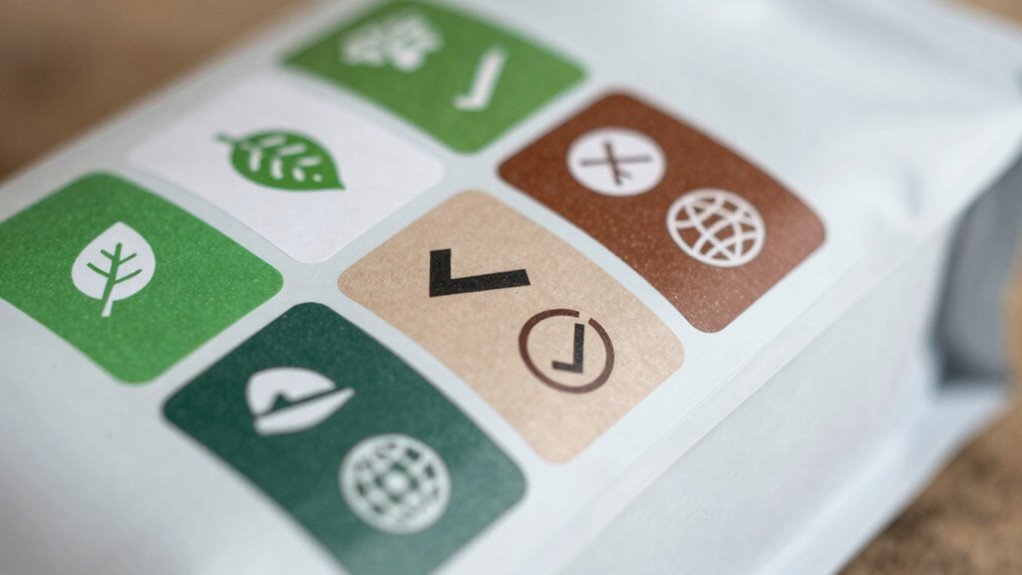
When you see organic labels on coffee, they mean the beans were grown without synthetic pesticides or fertilizers, following specific certification standards. Different farming practices can also affect the flavor and quality of your coffee, with organic methods often promoting healthier soil and plants. Understanding these labels helps you choose coffee that aligns with your values and may offer a better tasting experience. Additionally, recognizing transaction security measures in the purchasing process can ensure your data remains protected during your shopping. Recognizing the spiritual significance behind certain labels can also deepen your appreciation for sustainable and ethical farming practices. For example, some labels emphasize cowtown culture and prairie scenery, highlighting the importance of local heritage and natural landscapes in farming communities. An awareness of printmaking paper textures can similarly enhance your appreciation for the nuances in sustainable packaging and labeling practices.
What Organic Certification Means
Have you ever wondered what an organic certification on your coffee packaging really means? It indicates that the coffee comes from a farm following strict standards for organic farming. This label ensures the coffee farm uses environmentally friendly methods without synthetic pesticides or fertilizers. Organic certification also emphasizes soil health and biodiversity. It’s a sign of transparency, giving you confidence in the farming practices behind your brew.
Here are some key points to understand:
- The farm avoids synthetic chemicals and GMOs.
- Certification requires regular inspections.
- Farmers use natural methods to control pests.
- The label guarantees adherence to specific organic standards.
- It promotes sustainable, eco-friendly farming practices.
- Proper solar system design on farms can further reduce energy costs and environmental impact, supporting sustainable agriculture. Additionally, these practices often include biodiversity conservation, which benefits local ecosystems. Implementing effective filtration and pump protection systems can also help maintain the quality of water used in organic farming processes.
This certification helps you make informed choices about your coffee’s origins and farming ethics.
Differences in Farming Practices
Different farming labels on coffee packaging reveal varying approaches to cultivation and environmental impact. Organic farming, for example, emphasizes avoiding synthetic pesticides and fertilizers, promoting healthier soil and ecosystems. It often involves stricter standards that support biodiversity and reduce chemical runoff. Fair trade certification, on the other hand, ensures farmers receive fair wages and work under safe conditions, focusing on social and economic sustainability. While not directly tied to farming methods, fair trade often encourages environmentally friendly practices as part of ethical standards. These labels highlight different priorities: organic farming centers on ecological health, while fair trade emphasizes social equity. Both aim to promote more responsible and sustainable coffee production but target different aspects of farming practices.
Impact on Coffee Quality
Farming practices indicated by labels like organic or fair trade can influence the flavor, aroma, and overall quality of coffee. These labels often reflect the care taken during cultivation, which impacts how fresh and vibrant your coffee remains through proper coffee storage. Organic farming, for example, tends to produce beans with cleaner, brighter flavors, while fair trade emphasizes social impacts that can also improve bean quality. To maximize these benefits, consider your brewing methods, as certain labels respond better to specific techniques.
- Organic beans often need airtight storage to preserve freshness
- Fair trade coffee may have a richer, more balanced taste
- Proper coffee storage prevents staling and dullness
- Light roasts highlight the true flavor of organically farmed beans
- Brewing methods like pour-over can accentuate the nuanced qualities of ethically sourced coffee
How Can You Read Coffee Freshness Dates and Packaging Terms?
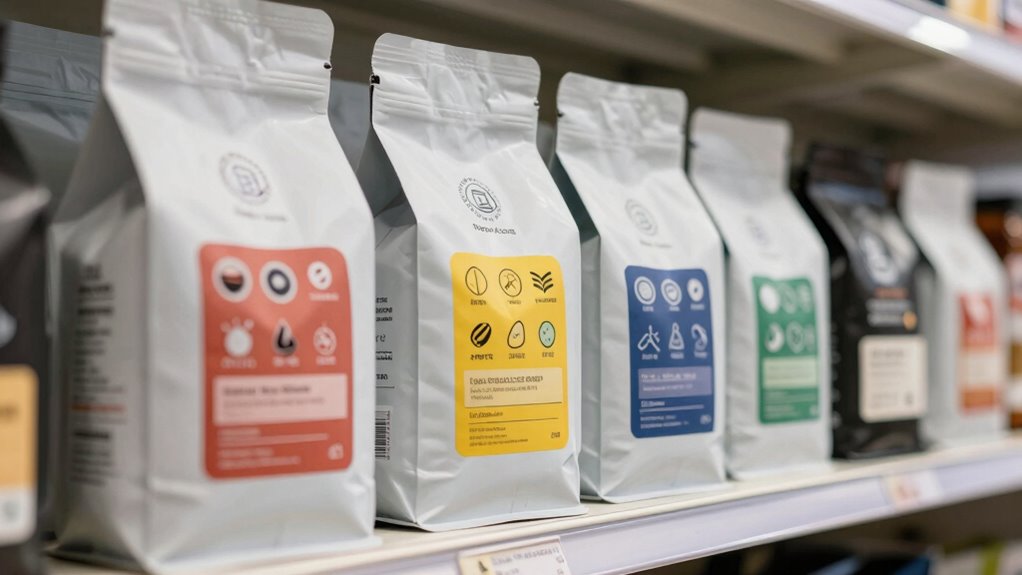
Understanding coffee freshness dates and packaging terms can seem confusing at first, but once you know what to look for, it becomes much easier to determine the quality and shelf life of your coffee. Freshness dates, like “best by” or “use by,” indicate when the coffee is at its peak flavor. Packaging terms such as “valve-sealed” or “fresh roast” help you identify how well the coffee is preserved. Proper coffee storage—keeping beans in an airtight container away from light—extends freshness, especially for brewing methods that require freshly ground beans. Use this table to grasp key terms:
| Term | Meaning |
|---|---|
| Best by | Prime flavor window |
| Roast date | When coffee was roasted |
| Valve-sealed | Preserves freshness during packaging |
What Do Arabica and Robusta Mean on Coffee Labels?
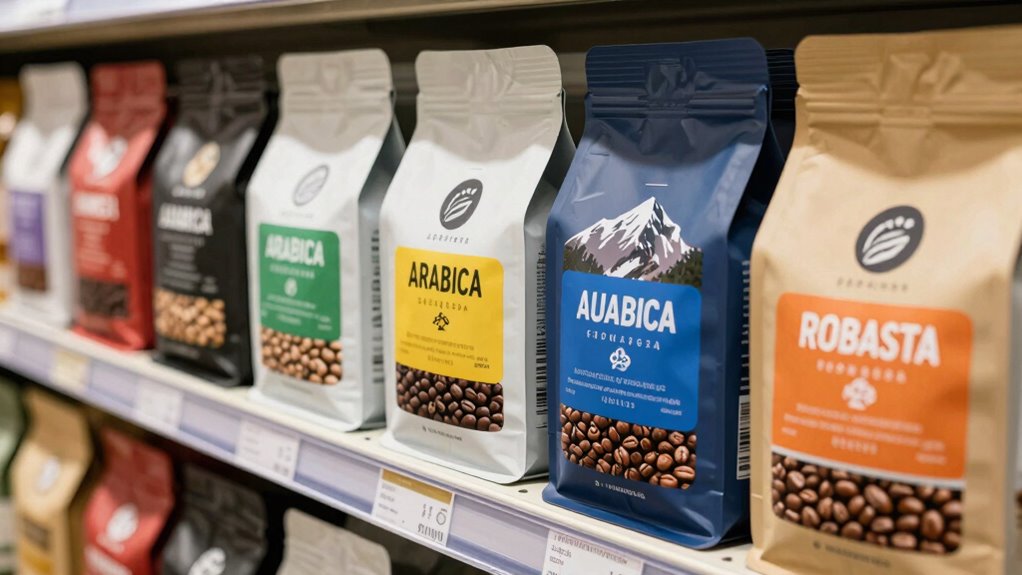
When you see Arabica or Robusta on a coffee label, it tells you about the coffee’s origin and characteristics. Arabica beans usually come from higher elevations and offer a smoother, more nuanced flavor, while Robusta beans are often grown in lower altitudes and provide a stronger, more bitter taste. Additionally, Robusta generally has more caffeine than Arabica, affecting both the kick and the overall experience.
Arabica vs. Robusta Origins
If you’re checking coffee labels, you might notice the terms Arabica and Robusta, which indicate the type of coffee bean used. These terms also hint at where the beans are grown. Arabica beans come from Arabica plantations, usually found at higher altitudes with cooler climates. Robusta beans are cultivated in regions with warmer, more humid conditions, often in lowland areas.
- Arabica plantations thrive on mountain slopes, producing beans with nuanced flavors.
- Robusta cultivation is often more resilient, thriving in less ideal conditions.
- Arabica beans tend to be sweeter with subtle acidity.
- Robusta beans typically have a stronger, more bitter taste.
- The origins influence the beans’ overall quality and taste profile, helping you choose based on your preferences.
Flavor Profile Differences
The flavor profiles of Arabica and Robusta beans are quite distinct, and these differences can help you identify your preferred taste. Arabica tends to have a smoother, sweeter flavor with notes of fruit and floral undertones, making it ideal for lighter coffee brewing techniques. Robusta, on the other hand, offers a stronger, more bitter taste with a earthy or nutty flavor, often used in espresso blends. When storing coffee, keeping beans in an airtight container away from light preserves their flavor. Proper coffee storage tips help maintain the beans’ freshness and flavor profile over time. Knowing these differences allows you to choose beans that match your taste preferences and brewing methods, ensuring a better coffee experience every time.
Caffeine Content Variations
Caffeine content can vary considerably between Arabica and Robusta coffee beans, and labels often indicate which type you’re getting. Arabica generally has less caffeine, making it milder, while Robusta packs a punch with higher caffeine levels. When you’re choosing your coffee, consider how you brew and store it, as these factors influence caffeine strength.
- Arabica beans are often favored for their smooth, nuanced flavor
- Robusta beans are more bitter and have a stronger caffeine kick
- Coffee storage in airtight containers preserves caffeine and freshness
- Dark roasts may seem stronger but don’t necessarily have more caffeine
- Brewed coffee’s caffeine depends on grind size and brewing time
Knowing these differences helps you pick the right coffee for your energy needs.
What Do Price and “Premium” Labels Tell You About Coffee Quality?
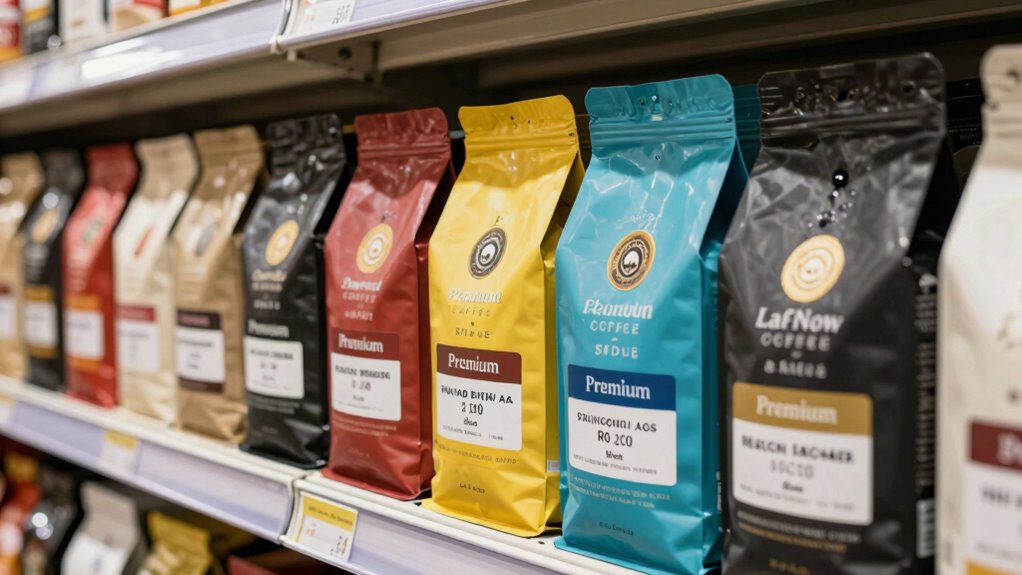
Have you ever wondered what the price tag or “premium” label on a coffee bag really indicates about its quality? Higher prices often suggest better beans, more careful processing, or unique sourcing, all of which can enhance your coffee brewing experience. However, a “premium” label doesn’t guarantee superior taste or freshness—sometimes it’s just marketing. Be aware that price doesn’t always correlate with quality; it might also reflect packaging or brand reputation. Many caffeine myths persist, like the idea that more expensive coffee is always stronger or healthier. Instead, focus on how the coffee’s flavor profile and origin align with your preferences. Remember, a higher price tag can mean better quality, but it’s not a foolproof indicator—do your research and taste test to find what truly satisfies you.
What Do Terms Like “Craft” or “Small Batch” Really Mean?
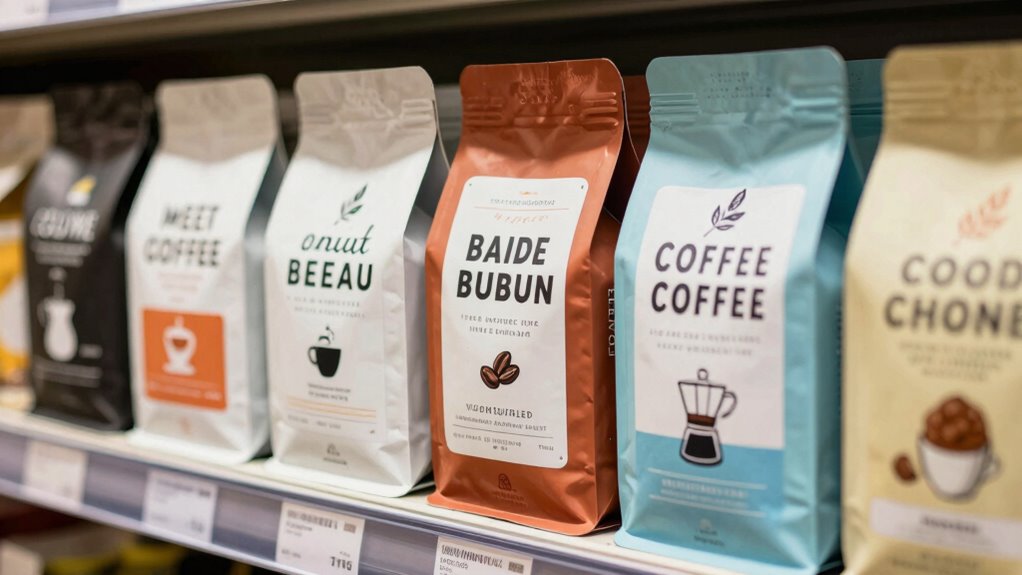
Labels like “craft” or “small batch” can seem straightforward, but they often carry more marketing weight than strict definitions. They suggest a focus on quality, but don’t guarantee it. When you see these terms, think about how the coffee was brewed and stored, which impacts flavor. “Craft” often indicates artisanal methods, small-scale roasting, and attention to detail. “Small batch” means fewer beans processed at a time, which can preserve freshness and unique flavors. These labels don’t specify the origin or quality standards but hint at a more personalized approach. Visualize coffee brewed carefully, stored properly in airtight containers, and roasted in limited quantities. This can mean fresher, more vibrant coffee, but always check for additional info to confirm.
How Can You Use Coffee Labels to Find the Best Brew for Your Taste?
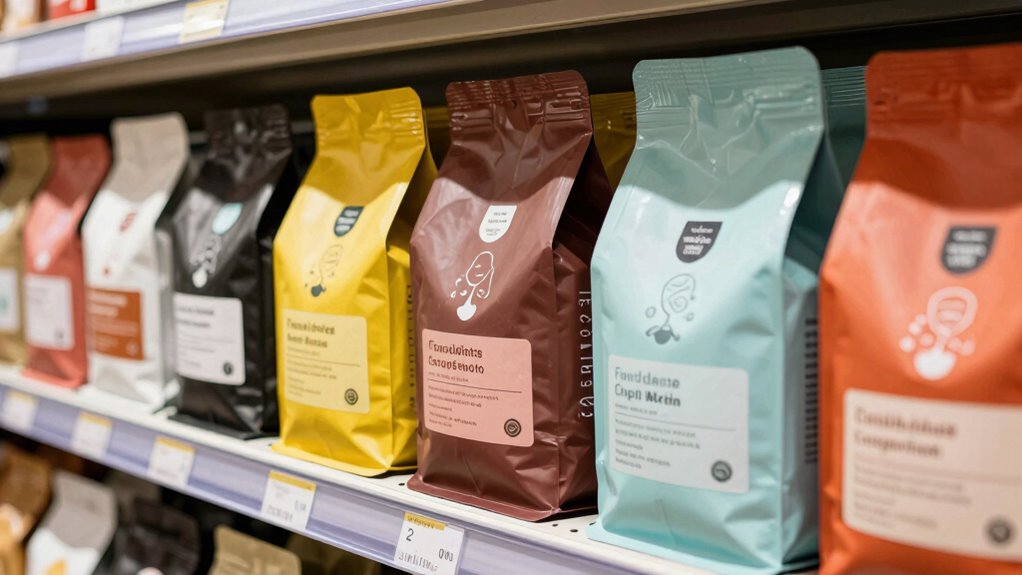
To find the best brew for your taste, start by paying close attention to the information on the coffee label. Look for details like roast level, origin, and flavor notes to match your preferences. If you prefer a bold, rich flavor, opt for dark roasts and consider brewing techniques like French press or espresso. For milder, brighter tastes, light roasts and drip brewing work well. Also, check for storage tips on the label—proper coffee storage keeps beans fresh longer, preserving flavor. Knowing how to store your coffee prevents staleness, ensuring each brew tastes its best. By understanding these label clues, you can select a coffee that suits your palate and maximize your brewing techniques for a satisfying cup every time.
Frequently Asked Questions
How Do I Identify the Best Coffee for My Brewing Method?
To find the best coffee for your brewing method, consider flavor profiles and brewing tips. If you prefer a rich, bold taste, choose dark roasts with a robust flavor. For a lighter, fruity note, go for a medium or light roast. Pay attention to grind size and water temperature, matching them to your brewing style. Experiment with different beans and note what yields the best flavor for your preferred method.
What Do “shade-Grown” and “Rainforest Certified” Labels Indicate?
“Shade-grown” and “rainforest certified” labels signal your coffee’s eco-friendly roots. They guarantee that the coffee is grown under a canopy of trees, protecting wildlife and maintaining biodiversity. When you see these labels, you’re supporting fair trade practices and ensuring the coffee’s origin is sustainable. These certifications mean the farmers prioritize environmental health and fair wages, making your choice a powerful step toward a healthier planet and more ethical sourcing.
Are There Regional Differences in Coffee Label Terminology?
Yes, regional flavor influences coffee label terminology, leading to labeling variations. You’ll notice different terms depending on where you buy your coffee; for example, Ethiopian coffees might highlight “washed” or “dry-processed,” while Colombian beans emphasize “strictly high-grown.” These regional distinctions help you understand the flavor profiles and cultivation practices, making it easier to choose coffee that matches your taste preferences. Always look for local nuances in labeling for a richer coffee experience.
How Reliable Are Eco-Labels Like Organic or Biodegradable Packaging?
Eco-labels like organic or biodegradable packaging are like trusted friends, but their reliability varies. You should check certification standards to guarantee authenticity, as some labels might be more marketing than fact. Look for recognized symbols from reputable organizations, and read labels carefully. While they generally indicate genuine eco-friendly practices, some products may stretch the truth, so verifying label authenticity helps you make truly sustainable choices.
What Do “Micro-Lot” and “Limited Edition” Mean for Coffee Quality?
Micro-lot and limited edition coffees mean you’re getting unique, often higher-quality beans with distinct flavor profiles. Micro-lots are small, carefully selected harvests, offering more nuanced flavors, while limited editions are rare releases, often emphasizing special processing methods. These coffees typically suit specific brewing methods to highlight their flavors. So, if you love exploring different taste profiles, these options can enhance your experience and match well with your preferred brewing style.
Conclusion
Think of coffee labels as a map guiding you through a vast, flavorful landscape. By decoding these labels, you’re the explorer charting your own perfect brew, avoiding pitfalls and discovering hidden treasures. Trust your curiosity and newfound knowledge to navigate the coffee world confidently. Just like a seasoned traveler, you’ll soon find the flavors that truly resonate with you, turning every cup into a personal adventure worth savoring.