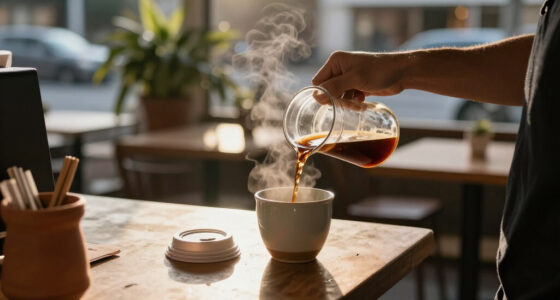
To adopt reusable coffee habits that work for busy schedules, keep your cup in a designated spot and pre-fill it before heading out. Choose durable, insulated cups with leak-proof lids for quick access and temperature control. Regularly clean and store your gear properly to prevent odors. If you stick to simple routines and keep your supplies on hand, you’ll reduce waste without adding hassle. Stay tuned to discover easy tips to make your reusable coffee routine even smoother.

Get coffee and tea gear delivered free with Prime
- Fast, free delivery on millions of items
- Prime Video, Amazon Music and more included
- Member-only deals all year
Key Takeaways
- Keep a designated reusable cup at work and in your bag for easy access throughout the day.
- Pre-fill your reusable cup at home to save time during busy mornings.
- Use spill-proof, insulated mugs to maintain temperature and prevent messes during commutes.
- Incorporate quick cleaning routines, like rinsing immediately and using dishwasher-safe cups.
- Style your reusable cup with accessories to make it a motivating and enjoyable part of your routine.
insulated reusable coffee mug leak-proof
As an affiliate, we earn on qualifying purchases.
As an affiliate, we earn on qualifying purchases.
Why Reducing Coffee Waste Matters for Busy People
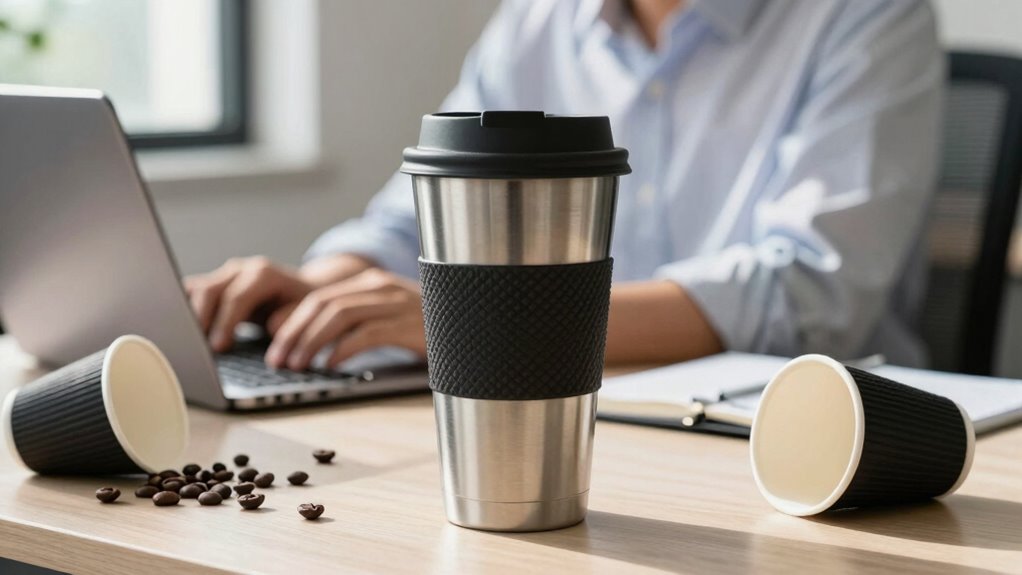
Have you ever considered how much coffee waste piles up in your busy daily routine? The environmental impact of disposable cups and filters adds up quickly, contributing to landfill overflow and pollution. By reducing coffee waste, you help lower the strain on waste management systems and cut down on resource consumption. Waste reduction isn’t just about saving money; it’s about making a meaningful difference for the planet. Every time you choose a reusable coffee cup, you prevent single-use items from ending up in the trash. This simple shift supports sustainability efforts and encourages mindful consumption. Additionally, adopting eco-friendly habits like using reusable cups aligns with lifestyle for longevity principles that promote overall well-being. As a busy person, small actions like this can create a significant environmental impact over time, helping you stay eco-friendly while keeping up with your hectic schedule. Considering the rise of electric bikes and other eco-friendly transportation options, you can further reduce your carbon footprint and promote sustainable living. Embracing reusable products not only benefits the environment but also fosters a sense of responsibility and mindful consumption in your daily routine. Incorporating natural materials into your reusable items can further enhance their eco-friendly benefits.
How to Choose the Best Reusable Coffee Cup for Your Routine
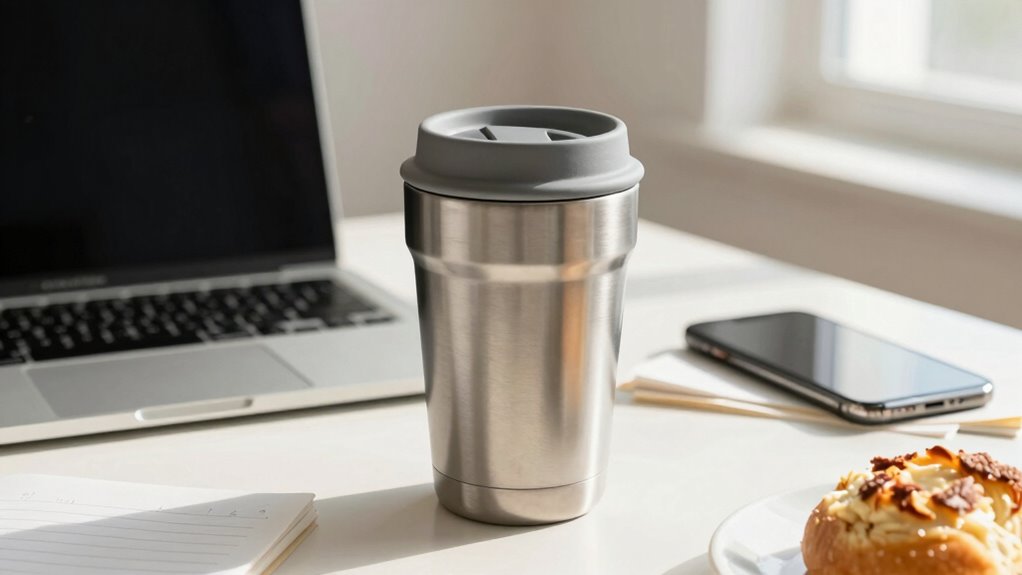
Choosing the right reusable coffee cup can make a big difference in simplifying your busy mornings while keeping waste in check. To find your ideal match, consider these factors:
Selecting the perfect reusable coffee cup simplifies mornings and reduces waste effortlessly.
- Material durability: Opt for sturdy materials like stainless steel or BPA-free plastic that withstand daily use.
- Design aesthetics: Pick a style that reflects your personality and fits your routine, whether sleek or colorful.
- Lid functionality: Make sure it’s leak-proof and easy to open or close with one hand.
- Size and shape: Match it to your cup holder and hand comfort.
- Insulation: Look for good heat retention for your hot beverages without burning your fingers.
- Incorporating home soundproofing solutions such as quiet lids or insulated sleeves can also help maintain your drink’s temperature and prevent spills during commutes. Additionally, selecting a cup with durable construction ensures it remains reliable and safe over time. Considering material safety can further protect your health and ensure your beverage stays uncontaminated.
Easy Habits for Using Reusable Coffee Gear on the Go
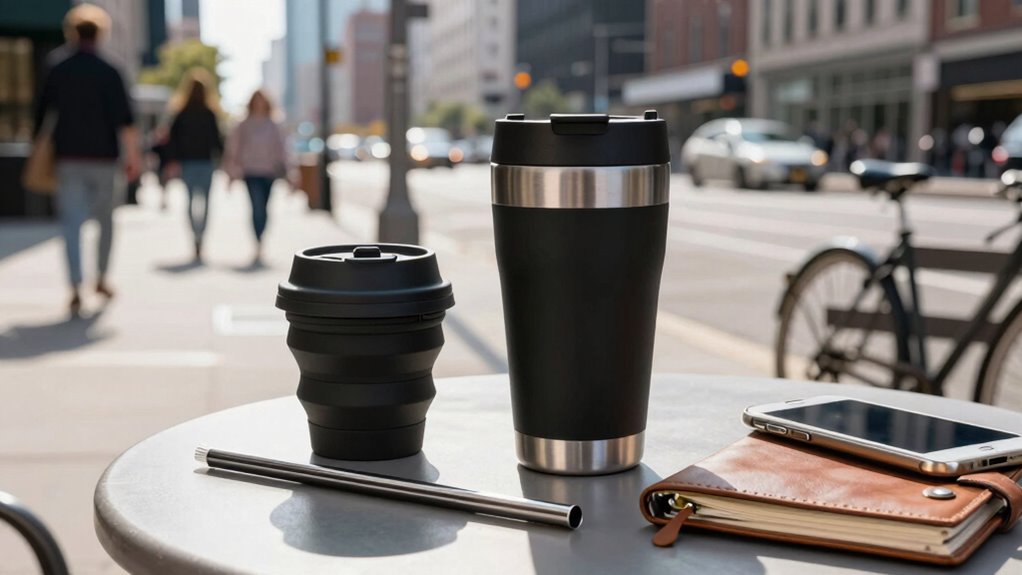
To seamlessly incorporate reusable coffee gear into your busy mornings, develop simple habits that make carrying and using your cup effortless. Keep your reusable cup or tumbler in a designated spot, like your bag or car, so it’s always ready to grab. Pre-fill it with your favorite coffee flavor before leaving home, saving time and ensuring consistency. When you’re on the go, use a spill-proof lid to enhance travel convenience, preventing messes and temperature loss. Rinsing your cup immediately after use keeps it fresh and ready for your next coffee run. Incorporating Victorian steampunk accessories and aesthetic elements into your reusable gear can add a touch of style to your routine. Consistently using your reusable gear not only reduces waste but also makes your mornings more efficient. Incorporating smart home safety features, such as reminders for cleaning or replacement, can help maintain your reusable coffee gear in optimal condition. These habits help you enjoy great coffee without sacrificing convenience or flavor, even during your busiest days.
Tips to Keep Your Reusable Coffee Supplies in Top Shape
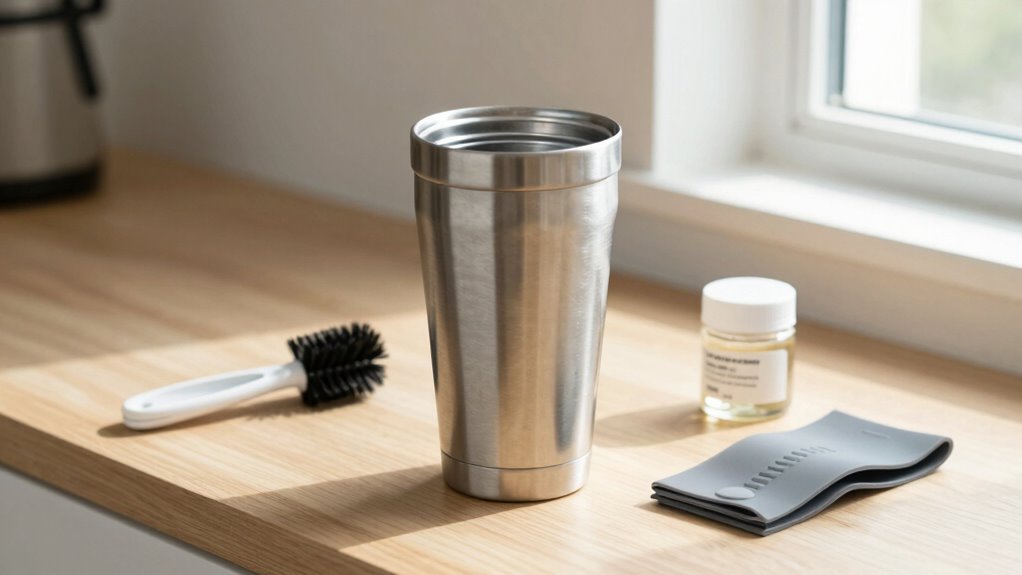
Keeping your reusable coffee supplies in good shape guarantees they’re always ready for your busy mornings. Proper coffee storage and regular cleaning routines are essential. To maintain your gear in top condition, consider these tips:
- Rinse your reusable cup or bottle immediately after use to prevent stains and odors.
- Use warm, soapy water to clean all parts thoroughly, paying attention to seals and lids.
- Avoid harsh chemicals that could damage the material; opt for natural cleaning solutions when possible.
- Air dry your supplies completely before storing to prevent mold and bacteria growth.
- Store your reusable coffee gear in a dry, cool place to maintain freshness and longevity.
- Being aware of indoor air quality can help you select cleaning products that do not introduce microplastics or other pollutants into your environment.
- Understanding the mental wellbeing index can help you stay motivated to keep up healthy habits, including proper maintenance of your reusable gear.
- Incorporating air purifier maintenance routines into your cleaning habits can further improve your indoor environment and ensure your space remains free of dust and pollutants.
- Regularly checking material durability can help you identify signs of wear and tear early, prolonging the life of your reusable coffee supplies.
- Additionally, paying attention to sound healing science principles, such as calming routines during cleaning, can enhance your overall well-being and make the process more enjoyable.
Following these simple routines ensures your reusable coffee supplies stay clean, fresh, and ready for every busy morning.
Overcoming Common Challenges With Reusable Coffee Habits
While reusable coffee habits are environmentally friendly and cost-effective, they can present some common challenges that might tempt you to revert to disposable cups. For sustainable brewing, consistency and convenience matter. To overcome these hurdles, plan ahead: keep your reusable mug clean and ready, and choose eco-friendly mornings when you’re pressed for time. Here’s a quick guide:
| Challenge | Solution | Benefit |
|---|---|---|
| Forgetting to bring mug | Keep it in your bag or car | Always prepared |
| Cleaning inconvenience | Use quick-drying, dishwasher-safe mugs | Hassle-free maintenance |
| Temperature retention | Invest in insulated cups | Hot coffee longer |
| Limited variety | Try different reusable options | Enjoyable sustainable brewing |
| Social acceptance | Politely remind staff about your mug | Promotes eco-friendly mornings |
Being proactive helps turn eco-friendly mornings into lasting habits. Incorporating reusable habits can make a significant difference in reducing waste and supporting environmental conservation efforts. Additionally, understanding how pollution impact from disposable cups affects the environment emphasizes the importance of these sustainable practices. Recognizing the long-term benefits of eco-friendly choices can motivate consistent adoption of such habits. Furthermore, knowledge about standby generators, like those used in data centers, highlights the importance of reliable and sustainable energy sources in modern infrastructure.
Frequently Asked Questions
Are Reusable Coffee Cups Safe for Hot Beverages?
Yes, reusable coffee cups are safe for hot beverages when made from quality materials like stainless steel or glass. They help reduce environmental impact and can save you money over time. Just make certain you choose a well-insulated cup that won’t leak or burn your hands. Regularly clean and inspect your cup to maintain safety and hygiene. Overall, reusable cups are a practical, eco-friendly choice for busy people who enjoy hot coffee.
How Long Do Reusable Coffee Cups Typically Last?
Reusable coffee cups typically last between one to five years, depending on their coffee cup lifespan and reusable mug durability. If you take good care of your mug—regularly cleaning it and avoiding drops—they can serve you well for years. High-quality materials like stainless steel or sturdy BPA-free plastics tend to be more durable, ensuring your reusable mug remains functional and safe for daily use over the long term.
Can Reusable Coffee Gear Be Used in Coffee Shops?
Yes, reusable coffee gear can definitely be used in coffee shops. Many shops welcome your eco-friendly efforts, encouraging coffee shop compatibility with your reusable mug or cup. Using reusable gear benefits both the environment and your budget, making every sip sustainable and satisfying. Just make certain your reusable container fits the shop’s policies, and you’ll enjoy your coffee with confidence, knowing you’re reducing waste while reaping the reusable rewards.
What Materials Are Best for Reusable Coffee Cups?
The best materials for reusable coffee cups offer a balance of durability and eco-friendliness. Stainless steel tops the list because of its durability and insulation, keeping your drinks hot or cold longer. Bamboo and glass are eco-friendly options that are lightweight and safe, but they may be less durable. Silicone sleeves or lids can add extra protection. Choose a material that suits your daily routine and environmental values for a sustainable coffee habit.
How Do I Prevent Mold Buildup in Reusable Coffee Containers?
An ounce of prevention is worth a pound of cure. To prevent mold buildup in your reusable coffee container, maintain a regular cleaning routine, washing it thoroughly after each use with hot, soapy water. Use proper storage solutions that allow air circulation, like leaving the lid slightly open, to keep moisture out. Dry the container completely before storing, and periodically disinfect to guarantee no mold spores develop.
Conclusion
Embracing reusable coffee habits isn’t just eco-friendly—it’s a smart move for busy lives. By choosing the right gear and developing simple routines, you reduce waste without sacrificing convenience. Remarkably, some studies suggest that making small sustainable choices can boost your overall well-being and sense of purpose. So, next time you grab your coffee, remember: every reusable cup you use is a step toward a healthier planet—and a more mindful you.
Fall Picks
fall essentials
As an affiliate, we earn on qualifying purchases.