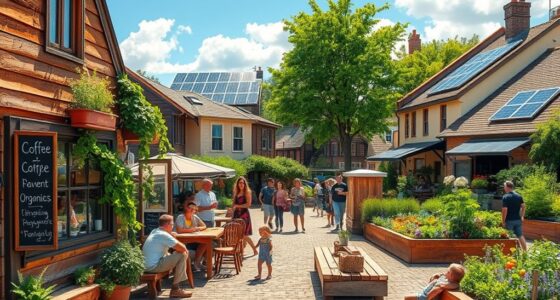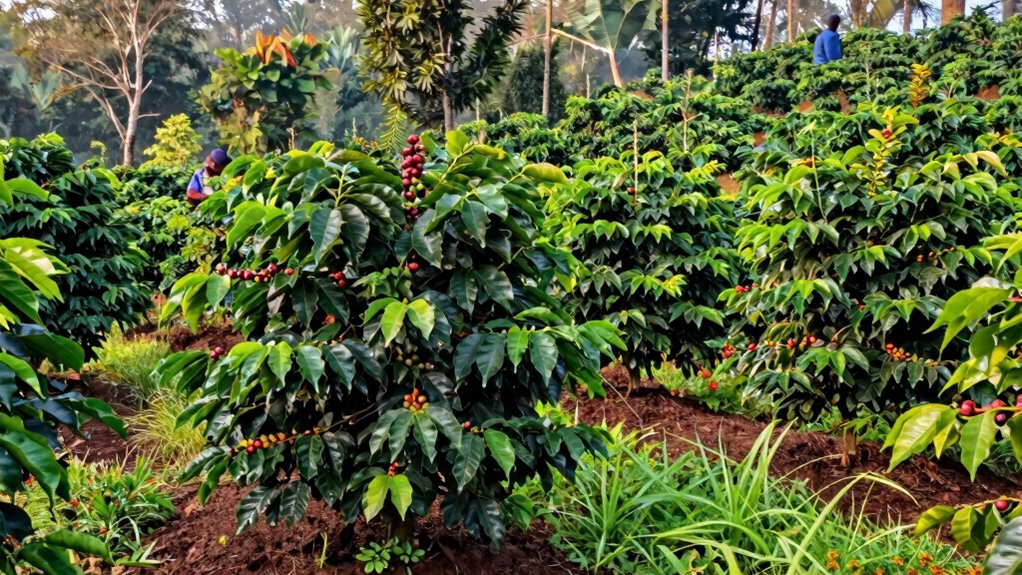

Regenerative farming in the coffee world means using sustainable practices that restore soil health, promote biodiversity, and strengthen ecosystems to produce better beans. You’ll see methods like cover cropping, composting, and planting shade trees, which improve plant resilience and flavor. These practices also support farmers’ livelihoods and protect the environment. As you explore further, you’ll discover how these innovative approaches are shaping the future of coffee and sustainability.
Key Takeaways
- Regenerative farming in coffee focuses on restoring soil health and ecosystems to promote sustainable, resilient coffee production.
- It employs practices like cover cropping, composting, and agroforestry to enhance biodiversity and soil microbial activity.
- The approach reduces chemical use, conserves water, and mitigates climate change impacts while improving coffee flavor.
- It supports local communities by fostering ecological balance, social equity, and sustainable livelihoods.
- Industry trends include certifications, organic practices, and innovative methods to promote sustainability and resilience in coffee farming.
organic compost for soil health
As an affiliate, we earn on qualifying purchases.
As an affiliate, we earn on qualifying purchases.
What Is Regenerative Coffee Farming and Why Does It Matter?
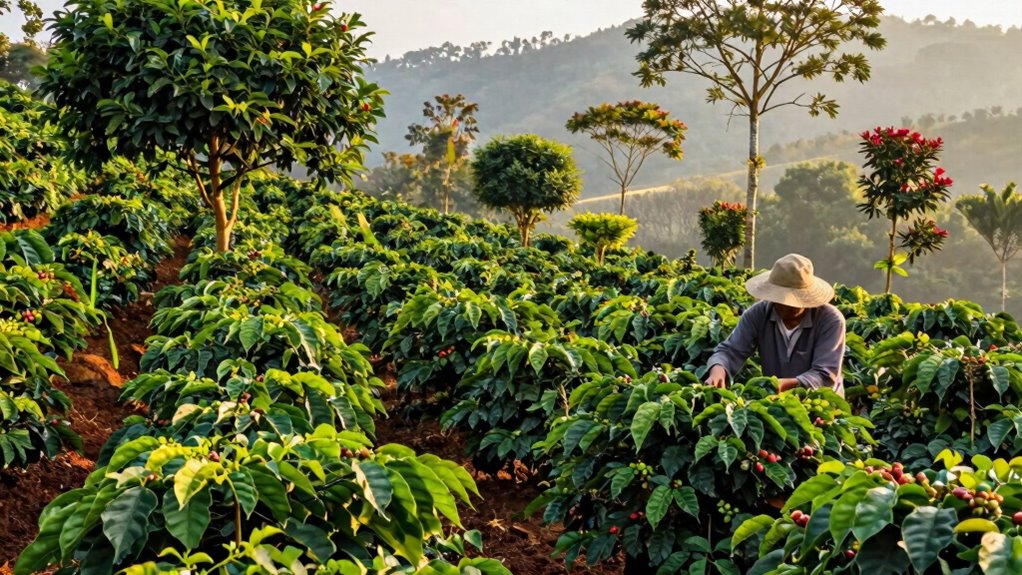
Have you ever wondered how coffee farming can actually improve the environment instead of degrading it? Regenerative coffee farming focuses on restoring and enhancing ecosystems while producing quality beans. This approach uses innovative farming technology to reduce chemical use, promote biodiversity, and conserve water. By choosing regenerative methods, you help create healthier soil, which directly influences coffee flavor, making it richer and more complex. These practices also improve resilience against climate change, ensuring sustainable production for the future. Additionally, implementing regenerative practices can support local ecosystems and reduce the carbon footprint of coffee cultivation. For example, integrating natural filtration systems can enhance water quality and reduce reliance on chemicals. Incorporating soil health management techniques further amplifies the benefits by increasing nutrient cycling and organic matter in the soil. Understanding the importance of biodiversity in farming landscapes helps reinforce the ecological balance and resilience of coffee farms. Instead of harming the land, you actively contribute to its recovery, turning coffee farms into ecosystems that support wildlife and local communities. Implementing contrast ratio in farming practices can further enhance visual monitoring of crop health and soil conditions. Ultimately, regenerative coffee farming isn’t just better for the planet—it also produces better coffee, making your next cup all the more rewarding.
shade trees for coffee farms
As an affiliate, we earn on qualifying purchases.
As an affiliate, we earn on qualifying purchases.
How Regenerative Practices Improve Soil Health for Coffee
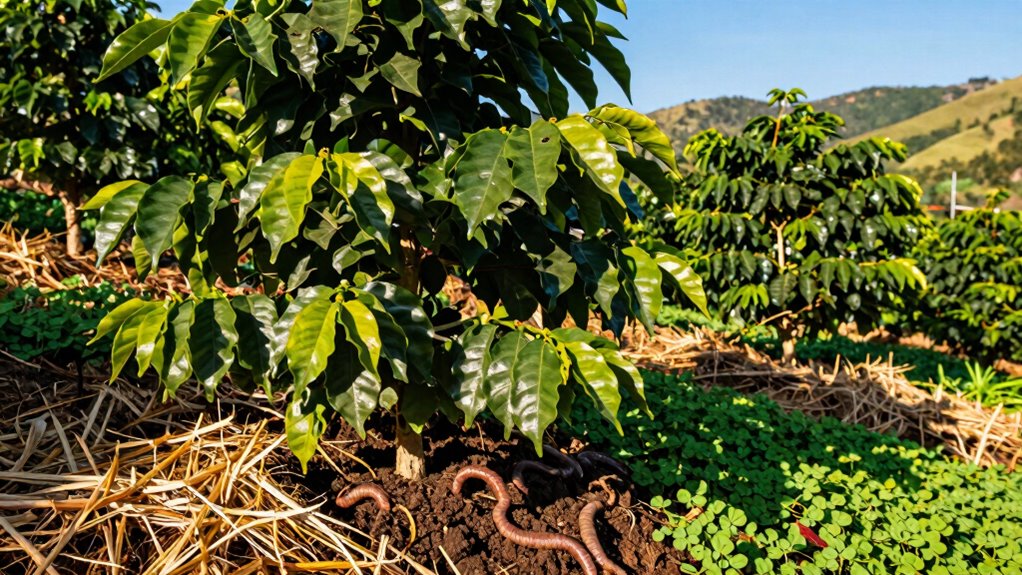
Ever wonder how regenerative practices can transform soil health on coffee farms? They boost soil microbes, which are crucial for nutrient cycling and overall soil vitality. Here’s how:
Regenerative practices enhance soil microbes, vital for healthy, resilient coffee farms.
- Plant cover crops to increase organic matter, feeding soil microbes.
- Reduce tillage to preserve microbial habitats.
- Apply compost and organic fertilizers to enhance nutrient availability.
- Incorporate diverse plant species to promote resilience and microbial diversity.
- Supporting pollinator health, like drone bees, encourages hive stability and benefits crop pollination.
These practices create a thriving soil ecosystem, improving nutrient cycling and making nutrients more accessible to coffee plants. Healthy soil microbes break down organic matter, releasing essential nutrients and strengthening soil structure. This process is vital for soil microbial diversity, which underpins a resilient farming system. Moreover, fostering soil health through regenerative techniques can lead to improved crop yields and quality. This leads to better water retention, fewer pests, and more resilient coffee plants. Additionally, maintaining soil health can help mitigate soil degradation, ensuring the land remains productive over time. Recognizing the importance of soil microbiome health can further optimize regenerative farming outcomes. By focusing on soil health, regenerative farming ensures long-term productivity and sustainability for your coffee farm.
cover crop seeds for regenerative farming
As an affiliate, we earn on qualifying purchases.
As an affiliate, we earn on qualifying purchases.
Key Practices That Make Coffee Farming Regenerative
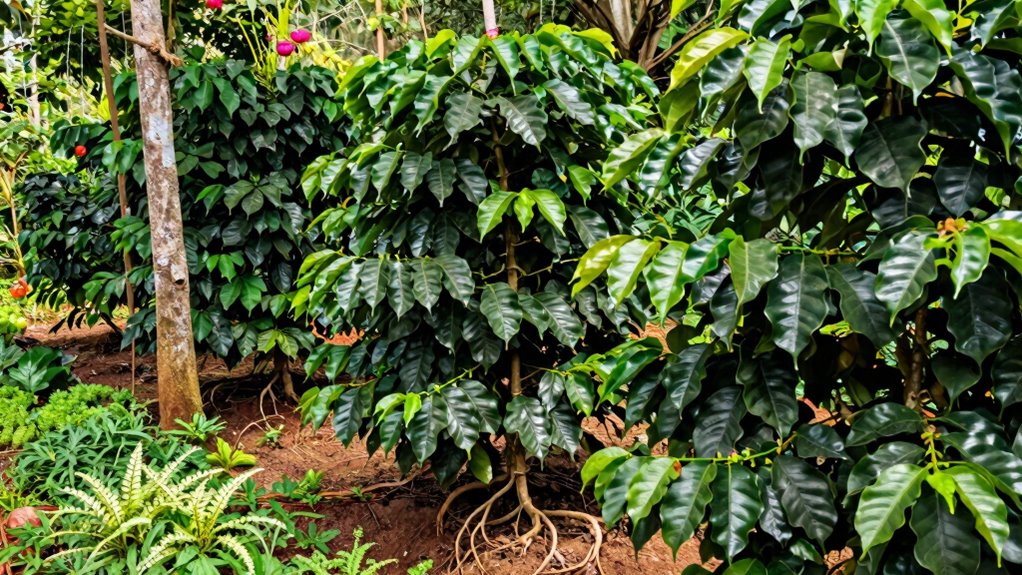
Implementing key practices is essential to making coffee farming truly regenerative. You focus on maintaining healthy soil through cover cropping, composting, and reduced tillage, which supports vibrant coffee plants. These practices enhance soil biodiversity, leading to richer flavor profiles in your coffee. As a result, your beans develop complex, nuanced tastes that appeal to discerning consumers. Additionally, integrating agroforestry — planting shade trees — promotes biodiversity and stabilizes microclimates. This creates a sustainable environment that benefits both the ecosystem and your crop quality. When it comes to roasting techniques, you can highlight the unique flavors born from regenerative methods, offering consumers a richer taste experience. Overall, these practices create a cycle of sustainability that improves coffee quality while supporting the health of your farm. Incorporating soil health practices into your routine can significantly boost both crop resilience and flavor development. Additionally, fostering healthy soil is crucial for climate resilience, helping farms adapt to changing weather patterns and maintain productivity. Incorporating soil management strategies can further optimize these benefits and promote long-term farm sustainability. Using cover crops, for instance, improves soil structure and prevents erosion, contributing to a healthier farming environment.
soil microbial test kit
As an affiliate, we earn on qualifying purchases.
As an affiliate, we earn on qualifying purchases.
Why Biodiversity Is Essential in Regenerative Coffee Farms
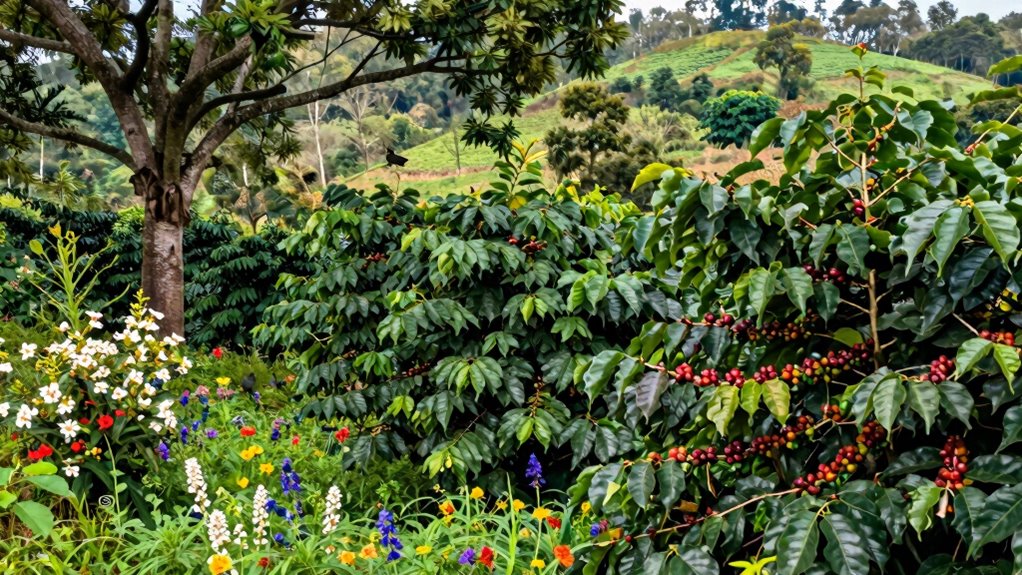
Biodiversity boosts your farm’s resilience by creating a balanced ecosystem that can better withstand pests, droughts, and diseases. When you support diverse species, your farm becomes more stable and productive over time. This variety also helps maintain healthy soil and natural pest control, reducing the need for chemicals. Incorporating soil health practices can further enhance these benefits by promoting beneficial microbial activity. Additionally, fostering plant diversity can attract beneficial insects and birds that naturally control pests, further supporting a pest-free environment. Introducing integrated pest management techniques can optimize pest control while minimizing chemical use, aligning with regenerative principles. Emphasizing biodiversity in your farm design can create a more resilient and sustainable ecosystem that supports long-term productivity.
Enhances Ecosystem Resilience
When a coffee farm embraces diverse plant and animal species, it naturally becomes more resilient to environmental changes and pests. This biodiversity boosts climate adaptation and water conservation, essential for long-term sustainability. Here’s how it works:
- Buffers against extreme weather – varied species improve soil health, reducing erosion and drought impacts.
- Pest regulation – natural predators control pests, decreasing reliance on chemicals.
- Water retention – diverse root systems enhance water absorption and reduce runoff.
- Soil resilience – multiple plants enrich soil nutrients, supporting healthy growth amid climate shifts.
Supports Diverse Species
Have you ever wondered why supporting a variety of species is essential for regenerative coffee farms? Biodiversity boosts pollinator health, which is vital for crop pollination and productivity. A diverse ecosystem encourages beneficial insects, birds, and other wildlife that naturally control pests and reduce the need for chemicals. Additionally, habitat preservation guarantees that native species thrive, maintaining ecological balance. When you foster diverse plant and animal life, you create a resilient farm environment that can better withstand pests, diseases, and climate fluctuations. Supporting these varied species also promotes soil health and nutrient cycling, guaranteeing your coffee plants remain healthy and productive. Incorporating Biodiversity practices into your farm enhances resilience and sustainability, ensuring long-term success. Embracing biodiversity not only benefits individual farms but also contributes to the broader ecosystem health, which is crucial for the overall resilience of agricultural landscapes. Ultimately, embracing biodiversity makes your farm more sustainable and contributes to the broader health of the ecosystem.
The Benefits of Regenerative Farming for Coffee Farmers and Communities
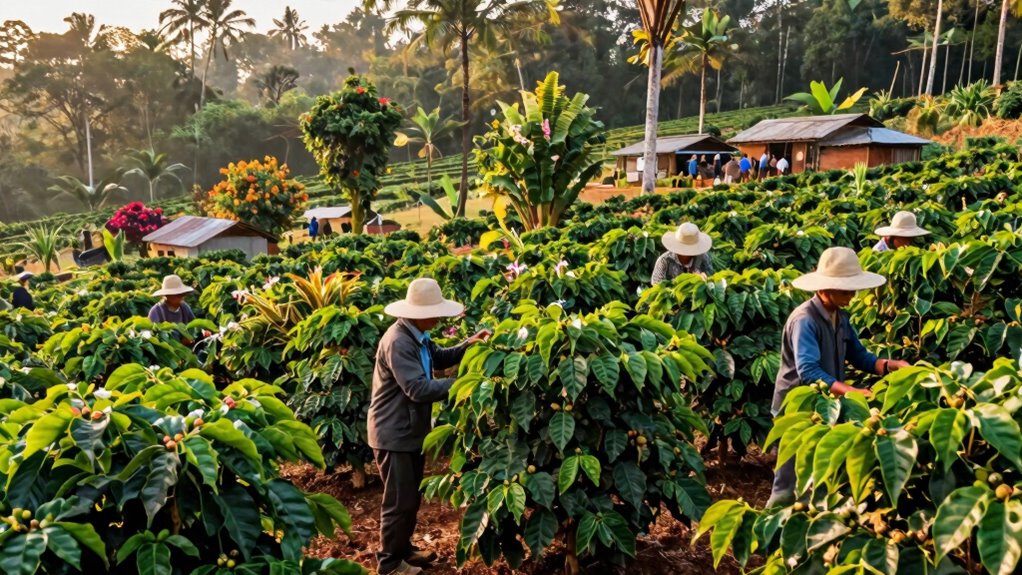
Ever wondered how regenerative farming can transform the lives of coffee farmers and their communities? It offers several clear benefits. First, it improves coffee flavor by enriching soil health, leading to richer, more vibrant beans. Second, it enhances farm aesthetics, making fields more lush and diverse, boosting pride and attracting eco-tourism. Third, regenerative practices increase resilience to climate change, reducing crop loss risks. Ultimately, it can lower costs over time by decreasing reliance on chemical inputs, improving profitability. These benefits foster stronger communities, support sustainable livelihoods, and promote environmental health. As a result, farmers can produce higher-quality coffee while nurturing their land and local ecosystems, creating a positive cycle of growth and sustainability.
Challenges and Barriers to Adopting Regenerative Coffee Methods
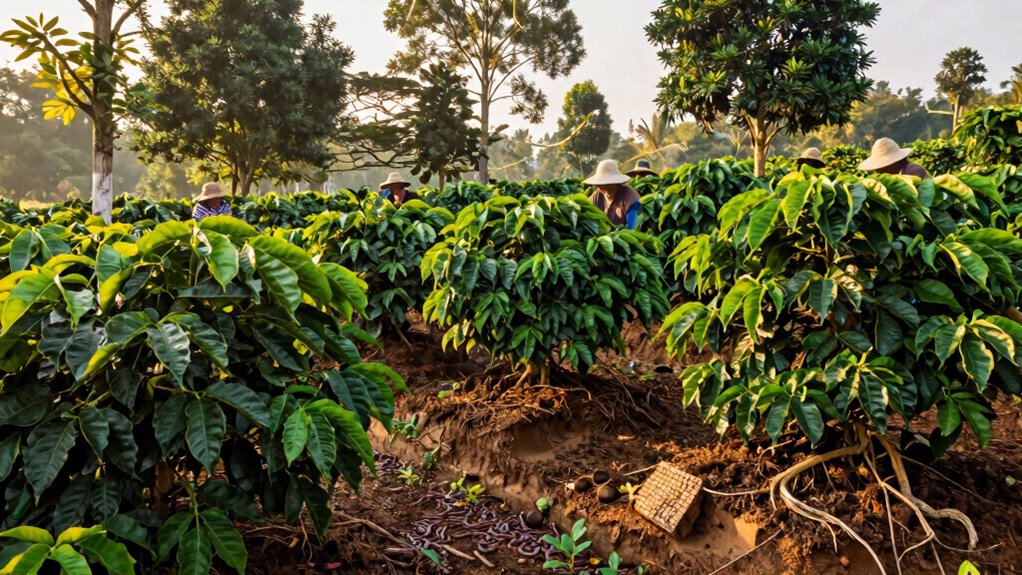
Adopting regenerative coffee methods often comes with significant challenges that you need to take into account. High upfront costs, gaps in knowledge, and limited market access can make change difficult. Understanding these barriers is key to finding ways to overcome them. Additionally, building awareness about sustainable practices can be supported through educational initiatives that promote eco-friendly farming techniques.
Economic Constraints and Costs
What are the main barriers holding farmers back from shifting to regenerative coffee practices? Chief among them is the upfront financial investment needed for new equipment, cover crops, and soil enhancements. Cost management becomes challenging when payments for these changes don’t immediately offset increased expenses. Here are key hurdles:
- High initial costs for moving to regenerative methods
- Limited access to affordable credit or financing options
- Uncertainty about long-term financial returns
- Increased labor requirements during the changeover period
These economic constraints can discourage farmers from adopting regenerative practices, even when long-term benefits are clear. Overcoming these barriers requires support in managing costs and securing funding to make the shift more feasible.
Knowledge and Training Gaps
Despite the clear benefits of regenerative farming, many farmers face significant knowledge and training gaps that hinder their adoption of these practices. Limited farmer education leaves many unaware of the techniques that improve soil health, conserve water, and boost yields sustainably. Without proper training, implementing regenerative methods can seem risky or confusing. Certification standards often require specific practices, but farmers may lack the resources or understanding to meet these criteria. This gap can create hesitation, especially when they don’t have access to expert guidance or peer support. Addressing these knowledge and training barriers is vital to spreading regenerative farming. Providing targeted education, practical workshops, and clear guidance on certification standards can help farmers confidently adopt more sustainable, resilient coffee-growing methods.
Market Access Limitations
Even when farmers understand regenerative practices, accessing markets that reward sustainable methods remains a significant hurdle. Market access is limited by certification barriers, which can be costly and complex to navigate. Without proper certification, it’s tough to prove your coffee’s sustainability and secure premium prices. Here are key barriers you face:
- Certification costs that strain smallholder budgets
- Lengthy approval processes delaying market entry
- Limited buyer awareness of regenerative standards
- Insufficient support to meet certification criteria
These challenges restrict your ability to connect with buyers who value eco-friendly coffee. Overcoming certification barriers and expanding market access are vital steps to making regenerative farming financially viable and encouraging wider adoption.
How Consumers Can Support Regenerative Coffee Farms
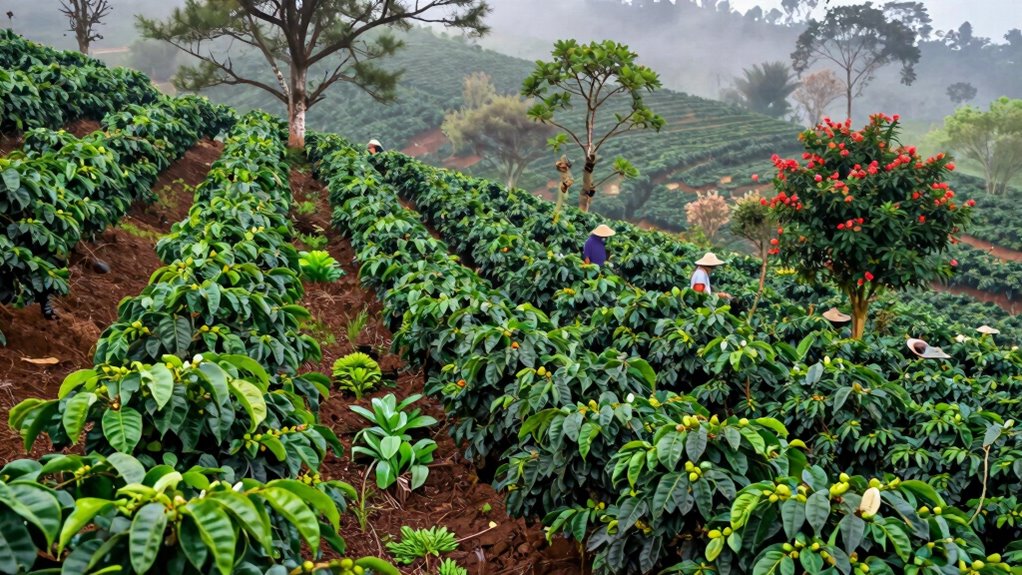
Wondering how you can make a difference in supporting regenerative coffee farms? Start by choosing coffee brands that prioritize sustainable practices and transparent sourcing. Your purchasing power encourages farmers to adopt regenerative methods that improve soil health and boost biodiversity. Pay attention to coffee flavor profiles, as sustainably farmed beans often yield richer, more complex tastes. When brewing, use roasting techniques that highlight these unique flavors, enhancing your appreciation for the coffee’s journey from farm to cup. By supporting companies committed to regenerative practices, you help promote ecological balance and social equity. Sharing your preferences for sustainably grown coffee also raises awareness, motivating more producers to adopt environmentally friendly methods. Additionally, understanding regenerative farming practices can deepen your appreciation for the positive impact your choices have on the environment. Supporting halal coffee options can also ensure that your coffee choices align with your cultural and ethical values. Being aware of plant health issues faced by coffee farms highlights the importance of sustainable and regenerative agriculture in maintaining healthy ecosystems. Recognizing the significance of soil regeneration can help you better understand how these practices restore land vitality and resilience. Incorporating knowledge about biodiversity benefits further emphasizes the ecological advantages of regenerative farming. Small choices like these can make a big impact in supporting regenerative coffee farms.
Future Trends: The Impact of Regenerative Farming on Coffee Industry Sustainability
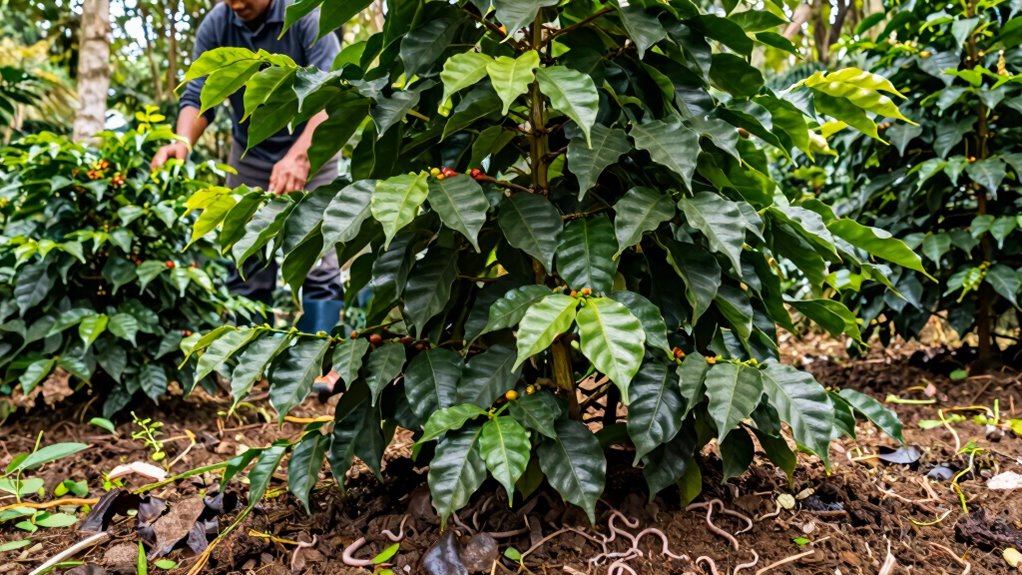
As more consumers prioritize sustainably sourced coffee, the industry is increasingly embracing regenerative farming practices to meet this demand. Future trends show significant impacts on sustainability, including:
- Expanded urban farming initiatives, making coffee production more accessible and reducing transportation emissions.
- Greater emphasis on organic certification, ensuring farming methods restore soil health and eliminate synthetic chemicals.
- Integration of regenerative techniques to boost biodiversity and resilience against climate change.
- Adoption of innovative practices that support local communities and promote long-term environmental health.
These trends will shape a more sustainable coffee industry, emphasizing eco-friendly practices and supporting regenerative agriculture’s role in combating climate change and preserving ecosystems.
Frequently Asked Questions
How Does Regenerative Farming Affect Coffee Flavor Profiles?
Regenerative farming enhances coffee flavor profiles by improving soil health, which leads to richer nutrient absorption by the coffee plants. As a result, you’ll notice increased flavor complexity and a more vibrant cup. Healthier soil fosters diverse microbial activity, strengthening plant resilience and promoting balanced, nuanced flavors. By choosing coffees from regenerative farms, you support sustainable practices that naturally elevate the sensory experience, making each sip more vibrant and layered.
Are Regenerative Coffee Farms More Resistant to Climate Change?
Yes, regenerative coffee farms are more resistant to climate change because they focus on soil restoration and biodiversity enhancement. By improving soil health, you help retain water and nutrients, which buffers against droughts and floods. Increasing biodiversity creates a resilient ecosystem that adapts better to changing conditions. These practices strengthen your farm’s ability to withstand climate extremes, ensuring sustainable coffee production now and in the future.
What Certifications Exist for Regenerative Coffee Practices?
You’ll find several certifications for regenerative coffee practices, like Rainforest Alliance and Fair Trade, which emphasize soil health and crop diversity. These certifications guarantee that farms implement sustainable methods that protect ecosystems and promote biodiversity. By choosing certified coffees, you’re supporting practices that improve soil quality, encourage diverse planting, and foster resilience against climate impacts, ultimately helping to create a more sustainable and environmentally friendly coffee industry.
How Long Does It Take to See Benefits From Regenerative Methods?
You’ll start noticing benefits from regenerative farming within 1-3 years, depending on your practices. Improving soil health and water conservation quickly enhances plant resilience and yields. Studies show that regenerative methods can increase soil organic matter by up to 20% in just a few years, boosting productivity. By focusing on these techniques, you’ll see healthier coffee plants, better water retention, and more sustainable harvests, all contributing to long-term farm robustness.
Can Regenerative Farming Be Applied to Large-Scale Coffee Plantations?
Yes, regenerative farming can be applied to large-scale coffee plantations. You just need to focus on sustainable practices like cover cropping and soil regeneration, which are adaptable to big operations. While large-scale implementation may require initial investments, it’s economically feasible long-term, as healthier soil boosts yield and resilience. With careful planning and commitment, you can make regenerative methods work effectively for big coffee plantations.
Conclusion
By supporting regenerative coffee farms, you’re helping to restore essential ecosystems and combat climate change. Did you know that regenerative practices can increase soil carbon sequestration by up to 5 tons per hectare annually? Your choices as a consumer can drive positive change, ensuring coffee farming becomes more sustainable and resilient. Together, we can make a real difference—one cup at a time—by choosing coffee that nurtures the planet and supports local communities.