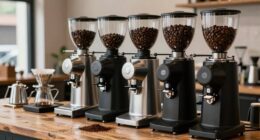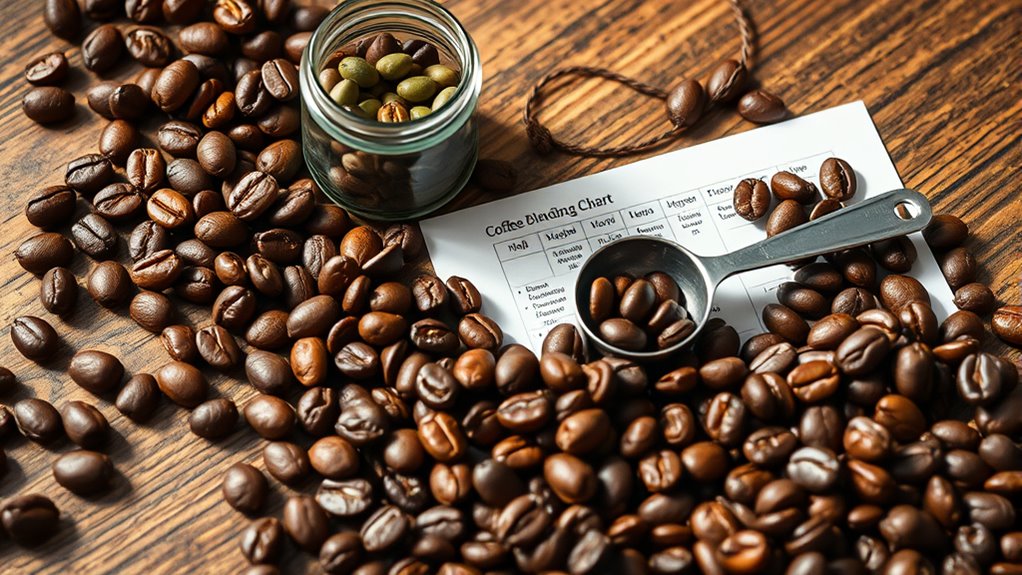

To mix coffee beans like a master roaster, start by understanding each bean’s flavor profile—such as fruity Ethiopian or chocolatey Brazilian—then taste them individually to note their body, acidity, and aftertaste. Roast each variety separately, record your process, and mix in precise ratios, like 50% base beans, 40% mid-range, and 10-20% high-note beans. Continuously test and refine your blend, adjusting ratios until you achieve your perfect flavor balance. Keep learning to perfect your signature brew.
Key Takeaways
- Start with a balanced base of full-bodied, sweet beans like Ethiopian or Brazilian varieties.
- Roast each bean type separately, recording times and temperatures for consistency.
- Experiment with small ratios, gradually adjusting until achieving the desired flavor profile.
- Keep detailed tasting notes and test blends to refine ratios and flavor harmony.
- Store beans properly and maintain consistent roasting and blending processes for reliable results.
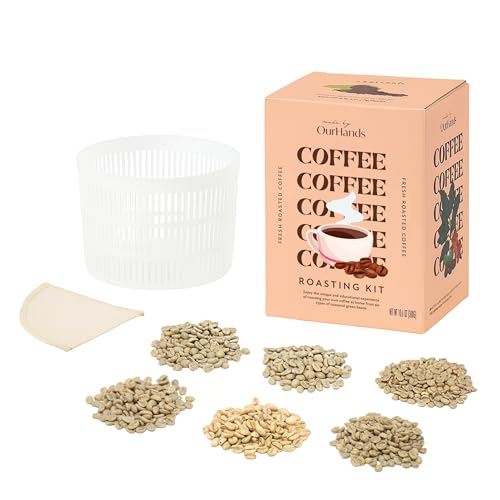
Coffee Roasting Kit by OurHands – Learn to Roast Green Coffee at Home with Your Oven – Includes 6 Varieties of Unroasted Coffee, Detailed Instructions and Coffee Roasting Tools
DIY COFFEE ROASTING KIT: Roast green coffee beans at home with our Coffee Roasting Kit. Ideal for coffee…
As an affiliate, we earn on qualifying purchases.
As an affiliate, we earn on qualifying purchases.
Understanding Your Coffee Beans and Flavor Profiles
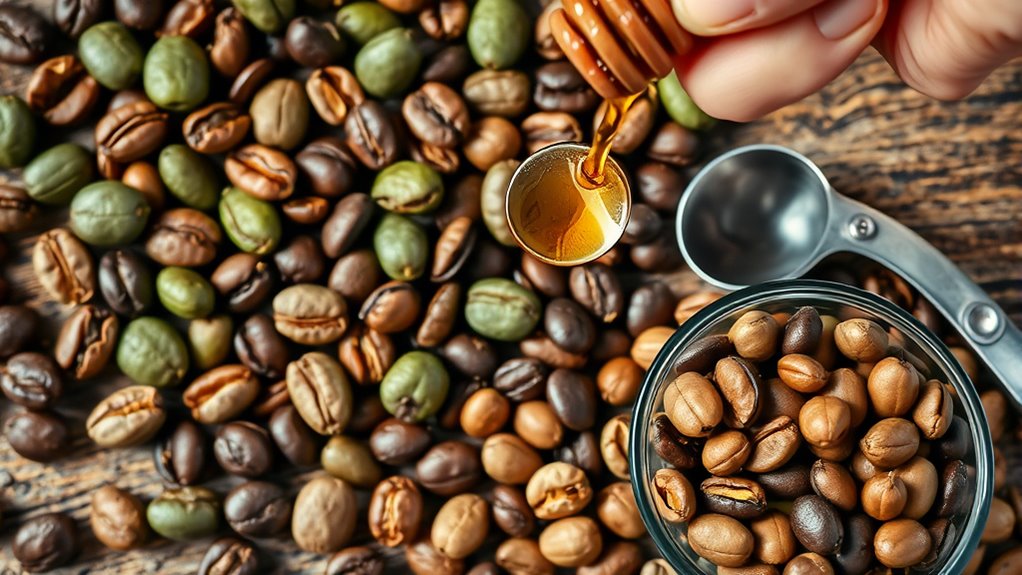
To create a well-balanced coffee blend, you first need to understand the unique flavor profiles of your beans. Different beans bring distinct characteristics—some are sweet and smooth, while others are bright and acidic. Tasting each origin individually helps you recognize these traits, such as fruity notes from Ethiopian beans or chocolatey undertones from Brazilian varieties. Pay attention to body, acidity, and aftertaste, and note how they evolve with different roast levels. Recognizing these qualities allows you to select complementary beans that create harmony in your blend. Keep detailed tasting notes to track how each bean contributes to the overall flavor. Understanding your coffee beans’ origin and processing methods helps in crafting a balanced, flavorful coffee that suits your preferences. Additionally, being aware of processing methods can influence the flavor profile, as washed or natural processes impart different characteristics to the beans. Gaining knowledge of flavor development during roasting can further refine your blending choices. Familiarity with quality control techniques ensures consistency and excellence in your final blend. Moreover, understanding how insurer’s financial stability impacts the security of your investments can be beneficial if you incorporate any financial planning components into your broader lifestyle management.

Maestri House Mini Coffee Scale with Timer, USB-C Rechargeable Espresso Scale, 2kg/0.1g Accurate Scale for Espresso and Pour-Over Coffee, Portable Digital Kitchen Scale with Auto Timer (Black&Silver)
【Ultra Small, Yet Professional】The Espresso Scale is small enough to fit in your palm. It measures 4.13*4.13*0.78 inches…
As an affiliate, we earn on qualifying purchases.
As an affiliate, we earn on qualifying purchases.
Crafting the Perfect Blend Ratio for Your Taste
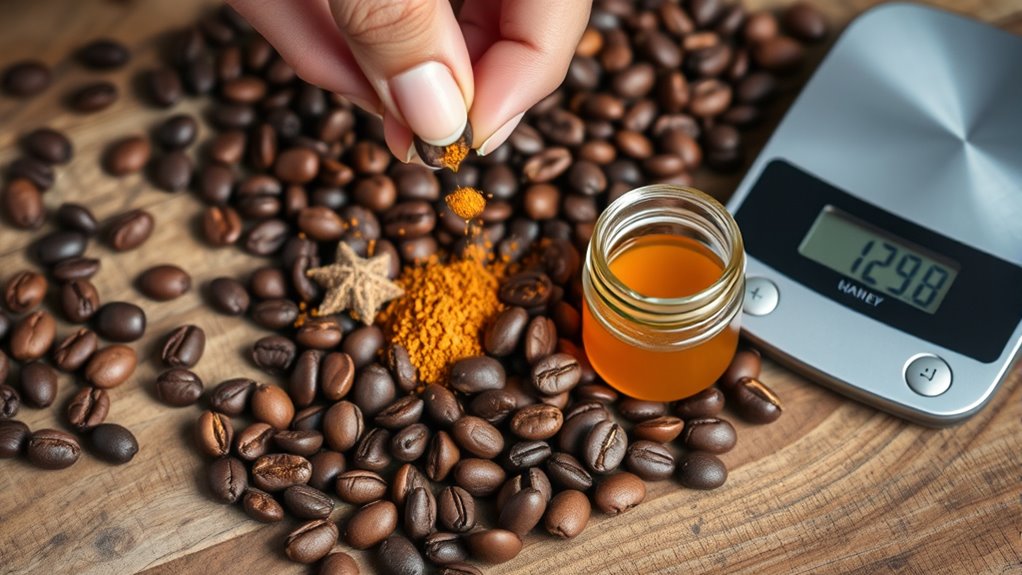
Finding the right blend ratio is key to tailoring coffee to your taste preferences. Start with a base of about 50%, typically a sweet, full-bodied bean that provides balance. Use around 40% for mid-palate beans, which add richness and complexity, and 10-20% for high-note beans to introduce brightness and floral accents. Adjust these ratios gradually, tasting after each change, to find your ideal harmony. For espresso, a common approach is 40% medium beans, 30% bright, and 30% body-focused beans, including a touch of Robusta for crema. Keep detailed notes on each variation to refine your blend over time. Remember, small adjustments can considerably impact flavor, so experiment patiently until you discover the perfect ratio, understanding that personality traits such as openness and conscientiousness can influence your taste preferences and experimentation style. Additionally, paying attention to aroma profiles can help guide your adjustments and enhance your overall coffee experience. Incorporating techniques from somatic therapy like mindful awareness during tasting can deepen your sensory connection and improve your ability to discern subtle flavor differences. Being mindful of physical sensations during tasting can also heighten your awareness of flavor nuances and improve your blending skills.
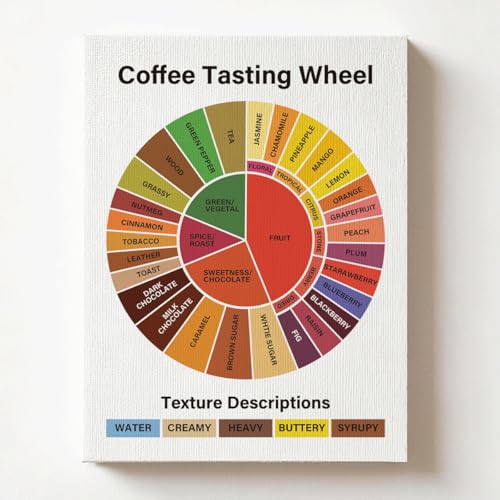
RTVJTERQ Coffee Tasting Wheel Art, 8×10 Inches Flavor Profile Oil Painting, Tasting Guide Wall Decor for Home & Cupping Sessions, Informative Art Piece, Ideal Gift For Enthusiasts
Perfect Size:This 8×10 inch Canvas Wall Art fits perfectly on café walls, living room shelves, office desks and…
As an affiliate, we earn on qualifying purchases.
As an affiliate, we earn on qualifying purchases.
Roasting and Combining Beans for Consistency
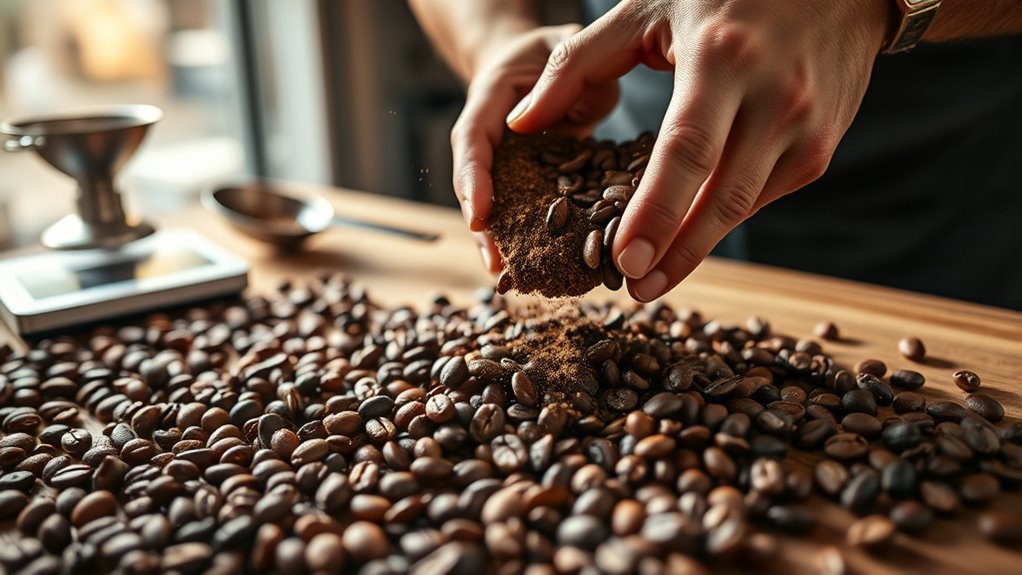
Roasting and combining beans with consistency starts with roasting each variety separately in small batches. This approach helps you control the roast level for each bean, ensuring uniformity before blending. Keep detailed notes on roast times, temperatures, and color to achieve the same profile each time. Once roasted, let the beans cool completely before mixing. Combine the roasted beans in your chosen ratios, based on your flavor goals, like 50% base, 40% mid-range, and 10% high notes. Mix thoroughly to ensure even distribution of flavors. Use small sample batches for testing, and brew each to evaluate how the blend develops. Proper record-keeping during the process can help you replicate your ideal blend consistently. Additionally, being aware of AI vulnerabilities in data management can help safeguard your records from potential cyber threats. Cybersecurity vulnerabilities during the process can compromise your data, so maintaining secure practices is essential. Moreover, understanding automation in business can streamline your roasting and blending workflows, increasing efficiency. Consistent roasting is key to achieving uniform flavor profiles, which is vital for a high-quality blend. Consistency comes from precise roasting, accurate ratios, and meticulous record-keeping, allowing you to reproduce your perfect blend every time.
Coffee Gifts – Gourmet Coffee Gift Set |9 Ground Coffee Assortment Gift Set |Coffee Sampler Gift Set, Tasting Kit |Gifts For Coffee Lovers |Ground Coffee Gift Basket |Gifts For Men And Women
Coffee Selection Gift Set: Explore the rich and diverse world of gourmet coffee with this specially curated coffee…
As an affiliate, we earn on qualifying purchases.
As an affiliate, we earn on qualifying purchases.
Experimenting and Tasting to Refine Your Mix
Experimenting and tasting are essential steps in refining your coffee blend, allowing you to identify which ratios and flavor combinations work best. Start by brewing individual beans separately to understand each profile’s strengths—note sweetness, acidity, body, and aftertaste. Mix small samples of brewed coffee in different ratios to simulate your final blend; this helps you compare flavor interactions without risking large quantities. Keep detailed records of each trial, including bean types, ratios, and tasting notes. Adjust proportions based on what you want to emphasize—more Brazilian for sweetness, less Costa Rican if overpowering. Use cupping or tasting charts to evaluate balance and harmony. Additionally, understanding flavor profile development can guide you in selecting complementary beans for a more harmonious blend. Familiarize yourself with brewing techniques to optimize extraction and flavor clarity during your testing process. Paying attention to roast levels can also significantly influence your final flavor profile. Through repeated testing and careful evaluation, you’ll discover the perfect combination that captures your desired flavor profile.
Tips for Maintaining Your Signature Blend
To guarantee your signature blend remains consistent over time, it’s essential to establish clear protocols for sourcing and processing your beans. Always buy from trusted suppliers and record batch details, including origin, roast level, and date. Maintain uniform roasting profiles for each bean type, adjusting only when necessary to preserve flavor consistency. Store your beans properly in airtight containers away from light, heat, and moisture to prevent flavor degradation. Consistently measure your blend ratios, using a scale for accuracy. Keep detailed logs of every batch, noting changes in sourcing, roasting, or ratios. Regularly taste test your blend to catch any flavor shifts early. Understanding Best Beaches can also inspire relaxed and creative atmospheres that enhance your coffee experience. Additionally, understanding divorce laws can help you navigate potential legal considerations if your coffee business involves partnerships or co-owners. Proper documentation and supply chain management are crucial to maintaining quality and consistency in your signature blend. Developing a quality control process ensures that each batch meets your standards before it reaches customers. Being aware of retirement planning strategies can also be beneficial if you’re considering long-term investments in your coffee venture. By following these practices, you make certain your signature coffee remains reliably excellent, cup after cup.
Frequently Asked Questions
How Do I Choose the Best Beans for My Ideal Flavor Profile?
You choose the best beans by identifying your preferred flavor profile first. If you want sweetness and body, pick a base bean with a round, sweet character. For brightness and floral notes, select fruity Arabicas from regions like Ethiopia or Colombia. Combine complementary flavors, like chocolaty Brazilian beans with fruity Ethiopian ones, and avoid overpowering pairings. Experiment with different ratios, roast levels, and brewing methods to refine your perfect blend.
What Is the Optimal Roast Level for Balanced Blends?
Hit the nail on the head with a medium roast level for balanced blends. You’ll find it hits a sweet spot, offering enough acidity, brightness, and body without overpowering flavors. Roast just to the first crack, then cool quickly to preserve nuanced aromas. This stage lets the beans develop rich, complex flavors while maintaining clarity — perfect for a well-rounded cup that appeals to a broad palate.
How Can I Prevent Flavor Loss During Blending?
To prevent flavor loss during blending, you should roast each bean separately to control their distinct flavors. Keep detailed records of your ratios and tasting notes, then blend roasted beans in small batches for evaluation. Brew samples individually before mixing, ensuring consistency in grind size and brewing method. Store your beans properly, and adjust ratios based on taste tests to maintain the integrity of each flavor component.
What Tools Are Essential for a Home Coffee Blending Setup?
You need a scale to measure precise bean ratios, a grinder for consistent grind size, and a timer to track roast times. Invest in a good coffee roaster or access to one, plus tasting cups for evaluation. Keep notes on each blend, and have storage containers to keep beans fresh. A coffee brewing method like a pour-over or French press helps you evaluate flavor accurately during trials.
How Long Can I Store Blended Beans Without Losing Freshness?
You should store blended beans for no more than two to four weeks to maintain freshness. Keep them in an airtight container, away from light, heat, and moisture. Avoid frequent opening, which exposes beans to air and accelerates staling. For ideal flavor, grind only what you need just before brewing, and consider vacuum-sealing or resealable bags to prolong freshness during storage.
Conclusion
Now that you know how to select, blend, and refine your coffee beans, you’re ready to craft your signature brew. Think of it like painting a masterpiece—each stroke adds depth and character. Don’t be afraid to experiment, much like an alchemist in a medieval workshop, blending ingredients to discover gold. Keep notes, stay curious, and soon you’ll be brewing coffee that’s uniquely yours, with the finesse of a master roaster and the spirit of a pioneer.