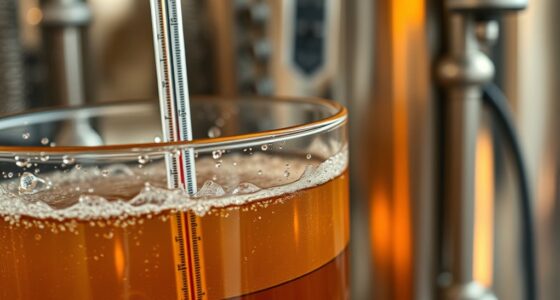
Effective water planning helps you achieve more predictable brewing results by carefully controlling mineral content and pH levels. By understanding and adjusting these factors, you can influence flavor, clarity, and enzyme activity, leading to consistent styles every time. Proper water management also reduces off-flavors and equipment issues. When you plan your water profile in advance, you set yourself up for smoother brewing, with fewer surprises along the way—continue exploring how to master water chemistry for better brews.
Key Takeaways
- Water planning enables precise adjustments to mineral content, aligning water profiles with specific beer styles.
- It helps maintain optimal pH levels, ensuring consistent enzyme activity and starch conversion.
- Proper water management reduces off-flavors caused by mineral imbalances and improves clarity.
- It allows proactive troubleshooting, minimizing variability between batches.
- Tailored water treatment enhances overall process control and final product quality.

Water is the foundation of brewing, making careful planning indispensable to produce high-quality beer. When you understand your water’s chemistry, you gain control over a pivotal aspect of the brewing process. Knowing the mineral content, such as calcium, magnesium, sulfate, and chloride, helps you tailor your water to match the style of beer you want to create. This preparation allows you to influence flavor, mouthfeel, and clarity, leading to more consistent results. Water chemistry isn’t just about adding minerals; it involves understanding how these elements interact during mashing and boiling, affecting enzyme activity and extraction efficiency.
One of the most important elements of water planning is pH optimization. As you fine-tune your water, you need to monitor and adjust the pH levels to guarantee they stay within ideal ranges. The mash pH, typically between 5.2 and 5.6, plays a fundamental role in enzyme activity, starch conversion, and protein breakdown. When you start with water that’s too alkaline or too acidic, it can lead to unpredictable fermentation, off-flavors, or cloudy beer. Adjusting the water’s pH before mashing, often with acids or buffers, helps you achieve the right balance, ensuring enzymes work efficiently and the wort extracts desired flavors.
Having a clear plan for how you’ll handle water chemistry and pH optimization means you’re less likely to encounter surprises during brewing. It allows for consistency, especially if you’re experimenting with new recipes or scaling up production. When you know your water profile, you can make precise adjustments—adding calcium sulfate for brightness or reducing bicarbonates to prevent excessive alkalinity—so that each batch aligns with your target flavor profile. Additionally, understanding water chemistry helps you optimize your brewing process by reducing the risk of off-flavors caused by mineral imbalances. Proper water management can also enhance the efficiency of your brewing equipment, leading to better overall results. Being familiar with pH stability and how to maintain it ensures your brewing process remains predictable and reliable. Furthermore, staying informed about water treatment options can help you achieve the ideal water profile tailored to specific beer styles.
Furthermore, water planning gives you predictability. Instead of reacting to issues during or after brewing, you’re proactively setting the stage for success. This means less troubleshooting, fewer off-flavors, and a more streamlined process overall. You can also compare your water profile to historic data or brewing guidelines for specific styles, ensuring your beer turns out as intended. In essence, by paying attention to water chemistry and pH optimization, you’re taking control of a variable that profoundly impacts the final product. Your ability to produce consistent, high-quality beer improves dramatically when you plan your water carefully, making your brewing more precise and your results more predictable.
water mineral test kit for homebrewing
As an affiliate, we earn on qualifying purchases.
As an affiliate, we earn on qualifying purchases.
Frequently Asked Questions
How Does Mineral Content Affect Beer Flavor?
Mineral content directly influences your beer’s flavor by affecting mineral interactions and pH balance. High mineral levels can introduce bitterness or harshness, while balanced minerals enhance malt sweetness and hop aroma. Proper water planning helps you manage mineral interactions, ensuring ideal pH balance. This control allows you to craft consistent flavors, making your beer more predictable and enjoyable, no matter the style.
What Is the Ideal Water pH for Brewing?
The ideal water pH for brewing is around 5.2 to 5.6, which helps optimize brewing acidity and flavor extraction. Maintaining this pH range guarantees your mash is neither too acidic nor too alkaline, resulting in better enzyme activity and consistent results. By monitoring water pH carefully, you can control brewing acidity, leading to more predictable and improved beer quality. Always test and adjust your water to stay within this ideal range.
How Often Should Water Testing Be Conducted?
You should test your water weekly to maintain consistency, especially since fluctuations in water hardness and pH stability can catch you off guard. Regular testing helps you catch changes early, like discovering that your water’s pH has shifted unexpectedly, which can affect your brew. By staying proactive, you guarantee your water quality remains ideal, giving you more predictable brewing results and avoiding surprises that could throw off your batch.
Can Water Adjustments Improve Beer Clarity?
Yes, water adjustments can improve beer clarity by optimizing water mineral balance and pH stabilization. When you fine-tune mineral levels, you reduce haze-causing compounds, resulting in a clearer beer. Adjusting pH helps proteins settle better during brewing, further enhancing clarity. By carefully managing these factors, you guarantee consistent, clean results, making your beer visually appealing and enjoyable for your drinkers.
What Are Common Water Treatment Methods for Brewing?
Ever wonder how brewers master consistency? They often use water treatment methods like water mineralization and pH adjustment. These techniques shape the water’s profile, influencing flavor and clarity. By controlling mineral content and acidity, you can fine-tune your water for ideal brewing conditions. This careful preparation guarantees your beer turns out just right, giving you confidence in every batch and revealing the secret to predictable, high-quality results.
Conclusion
By planning your water quality and composition, you’ll enjoy more consistent brewing results. Proper water adjustments can improve taste and reduce variations batch to batch. Did you know that water makes up about 90% of beer? That’s why paying attention to your water profile is essential. With just a bit of planning, you’ll craft better, more predictable brews every time, turning good batches into great ones and impressing your friends with your brewing mastery.