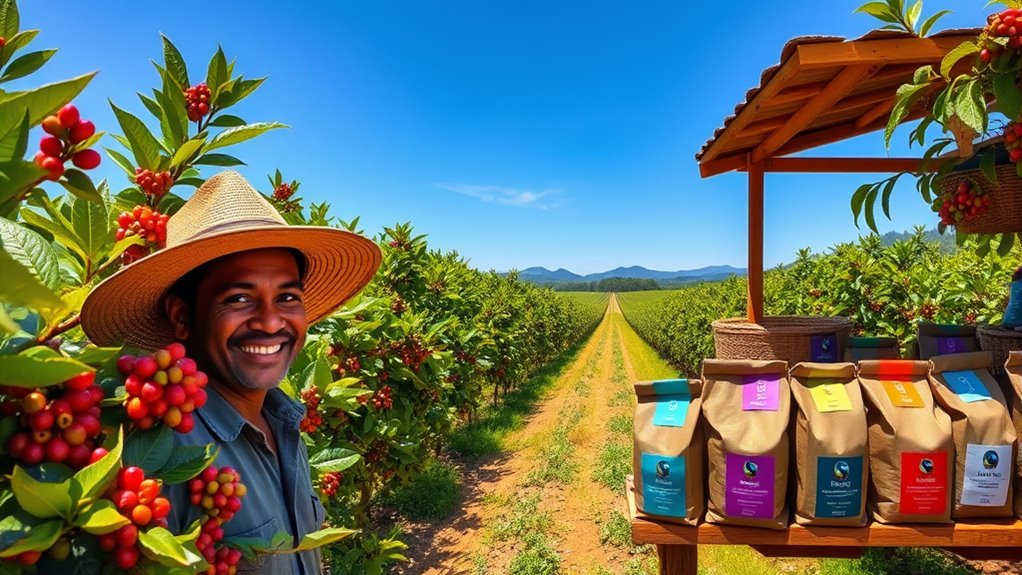

If you want to genuinely help farmers, Direct Trade often provides more immediate financial benefits through higher prices and personalized support, fostering strong relationships and tailored sustainability efforts. While Fair Trade offers community-wide premiums and structured standards, it can limit direct farmer benefits and transparency. Your choice can impact farmers’ livelihoods differently. To understand how each system influences farmers and communities, explore the details behind both approaches.
Key Takeaways
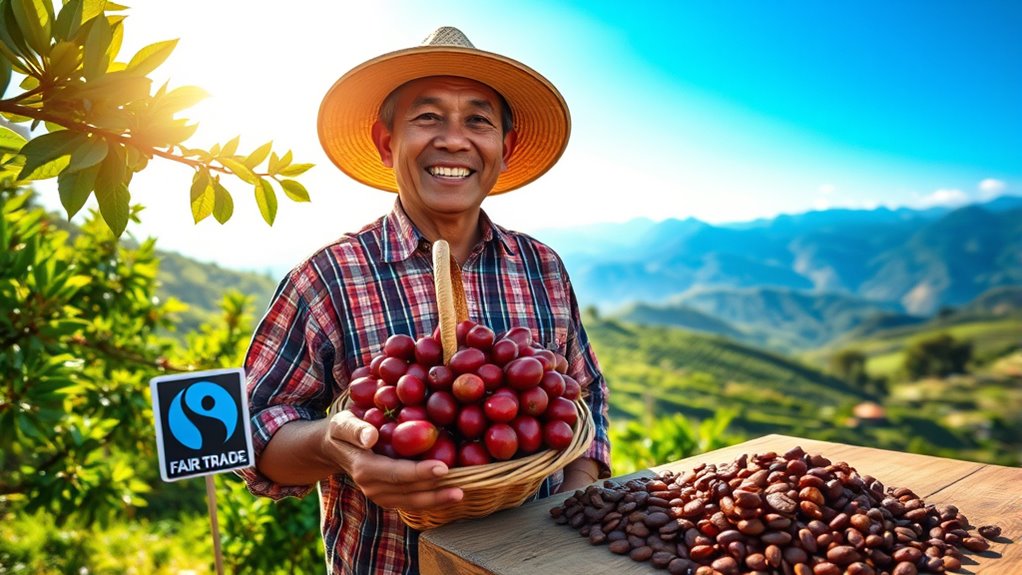
- Fair Trade provides stable minimum prices and community premiums, supporting long-term farm stability and infrastructure development.
- Direct Trade offers higher prices and premiums for quality, potentially increasing individual farmers’ income more directly.
- Fair Trade emphasizes structured social and environmental standards, ensuring community-wide benefits and sustainability projects.
- Direct Trade fosters personalized relationships, allowing tailored support and sustainable practices that can benefit farmers’ specific needs.
- Both models improve farmer livelihoods but through different mechanisms: Fair Trade via community programs, Direct Trade through individual incentives.

Fresh Roast SR540 Automatic Coffee Bean Roaster | Roast Coffee At Home | Variable Heat Settings | Convection Fan Control | Digital Status Display | Speed Roasting System | The Freshest Roast On Earth
☕ Fresh and flavorful coffee guaranteed - Why roast coffee at home? Commercially roasted whole bean coffee starts...
As an affiliate, we earn on qualifying purchases.
Understanding Certification and Relationship Models
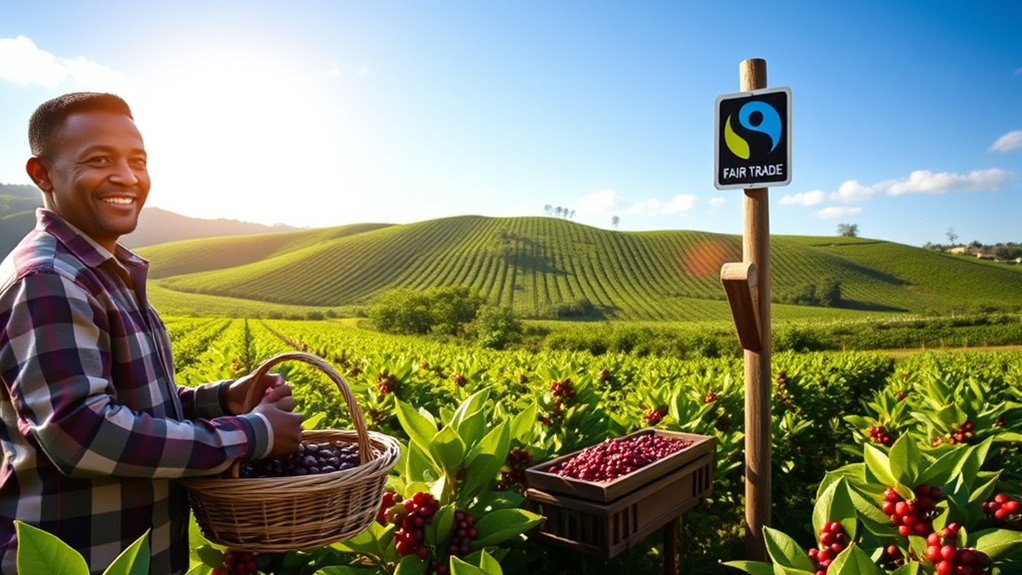
To understand the differences between Fair Trade and Direct Trade, it’s essential to examine their certification and relationship models. Fair Trade relies on third-party organizations like Fairtrade International to certify farms based on standards for pricing, labor, and environmental practices. This certification offers a level of assurance and helps smallholder farmers access international markets. In contrast, Direct Trade doesn’t involve formal certification; instead, it’s built on personal relationships between roasters and farmers. Buyers negotiate prices directly with farmers, emphasizing transparency and trust. Some roasters even combine both approaches, sourcing from Fair Trade-certified farms while maintaining direct relationships. This hybrid model aims to balance the security of certification with the benefits of personalized, direct connections. Additionally, the emphasis on quality-focused sourcing is a key factor that differentiates many Direct Trade practices from traditional Fair Trade models. Transparent pricing and consistent quality control are further distinguishing features that appeal to discerning consumers and ethical producers alike. Moreover, market access for smallholder farmers can be significantly improved through Fair Trade certification, providing them with more stable income and better working conditions. Recognizing the importance of farmer empowerment can further enhance sustainable practices and community development within coffee production. Furthermore, the focus on sustainability standards ensures that environmental and social considerations are integrated into the supply chain, benefiting both farmers and consumers.

1Pound Electric Coffee Roaster for Home Use, Automatic Roasting And Easy Operation, With A Smoke Filter(Suitable for light roasting), 2 Chimney Tube, And Chaff Collector.
【Versatile Design】 Combines automatic, assisted, and manual modes for advanced coffee roasting programs, suitable for different user needs...
As an affiliate, we earn on qualifying purchases.
Pricing Structures and Economic Benefits for Farmers
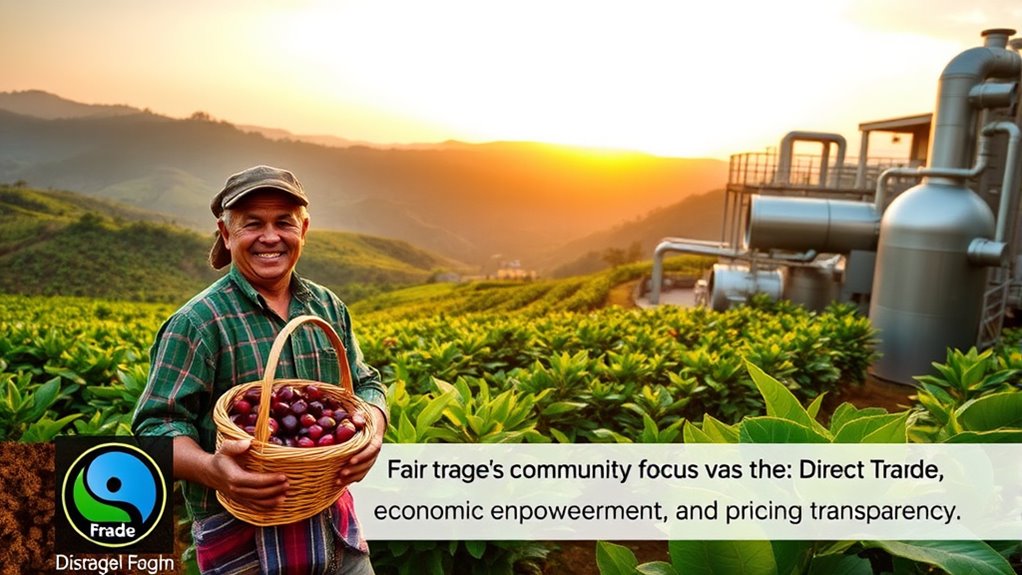
Pricing structures in Fair Trade and Direct Trade considerably impact farmers’ incomes and economic stability. Fair Trade guarantees a minimum price (around $1.40 per pound in 2021) plus a premium for community projects, protecting farmers from market fluctuations. However, the premium isn’t always directly received by individual farmers, which can limit personal gains. In contrast, Direct Trade involves direct negotiations between farmers and buyers, often resulting in higher prices—sometimes above $3.00 per pound—thanks to eliminating intermediaries and rewarding quality. This model can offer farmers more immediate and substantial financial benefits. While Fair Trade’s fixed minimum price provides stability, Direct Trade’s flexible pricing, based on quality and relationships, can lead to increased income, especially for farmers producing premium, high-quality beans.

Fresh Roast SR800 Coffee Roaster – Roast Coffee at Home – Variable Heat and Fan Control – Digital Display – Roasts 6–8 oz (170–226g) Per Batch – Easy to Use – Fast Roast Time
Fresh and flavorfull coffee guaranteed - Why roast coffee at home? Commercially roasted whole bean coffee starts to...
As an affiliate, we earn on qualifying purchases.
Emphasis on Quality and Coffee Characteristics
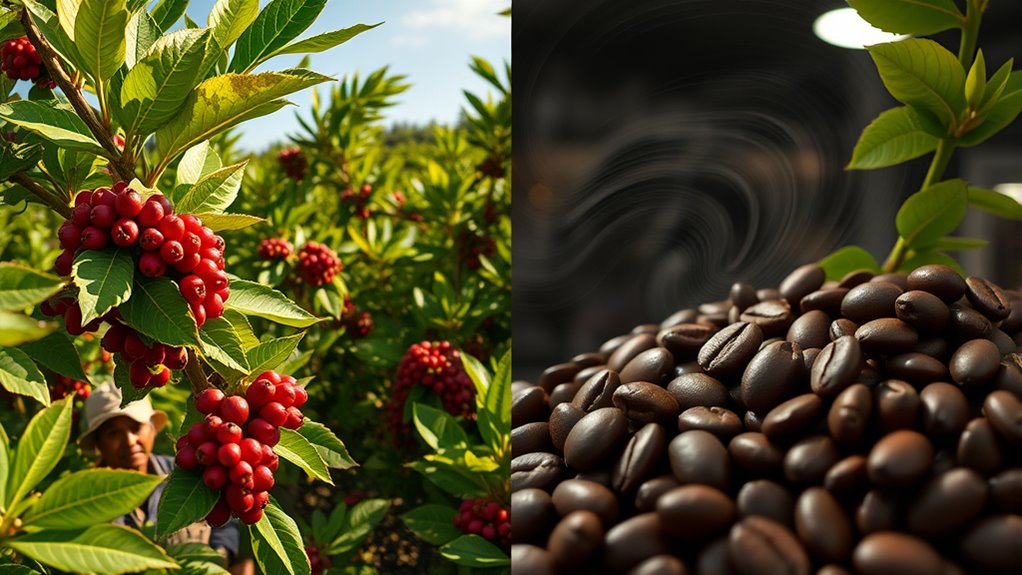
While Fair Trade certification sets general quality standards, it often prioritizes ethical and economic fairness over flavor nuances. This means the focus is on ensuring fair wages and sustainable practices rather than optimizing for coffee’s taste profile. In contrast, Direct Trade emphasizes quality and specific coffee characteristics. Roasters work closely with farmers to select premium micro-lots, refining processing methods to enhance flavor and consistency. This direct relationship allows buyers to hold farmers accountable for quality control and encourages innovation. Farmers in the Direct Trade model often receive higher premiums for exceptional beans, motivating them to maintain high standards. As a result, Direct Trade tends to produce coffee with distinct, vibrant flavors, aligning economic incentives with the pursuit of superior quality. Additionally, the emphasis on biodiversity and sustainable practices in Direct Trade can contribute to healthier coffee ecosystems and better flavor profiles.

MAGO MAGA Smart Home Coffee Bean Roaster, Digital Display, Auto and Manual Modes, 300g Capacity Ultra-low Smoke Chaff Collection, Transparent Viewing, Auto-Cooling, 120V
👍Smart Home Coffee Bean Roaster: The Roma Pro combines modern tech with classic design for professional home roasting....
As an affiliate, we earn on qualifying purchases.
Farmer Engagement and Market Accessibility
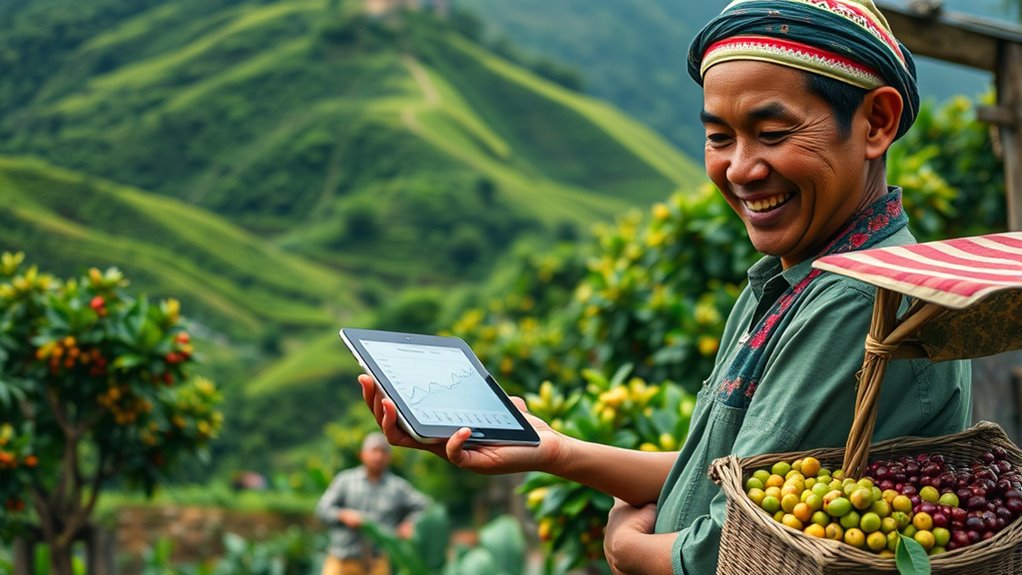
Farmer engagement and market accessibility differ markedly between Fair Trade and Direct Trade models. With Fair Trade, farmers usually sell through cooperatives, which limits direct interaction with buyers and adds bureaucratic layers. This setup often means less personalized support but broader market access for smallholders. In contrast, Direct Trade fosters direct relationships, giving farmers a chance to negotiate prices and receive tailored feedback. Additionally, market structures can influence how farmers perceive opportunities and build confidence in their market dealings. These structures also impact the development of farmer trust, which is essential for establishing long-term partnerships. Moreover, understanding the market access mechanisms helps farmers adapt to changing conditions and improve their bargaining power. Recognizing how different trade models influence farmer participation and success is crucial for developing effective strategies that support sustainable growth.
Environmental and Social Sustainability Initiatives
Environmental and social sustainability initiatives are central to both Fair Trade and Direct Trade models, though they approach these goals differently. Fair Trade emphasizes strict environmental standards, such as promoting organic farming and protecting biodiversity, enforced through third-party certifications. It also invests premiums into community projects like healthcare, education, and infrastructure, benefiting entire communities. In contrast, Direct Trade relies on personal relationships and buyer discretion to encourage sustainable practices. Farmers are incentivized to adopt environmentally friendly methods to produce high-quality coffee, which can include shade-grown or organic techniques. While Fair Trade offers formal guidelines and oversight, Direct Trade offers flexibility, allowing buyers to tailor sustainability efforts based on individual relationships and priorities. Both models aim to foster long-term farm health and community well-being but differ in structure and accountability. Additionally, monitoring standards are essential to ensure that sustainability commitments are maintained over time. Implementing effective compliance measures is crucial to uphold these initiatives and ensure continuous improvement, often involving ongoing auditing processes to verify adherence. Furthermore, transparency and accountability are vital to building trust among consumers and stakeholders, encouraging ongoing commitment to sustainability goals.
Addressing Limitations and Criticisms of Each System
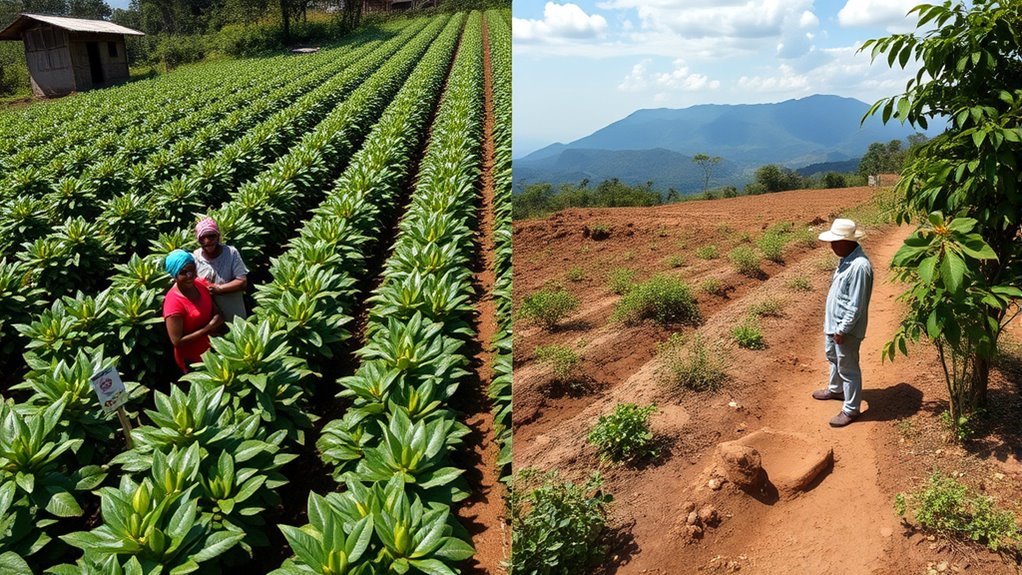
Both Fair Trade and Direct Trade face issues with transparency and certification gaps that can obscure practices and benefits. You might notice that Fair Trade’s formal certification doesn’t always guarantee ethical or quality standards, while Direct Trade’s lack of regulation makes it hard to verify claims. These challenges raise questions about how well each system aligns incentives and guarantees fair, sustainable outcomes for farmers. Additionally, self-watering plant pots exemplify how innovative tools can promote sustainable practices by reducing maintenance and overwatering, similar to how transparent trade systems aim to support farmers effectively.
Transparency and Certification Gaps
While both Fair Trade and Direct Trade aim to promote fairness and sustainability in coffee sourcing, their approaches to transparency and certification reveal significant gaps. Fair Trade relies on third-party certifications, which can be opaque and bureaucratic, making it hard to verify if standards are truly met. Conversely, Direct Trade lacks formal certification, depending on personal relationships that can vary in transparency. This creates issues like:
- Limited oversight, leading to potential inconsistencies in fair practices
- Difficulty verifying claims of sustainability and fairness
- Possible disparities in how much farmers benefit, depending on buyer honesty
These gaps mean neither system guarantees complete transparency. As a result, you might find it challenging to assess whether your coffee truly supports ethical and sustainable practices. Transparency in certifications remains a key concern for consumers seeking verified ethical sourcing.
Incentive Alignment Challenges
Incentive alignment poses significant challenges for fair trade and direct trade systems, often limiting their effectiveness in ensuring truly equitable outcomes. Fair trade’s emphasis on minimum prices and certifications can discourage farmers from investing in quality improvements, since they are guaranteed a baseline regardless of bean quality. This may reduce motivation to innovate or adopt sustainable practices. Conversely, direct trade’s reliance on personal relationships and negotiated prices incentivizes farmers to produce high-quality beans, but it can also lead to inconsistent standards and uneven benefits. Some farmers may not receive fair compensation if buyers prioritize short-term gains or lack transparency. Both systems face the risk that incentives don’t fully align with farmer well-being, potentially undermining long-term sustainability and fairness. Additionally, exploring hackathons as innovative platforms could foster new approaches to address these incentive issues and improve transparency across trading systems.
Impact on Farmer Livelihoods and Community Development
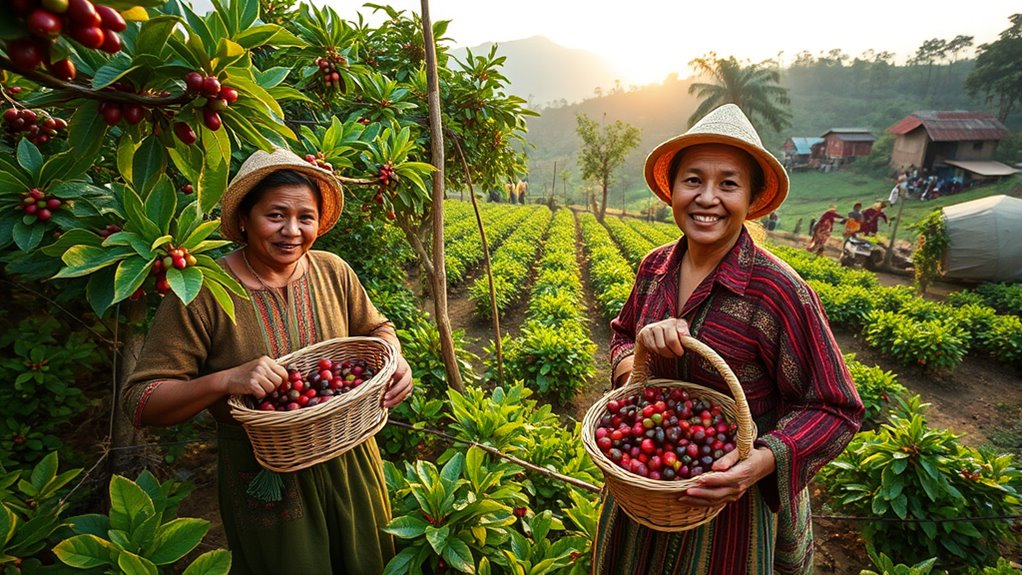
Fair Trade and Direct Trade models each influence farmers’ livelihoods and community development differently. With Fair Trade, farmers receive minimum prices and premiums, which often fund community projects like schools or clinics. However, the benefits don’t always reach individual farmers directly. In contrast, Direct Trade fosters personal relationships that can lead to higher earnings through negotiation and quality premiums, directly boosting farmers’ income and investment capacity.
You’ll notice:
- Fair Trade supports community development via premiums, but impact varies among farmers.
- Direct Trade’s focus on quality often results in markedly higher individual earnings.
- Personal relationships in Direct Trade enable tailored support and knowledge sharing, strengthening farming practices.
Both models aim to uplift communities, but their approaches and impacts differ considerably.
Factors Influencing Which System Is More Beneficial
When choosing between Fair Trade and Direct Trade, consider how price transparency and negotiation impact farmer earnings. Quality incentives and standards can also influence which system rewards growers for exceptional work, while community and environmental impacts shape long-term sustainability. Your decision depends on balancing fair pricing, quality rewards, and broader social benefits.
Price Transparency and Negotiation
Price transparency and negotiation play a crucial role in determining which coffee trading system benefits farmers more. With Fair Trade, prices are set through third-party certification, ensuring minimum prices and a transparent process that protects farmers from market volatility. In contrast, Direct Trade relies on personal relationships, allowing for direct negotiations that often lead to higher pay, especially for high-quality beans. This system gives farmers more control over pricing but might lack standardized safeguards. Market stability is also a key factor, as it influences farmers’ income security under both systems. Additionally, the price-setting mechanisms differ significantly, impacting how income fluctuations are managed. Data analysis by AI can identify trends and preferences in coffee markets, helping farmers and buyers make more informed decisions. – Fair Trade guarantees minimum prices, shielding farmers from price swings. – Direct Trade enables higher prices through direct negotiations based on quality. – Transparency in Direct Trade fosters trust but can vary, unlike the clear standards of Fair Trade. Both systems influence farmer income, but negotiation style and transparency determine which benefits farmers more.
Quality Incentives and Standards
Quality incentives and standards substantially shape which trading system benefits farmers most. With Fair Trade, standards focus on ethical practices and fair wages rather than coffee quality, providing a safety net but potentially limiting motivation for quality improvements. Understanding the Vortex can help farmers align their intentions and efforts toward continuous improvement, fostering a mindset geared toward excellence. Additionally, the emphasis on ethical standards may sometimes overlook the importance of quality enhancements, which are essential for premium market access. Conversely, Direct Trade emphasizes coffee quality, encouraging farmers to produce premium micro-lots and refine processing methods. Roasters work closely with farmers to ensure consistent flavor profiles, often paying higher prices for top-tier beans. This focus on quality creates strong incentives for farmers to innovate and maintain sustainable practices. While Fair Trade’s standards promote fairness and ethical standards, they don’t necessarily reward excellence in flavor. Direct Trade’s emphasis on quality can lead to better prices and incentives for farmers committed to producing exceptional coffee. Incorporating natural materials such as wood and linen in farming and processing environments can further enhance quality and sustainability.
Community and Environmental Impact
Community and environmental impacts are central to determining which coffee trading system benefits farmers and their regions most. Fair Trade’s standards promote sustainable farming practices, ensuring environmental protection and supporting community development through premiums. You benefit from structured programs that fund education, healthcare, and infrastructure, helping entire regions thrive.
In contrast, Direct Trade fosters sustainable practices through direct relationships, often encouraging innovative farming methods tailored to specific farms. You might see quicker adoption of eco-friendly techniques due to personalized support.
- Fair Trade guarantees community projects and environmental standards via certification.
- Direct Trade promotes sustainability through long-term relationships and quality-focused practices.
- Both systems impact regions differently, with Fair Trade providing more structured community benefits and Direct Trade emphasizing tailored farm sustainability.
Frequently Asked Questions
How Do Certification Costs Affect Small Farmers’ Profitability?
Certification costs can cut into your profitability by making it more expensive to participate in programs like Fair Trade. These fees, along with paperwork and compliance, can be especially burdensome for small farmers with limited resources. As a result, some farmers might find it harder to cover expenses and earn a fair income, which impacts their overall profitability and ability to invest in better farming practices.
Can Direct Trade Relationships Ensure Consistent Quality Over Years?
Think of direct trade like planting a seed in a personal garden—when you nurture relationships, consistency blossoms year after year. By working closely with farmers, you can monitor practices, give feedback, and refine processes, helping guarantee stable quality. While it’s not foolproof, this personal touch fosters trust and communication, making it more likely that farmers will produce high-quality beans consistently, season after season.
Do Premium Prices Directly Reach Individual Farmers or Just Cooperatives?
Premium prices in direct trade often reach individual farmers, but it depends on the relationship. When you buy directly from farmers, roasters typically negotiate prices that can be higher than Fair Trade minimums, and these payments may go straight to the farmers. However, in some cases, premiums are shared with cooperatives or distributed through other channels. You should ask your roaster how they guarantee the premiums benefit individual farmers directly.
How Are Environmental Standards Enforced in Non-Certified Direct Trade Models?
You might be surprised to learn that only about 10-20% of direct trade relationships include formal environmental standards. In non-certified direct trade models, environmental standards are enforced through buyer-farmer agreements, personal audits, and ongoing communication. Buyers often work closely with farmers to implement sustainable practices, offering guidance and resources. This flexible approach relies on mutual trust and shared commitment, rather than formal certification, to promote environmental responsibility.
Which System Better Promotes Long-Term Sustainability for Farmers?
You’ll find that Fair Trade generally promotes longer-term sustainability because it has formal environmental standards and community-focused premiums that support farmers’ livelihoods and ecosystems. While Direct Trade fosters sustainability through personalized relationships and quality incentives, it lacks standardized environmental guidelines. Hence, Fair Trade’s structured approach better guarantees farmers can sustain their farming practices, communities, and environments over the long run, especially when adherence to environmental standards is vital.
Conclusion
Ultimately, whether fair trade or direct trade benefits farmers more depends on your priorities. As you explore these systems, you might find that supporting transparency and sustainable practices often leads to better livelihoods. Coincidentally, many farmers report that building direct relationships not only boosts income but also strengthens communities. So, when choosing your coffee, consider how your purchase aligns with these values—sometimes, the true impact is felt where you least expect it.