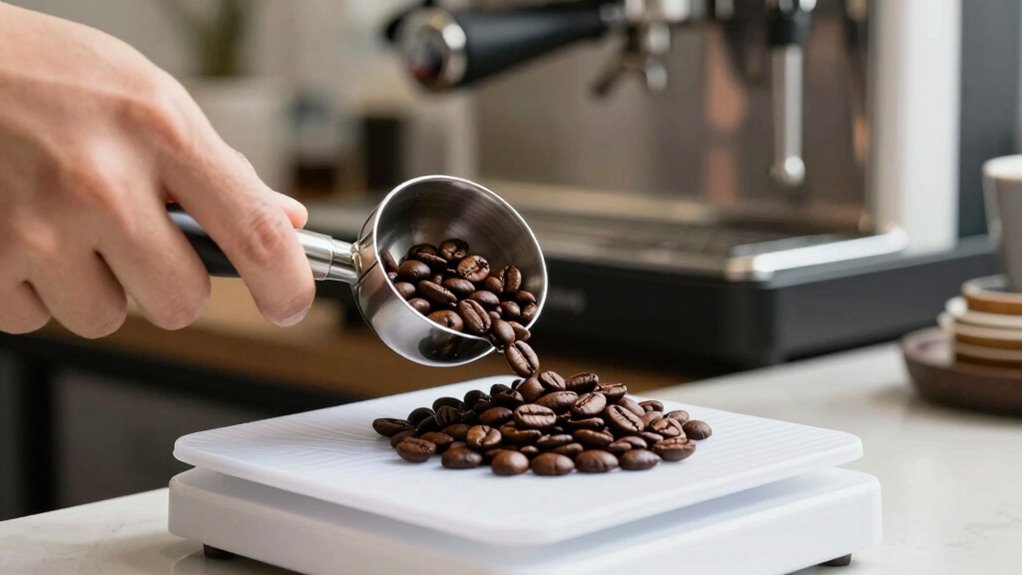

Better measuring can markedly help you cut down on wasted beans and avoid bad cups. When you measure shot by weight, you guarantee each brew is consistent and balanced, preventing over- or under-extraction. Precise measurements also help you use only what you need, reducing waste. Plus, they make it easier to repeat successful recipes for great flavor every time. Keep exploring how fine-tuning your measurements can elevate your coffee game even more.

Get coffee and tea gear delivered free — and shop member deals
- Fast, free delivery on millions of items
- Access to Prime Big Deal Days deals on October 6–7
- Prime Video, Amazon Music and more included
Key Takeaways
- Precise measurement ensures consistent coffee strength, reducing the need to discard poorly brewed or overly strong cups.
- Accurate weighing minimizes overuse of beans, preventing waste and extending overall coffee freshness.
- Standardized measurements lead to predictable extraction, resulting in better-tasting coffee and fewer bad cups.
- Consistent dosing helps maintain optimal grind size and brewing variables, improving overall cup quality.
- Better measuring promotes mindful brewing, enabling adjustments for ideal flavor and reducing waste caused by trial and error.
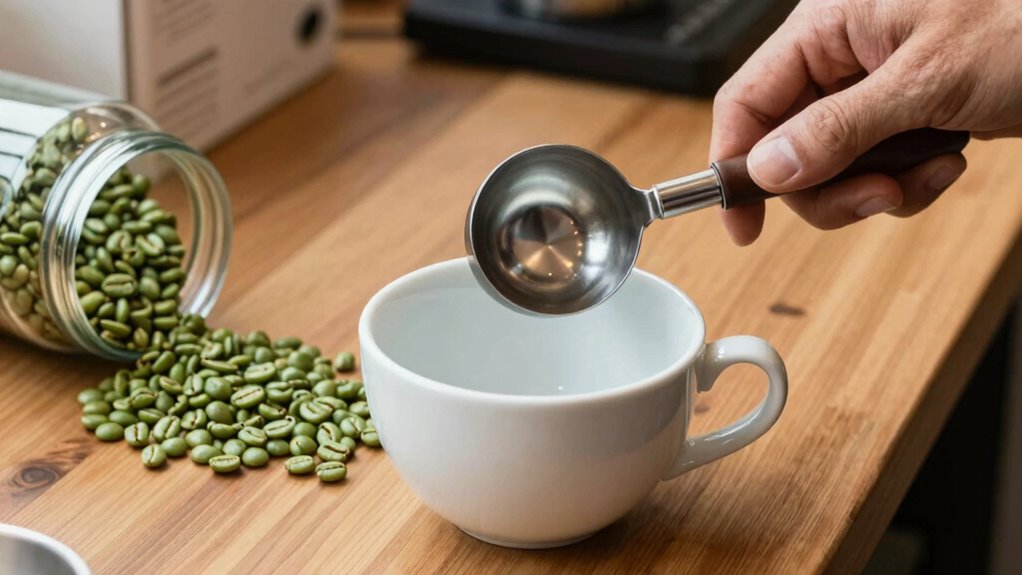
If you want to improve your coffee quality and reduce waste, better measuring can make a significant difference. Precise measurement ensures that every cup you brew hits the mark, maintaining optimal coffee freshness and flavor. When you measure accurately, you avoid overdoing it, which not only saves beans but also prevents that bitter or weak taste that comes from inconsistent doses. Coffee freshness depends heavily on how well you manage your beans; using the right amount preserves their aroma and flavor longer, making each brew more satisfying.
One of the most overlooked aspects of brewing is grinder precision. If your grinder isn’t consistent, you could be over-extracting or under-extracting your coffee, which results in bad cups and wasted beans. A high-quality grinder with adjustable settings allows you to achieve uniform particle size. When your grind is precise, your coffee’s extraction becomes more predictable, and you get a better balance of flavors. This consistency means you don’t need to use more beans than necessary, reducing waste. Plus, precise grinding helps keep your coffee fresher longer because you’re not exposing more surface area than needed, which accelerates staling. Grinder consistency plays a crucial role in maintaining optimal extraction and flavor balance.
High-quality, adjustable grinders ensure uniform particle size, better flavor balance, and longer-lasting coffee freshness.
Measuring coffee accurately isn’t just about using a scale; it’s about understanding the relationship between dose and brew quality. When you measure coffee by weight, rather than volume, you eliminate variability caused by bean density or grind size. This precision helps you replicate the same great taste every time, ensuring you don’t brew too weak or too strong, both of which can lead to waste. For instance, if you accidentally use too much coffee, you might end up with a bitter, over-extracted cup that’s unpleasant to drink. Conversely, using too little results in a weak, underwhelming brew. Proper measurement raises your consistency and sidesteps these issues, saving your beans and your palate.
Additionally, better measuring encourages a mindful brewing process. When you pay close attention to how much coffee you use, you become more aware of how different variables—like grind size, water temperature, and brew time—interact. This awareness can be enhanced by understanding the significance of measurement accuracy, which is supported by research indicating that precise measurement practices improve brewing outcomes. This helps you fine-tune your method, producing consistently better cups and avoiding unnecessary waste. Understanding the importance of precise measurement and grinder consistency is essential for optimizing your brewing results. Over time, you’ll develop an intuitive sense of the right measurements, which makes brewing more efficient and enjoyable. Ultimately, adopting precise measurement practices, combined with grinder precision, allows you to maximize coffee freshness, minimize waste, and enjoy better-tasting coffee every day.
As an affiliate, we earn on qualifying purchases.
Frequently Asked Questions
How Does Measuring Impact Overall Coffee Quality?
Measuring directly impacts your coffee quality by enabling precision brewing, which guarantees you use the right amount of beans and water. This consistency leads to flavor stability and prevents over- or under-extraction. When you measure accurately, you maintain flavor consistency, making each cup reliably delicious. Proper measurement helps you fine-tune your process, ultimately elevating your coffee experience and reducing waste from poorly brewed, inconsistent cups.
Are Digital Scales More Accurate Than Traditional Methods?
Digital scales are more accurate than traditional methods because they offer greater precision and consistency. You can easily measure exact amounts of beans or water, reducing variability that impacts flavor. Unlike manual measuring tools, digital scales eliminate guesswork, ensuring every brew is consistent. This accuracy helps you reduce waste, improve quality, and consistently craft better cups, making them a valuable tool for any coffee enthusiast aiming for perfect results every time.
Can Measuring Techniques Vary by Coffee Type?
Yes, measuring techniques can vary by coffee bean type because different beans have distinct densities and flavor profiles. You should adjust your measurement method to maintain consistency, ensuring each brew is balanced and flavorful. For example, lighter roasts may require slightly more beans by volume, while darker roasts might need less. Consistent measurement of coffee beans helps you achieve reliable taste and reduces waste, regardless of the coffee type.
What Are Common Mistakes in Measuring Coffee?
You often make mistakes in measuring coffee by not paying attention to your coffee grind and water temperature. Using the wrong grind size can lead to over- or under-extraction, affecting flavor. Additionally, not maintaining the proper water temperature can result in weak or bitter coffee. To improve, measure your coffee accurately, adjust your grind based on your brewing method, and guarantee your water hits the ideal temperature for a better cup every time.
How Often Should I Calibrate My Measuring Tools?
You should calibrate your measuring tools regularly—ideally once a month or whenever you notice measurement inconsistencies. Calibration frequency guarantees measurement consistency, helping you maintain the right coffee-to-water ratio every time. By staying on top of calibration, you prevent under or over-measuring, reduce waste, and improve your coffee’s quality. Consistent measurements build confidence, save money, and lead to better tasting cups, so don’t delay in checking your tools regularly.
Conclusion
By mastering precise measurements, you can turn your coffee routine into a well-tuned symphony rather than a chaotic noise. Better measuring acts like a skilled conductor, guiding each bean and brew to create the perfect harmony of flavor. When you pay attention to these small details, you’ll not only reduce waste but also elevate each cup to a work of art. In the end, accurate measurement is the compass that steers your coffee journey toward consistency and excellence.
Fall Picks
fall essentials
As an affiliate, we earn on qualifying purchases.