To budget effectively for a better home coffee setup, focus on balancing quality and cost across water, beans, and gear. Use filtered or purified water to improve flavor and protect your equipment without overspending. Invest in a good grinder and reliable brewer, choosing affordable options that last. Buy high-quality beans in bulk, stored properly for freshness. Planning for future expenses and maintenance helps save money long-term. Keep going to discover how to make your coffee experience both affordable and exceptional.
Key Takeaways
- Allocate your budget by prioritizing quality gear like burr grinders and reliable brewers for long-term savings.
- Use filtered or purified water to improve flavor and extend equipment lifespan, reducing maintenance costs.
- Choose high-quality beans in bulk or from local roasters to maximize freshness and cost-efficiency.
- Regularly maintain equipment and replace filters to prevent mineral buildup and costly repairs.
- Plan for incremental upgrades and replacements to optimize your setup without overspending.
Understanding Your Coffee Budget
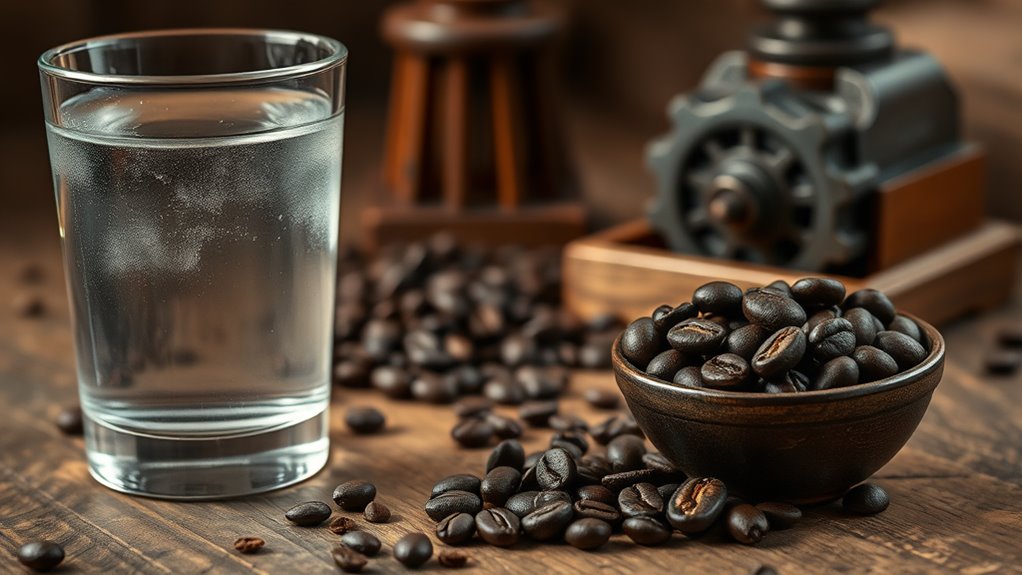
Before investing in a home coffee setup, it’s essential to understand your budget and how much you’re willing to spend. Determine your maximum spending limit to avoid overspending on equipment. Consider the costs of good quality machines, grinders, and accessories, which can range from a few hundred to over a thousand dollars. Remember, entry-level drip coffee makers are affordable, starting around $20, while espresso machines can cost upwards of $500. Set a realistic budget that balances your coffee habits and desired quality. Keep in mind that investing in better equipment may have higher upfront costs but can lead to long-term savings and improved taste. Additionally, understanding the costs of premium equipment can help you make an informed decision that aligns with your financial plans. Being aware of the initial investment required can also prepare you for potential upgrades or maintenance costs down the line. Proper planning and budgeting for maintenance ensure your setup remains reliable and cost-effective over time. Incorporating reliable maintenance practices can extend the lifespan of your coffee gear and protect your investment, especially when considering the durability of equipment over prolonged use.
Selecting the Right Equipment for Your Needs

Choosing the right equipment for your home coffee setup depends on your brewing preferences, budget, and how much effort you want to invest. If you prefer quick, simple coffee, an entry-level drip maker or French press might suit you best. For richer, more customizable drinks, consider a high-quality espresso machine or pour-over setup. Budget-friendly options like AeroPress or manual pour-over brewers cost less upfront and are easy to operate. If you prioritize consistency and precision, investing in a good burr grinder and temperature-controlled kettle makes sense. Keep in mind that more advanced equipment offers better results but comes with higher costs. Matching your gear choices to your taste, routine, and financial comfort to build a setup that keeps your coffee satisfying without breaking the bank. Additionally, understanding coffee brewing techniques can help you improve your at-home coffee experience and fully utilize your equipment. Exploring equipment maintenance is also crucial to ensure your gear remains in optimal condition and delivers consistent quality. Proper equipment calibration can further enhance your brewing results and help you achieve your desired flavor profile. Understanding Ford Tuning can help you optimize performance and efficiency if you’re interested in customizing your vehicle. Moreover, considering cost-effective options can further enhance your budget-friendly coffee setup and maximize your investment.
Investing in Quality Water for Better Flavor

Using filtered water in your coffee setup can ensure flavor and extend your equipment’s lifespan. The mineral content in your water affects extraction and taste, so balancing these minerals is vital. Regularly maintaining and invigorating your water supply guarantees consistent, high-quality brews every time. Incorporating water quality assessments can further optimize your brewing results, especially considering the importance of air purification technology in maintaining a healthy indoor environment. Additionally, monitoring mineral balance can help prevent scale buildup and preserve the integrity of your coffee equipment. Ensuring your doorbell remains Wi-Fi connected is also crucial for continuous operation and optimal video quality. Proper water testing can identify imbalances early, helping you adjust your treatment process for the best brewing experience.
Filtered Water Benefits
Investing in quality water is essential for brewing better coffee at home, as water makes up about 98% of your cup. Using filtered or purified water helps eliminate minerals, chlorine, and other impurities that can distort flavor and cause mineral buildup in your equipment. When water tastes clean and neutral, your coffee’s true flavors shine through, making each cup more enjoyable. Additionally, filtered water reduces the risk of scale buildup inside your machine, extending its lifespan and reducing maintenance costs. While the initial investment in a good water filter or purifier may seem extra, it pays off with better-tasting coffee and less equipment trouble. Incorporating consistent quality into your brewing routine ensures that every cup is as flavorful as possible. Moreover, maintaining water quality can prevent equipment damage caused by mineral deposits, ultimately saving you money on repairs and replacements. Ensuring your water source is reliable and free of contaminants can also contribute to a more consistent brewing process, leading to better overall results. Properly treated water can also improve the overall aroma and flavor of your coffee, making each brewing experience more satisfying. Overall, investing in quality water elevates your brewing experience and ensures consistent, flavorful results.
Mineral Content Impact
Since mineral content in water directly affects both flavor and your coffee equipment’s longevity, paying attention to water quality is vital. High mineral levels, like calcium and magnesium, can enhance extraction and create a richer taste, but too much causes scale buildup in your machine. Conversely, water with low mineral content may produce flat, dull coffee. Using water with the right balance—often referred to as “balanced hardness”—ensures ideal flavor and prevents mineral deposits that can damage equipment over time. Investing in filtered or purified water helps regulate mineral levels, giving you consistent, better-tasting coffee while protecting your machine. Proper water mineral content is essential for optimal brewing results and equipment durability. Adjusting mineral content through water treatment or choosing the right water source is a small but essential step toward elevating your home brew. Additionally, understanding water chemistry can help you tailor your water quality to suit your specific coffee preferences and equipment needs.
Proper Water Maintenance
Maintaining high-quality water is essential for brewing better coffee and protecting your equipment. Poor water quality can cause mineral buildup, scale, and off-flavors, diminishing taste and lifespan. Invest in a good water filter or purifier to remove chlorine, sediments, and unwanted minerals. Regularly check and replace filters to ensure superior performance. If your tap water is hard, consider using softened or reverse osmosis (RO) water, which can be mixed with mineral supplements to enhance flavor. Avoid using distilled water alone, as it lacks minerals critical for extraction. Proper water maintenance is a cost-effective way to improve your coffee’s taste and extend your machine’s life, making it a crucial part of your home brewing budget. Additionally, choosing low mineral content water can help prevent scale buildup and improve extraction consistency.
Choosing Beans: Cost and Quality Considerations

Choosing the right beans is essential for getting the best flavor from your home coffee setup without overspending. High-quality beans cost between $2.69 and $4.04 per pound, enough for about 40 cups. Freshly ground whole beans deliver richer, more complex flavors than pre-ground options, so investing in a good burr grinder is worthwhile. While premium beans can be pricier, they often last longer if stored properly in airtight containers, maintaining freshness. Consider your taste preferences and brewing method when selecting beans; lighter roasts highlight delicate flavors, while darker roasts offer boldness. Avoid overly cheap beans, which may be stale or inferior in quality. Balancing cost and quality ensures you enjoy great coffee without breaking your budget. Regularly replenishing fresh beans keeps your brew consistently flavorful. Additionally, tuning your grinder settings can further enhance flavor extraction and overall coffee quality, especially when using ground coffee designed for espresso machines.
Balancing Initial Investment and Long-Term Savings
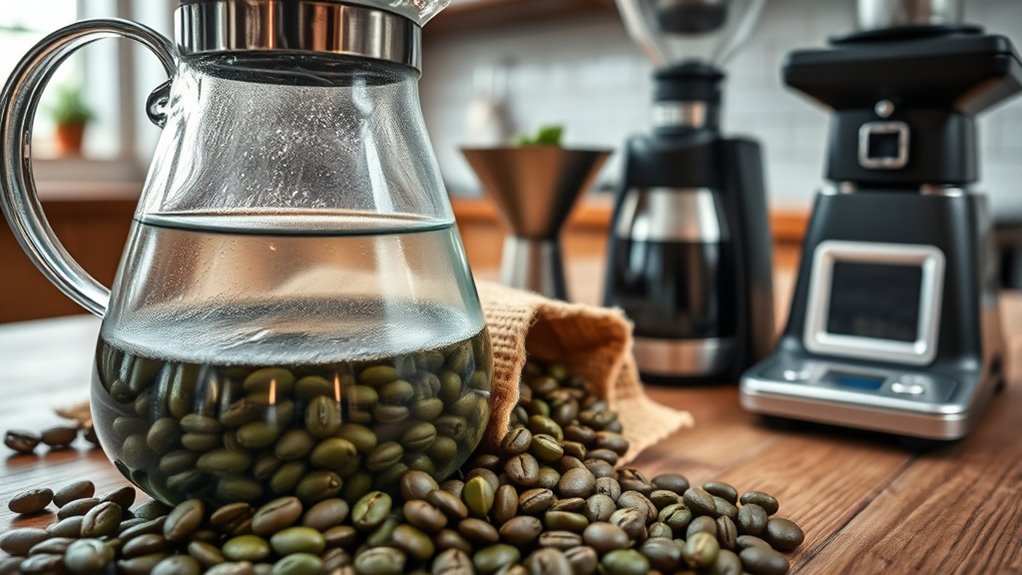
Investing in quality equipment may cost more upfront, but it often pays off with better results and durability. Balancing this initial expense against long-term savings helps you avoid frequent replacements and repairs. Ultimately, choosing the right gear means you enjoy great coffee now and save money over time.
Upfront Costs Vs Savings
While the initial cost of setting up a home coffee station may seem high, it often pays off quickly through long-term savings. Investing around $300 to $470 in quality equipment, like a reliable grinder and brewer, can reduce your per-cup cost from café prices of $3 to $5 down to as low as $0.32 to $1.25. With daily use, you’ll recoup your initial investment within a few months, saving hundreds annually. Although premium gear costs more upfront—$600+—it offers durability and better results, making it worthwhile over time. Keep in mind, ongoing expenses for beans, filters, and water are predictable and modest, further boosting your savings. Overall, balancing initial costs against long-term benefits makes home brewing a smart financial choice.
Investing in Quality Equipment
Opting for high-quality coffee equipment may require a larger upfront investment, but it pays off through improved durability and brewing performance. A solid espresso machine or grinder lasts longer and produces consistently better results, saving you money and frustration over time. While premium gear like temperature-controlled kettles or advanced grinders can seem costly initially, they often pay for themselves within months by reducing waste and improving extraction. Investing in quality equipment also means fewer repairs or replacements, lowering long-term expenses. Balancing this investment means prioritizing essential upgrades that enhance your brewing experience without overspending. By choosing reliable, well-built gear, you ensure each cup is better, and your setup remains cost-effective over its lifespan. Ultimately, quality gear turns your daily coffee ritual into a worthwhile, lasting investment.
Budget-Friendly Brewing Methods and Tools

Budget-friendly brewing methods allow you to enjoy high-quality coffee at home without breaking the bank. Devices like AeroPress, French press, and pour-over setups are affordable yet produce excellent results. An AeroPress costs under $50, and a basic pour-over dripper starts around $25, making them accessible options for any budget. French presses are often available for less than $30 and require minimal maintenance. These methods don’t need complex machinery or high electricity use, saving you money in the long run. Additionally, they are portable and easy to use, perfect for beginners. By choosing simple, cost-effective tools, you can brew consistently good coffee without overspending. Investing in these methods allows you to savor quality coffee daily while keeping your setup affordable.
Maintaining Your Gear Without Breaking the Bank
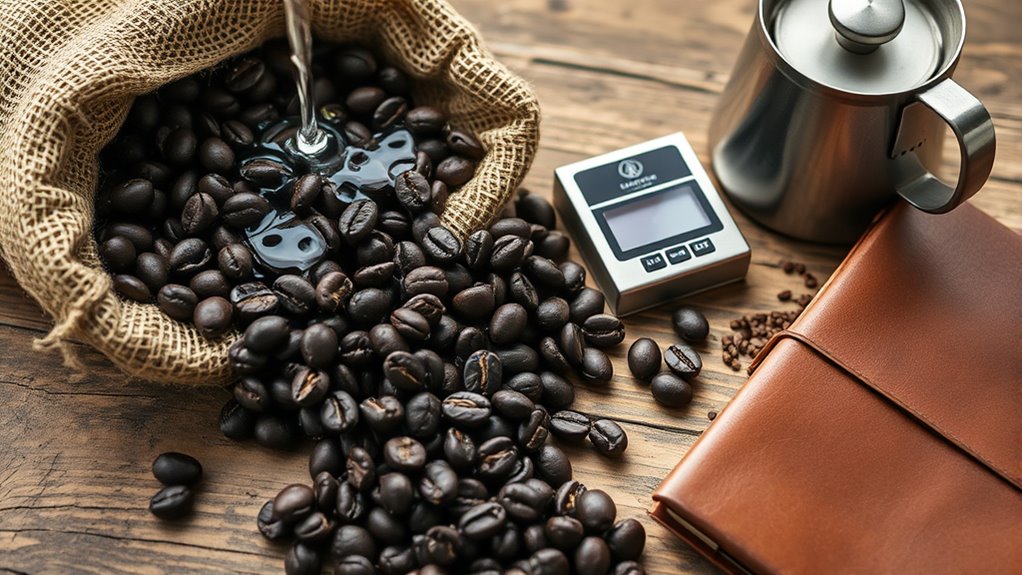
Keeping your coffee gear in good shape doesn’t have to cost a lot; simple cleaning routines and proper storage make a big difference. Regularly cleaning your equipment prevents buildup and extends its lifespan, saving you money in the long run. Using affordable storage solutions helps protect your investment and keeps your setup organized without breaking the bank.
Regular Equipment Cleaning
Ever wondered how to keep your home coffee equipment in top shape without overspending? Regular cleaning is key to prolonging your gear’s lifespan and ensuring great-tasting coffee. You don’t need fancy cleaners—just use mild soap and warm water for daily rinses. Descale your espresso machine and kettle every few months with affordable vinegar or citric acid solutions to prevent mineral buildup. Clean your grinder’s burrs with a brush or a few grams of rice to remove leftover grounds. Keep filters and drip trays sanitary by rinsing them regularly. Avoid harsh chemicals that could damage your equipment. By sticking to simple, inexpensive routines, you’ll maintain ideal performance, extend your gear’s life, and save money—proving that good maintenance doesn’t have to break the bank.
Proper Storage Practices
Proper storage is essential to preserve your coffee equipment’s performance and longevity without spending extra money. Keep your grinder, filters, and accessories in a dry, clean place away from heat and humidity to prevent damage. Use airtight containers for beans to maintain freshness and prevent stale flavors; glass or ceramic jars with tight seals work well and are affordable. For delicate equipment like scales and kettles, store them in cabinets or drawers to avoid dust and accidental damage. Avoid stacking heavy items on top of your gear, which can cause warping or scratches. Regularly check for dust or moisture buildup, and clean storage areas periodically. Proper storage safeguards your investment, ensures ideal brewing results, and helps you avoid costly repairs or replacements.
Cost-Effective Upkeep
Maintaining your coffee gear doesn’t have to be expensive or complicated. With simple habits, you can keep your setup in top shape without overspending. Regularly descaling your machine prevents mineral buildup, saving you repair costs. Cleaning grinder burrs monthly ensures consistent grind size and flavor. Replacing worn-out filters and seals promptly avoids leaks and malfunctions.
To make upkeep affordable, focus on these essentials:
- Use gentle, non-abrasive cleaning solutions for your equipment
- Schedule regular descaling with vinegar or commercial descalers
- Store beans properly to prevent mold and stale flavor
Comparing Home Brewing Costs to Café Prices

Comparing home brewing costs to café prices reveals significant savings over time. While a cup at a coffee shop costs between $3 and $5, making your own can drop that to just $0.32 to $1.25 per cup, depending on beans and equipment. For example, with an initial investment of around $300 to $470, you can brew dozens of cups, quickly offsetting the setup cost. If you drink one cup daily, you save roughly $2 to $4 per cup, totaling $700 to $1,460 annually. These savings accumulate fast, especially considering that premium home setups can pay for themselves within months. Over time, you’ll spend less and enjoy better control over your coffee quality—all while avoiding the high prices of café visits.
Planning for Upgrades and Future Expenses

Planning for upgrades and future expenses is essential to keep your home coffee setup evolving with your needs and tastes. By anticipating future costs, you can allocate your budget wisely and avoid surprises. Consider these key areas:
- Equipment upgrades: Upgrading your grinder or brewer for better consistency and quality as your skills improve.
- Replacement parts: Budget for wear-and-tear items like filters, seals, or water filters to maintain optimal performance.
- Additional accessories: Investing in tools such as tampers, scales, or temperature-controlled kettles to refine your brewing process.
Staying prepared ensures your setup stays current and functional, helping you enjoy consistently excellent coffee without unexpected expenses. Regularly reassess your needs and plan for incremental improvements to maximize your investment and brewing pleasure.
Tips for Maximizing Your Coffee Budget
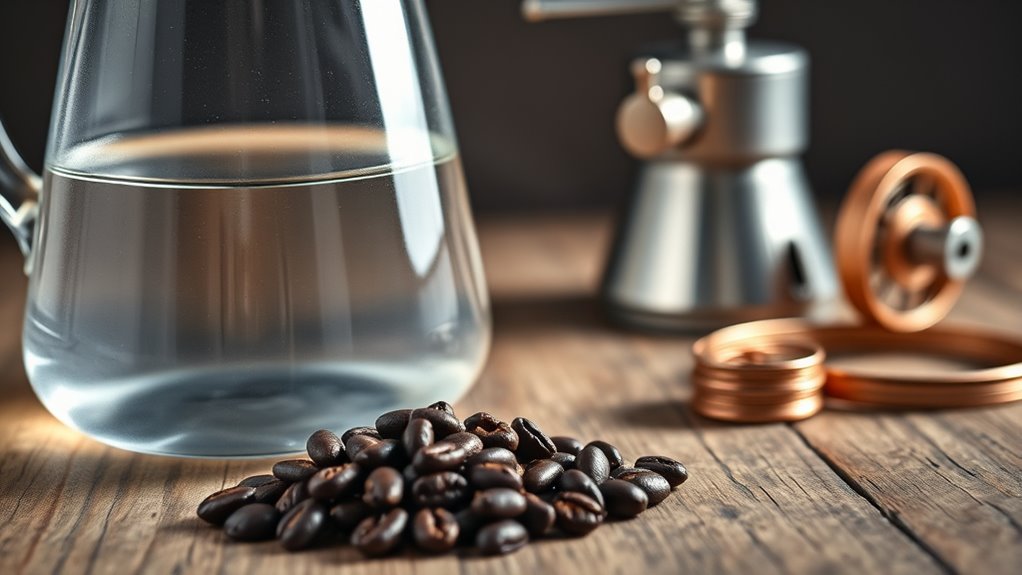
To get the most value from your coffee budget, focus on making smart choices about equipment, ingredients, and brewing habits. Invest in versatile, durable gear like a quality burr grinder and a reliable drip or pour-over setup that fits your budget. Prioritize fresh, whole beans, and buy in bulk or from local roasters to save money while maintaining flavor. Use filtered water to protect your equipment and improve taste, avoiding unnecessary repairs or replacements. Practice consistent brewing techniques to maximize extraction and flavor, reducing waste. Limit specialty drinks that drive costs up and focus on mastering a few core recipes. Regularly clean and maintain your equipment to extend its lifespan. These habits help you enjoy high-quality coffee without overspending.
Frequently Asked Questions
How Can I Reduce Water and Bean Costs Without Sacrificing Quality?
You can reduce water and bean costs by buying beans in bulk, which lowers the price per pound, and storing them properly to maintain freshness. Use filtered or purified water to avoid mineral buildup and off-flavors, but consider investing in a water filter to cut costs over time. Additionally, brew only the amount you need to prevent waste, and choose cost-effective brewing methods like AeroPress or French press to maintain quality without extra expenses.
Are Cheaper Brewing Devices Still Capable of Making High-Quality Coffee?
Are cheaper brewing devices still capable of making high-quality coffee? Absolutely. You can brew excellent coffee with budget-friendly options like AeroPress, French press, or pour-over setups costing under $50. These methods emphasize proper technique and quality beans, which matter more than expensive equipment. So, don’t assume you need the priciest gear to enjoy rich, flavorful coffee at home—smart choices and good beans make all the difference.
What Are the Hidden Expenses Beyond Initial Equipment Costs?
Beyond initial equipment costs, you’ll spend on quality beans to keep your coffee fresh and flavorful. Regularly replacing filters, cleaning supplies, and descaling agents add up over time. Don’t forget electricity bills for brewing and heating water, plus occasional upgrades or repairs for your gear. These ongoing expenses can influence your total coffee budget, so plan ahead to make sure your setup continues delivering great coffee without unexpected costs.
How Often Should I Replace Parts to Stay Within Budget?
You should replace parts like water filters every 2-3 months to maintain ideal water quality and prevent buildup. For example, a coffee enthusiast who changes filters quarterly saved on costly repairs from mineral deposits, ensuring their machine stays efficient. Regular maintenance reduces long-term expenses and keeps your brew tasting great. Keep an eye on wear items, and replace them promptly to stay within your budget and enjoy consistent, quality coffee.
Can I Upgrade Equipment Gradually to Manage Costs Effectively?
Yes, you can upgrade your equipment gradually to manage costs. Start with a basic setup like an entry-level brewer or grinder, then upgrade as your budget permits. Prioritize essential upgrades, such as a better grinder or kettle, to improve quality without overspending upfront. This approach spreads out expenses, helps you learn what you need, and guarantees you’re making thoughtful investments that enhance your brewing experience over time.
Conclusion
Think of your coffee setup as a garden. With the right planning and careful tending, your investments bloom into rich, satisfying brews without draining your wallet. By balancing quality and cost, you’ll cultivate a space where every cup feels rewarding. Keep nurturing your gear, beans, and water, and watch your home coffee garden flourish, turning simple mornings into a lush, flavorful escape. Your perfect brew is just a well-tended seed away.