Understanding coffee label details like origin, roast level, processing method, and certifications helps you pick beans that match your flavor preferences and brewing style. Look for terms like single origin, blend, or roast darkness, and note the packaging date to guarantee freshness. Recognizing symbols such as Fair Trade or Organic informs you about quality and sustainability. By mastering these details, you’ll make more informed choices—keep exploring to discover even deeper insights.

Get coffee and tea gear delivered free with Prime
- Fast, free delivery on millions of items
- Prime Video, Amazon Music and more included
- Member-only deals all year
Key Takeaways
- Understanding terms like “Single Origin,” “Blend,” and roast levels helps match coffee with personal flavor preferences.
- Recognizing certifications such as Organic or Fair Trade indicates quality standards and ethical sourcing.
- Identifying processing methods (washed, natural, honey) reveals flavor profiles and environmental impact.
- Checking packaging date and proper storage methods ensures freshness and optimal taste.
- Knowing brand indicators and price points guides selection based on quality, complexity, and value.
As an affiliate, we earn on qualifying purchases.
How to Read Coffee Labels to Find Quality and Origin

Have you ever looked at a coffee label and wondered what all those details mean? Understanding these labels helps you identify quality and origin. Look for the coffee’s flavor notes—like fruity, nutty, or chocolatey—since they hint at the beans’ origin and processing. The label may also suggest ideal brewing methods; for example, some coffees are best brewed as pour-overs, while others suit French presses. This info guides you to enjoy the full coffee flavor profile. Check the origin, such as country or region, to connect with the unique taste characteristics. Additionally, certifications like Fair Trade or Organic can indicate quality standards. Decoding these details helps you select coffee that matches your taste preferences and brewing style.
What Do Roast Levels Mean and How They Affect Flavor
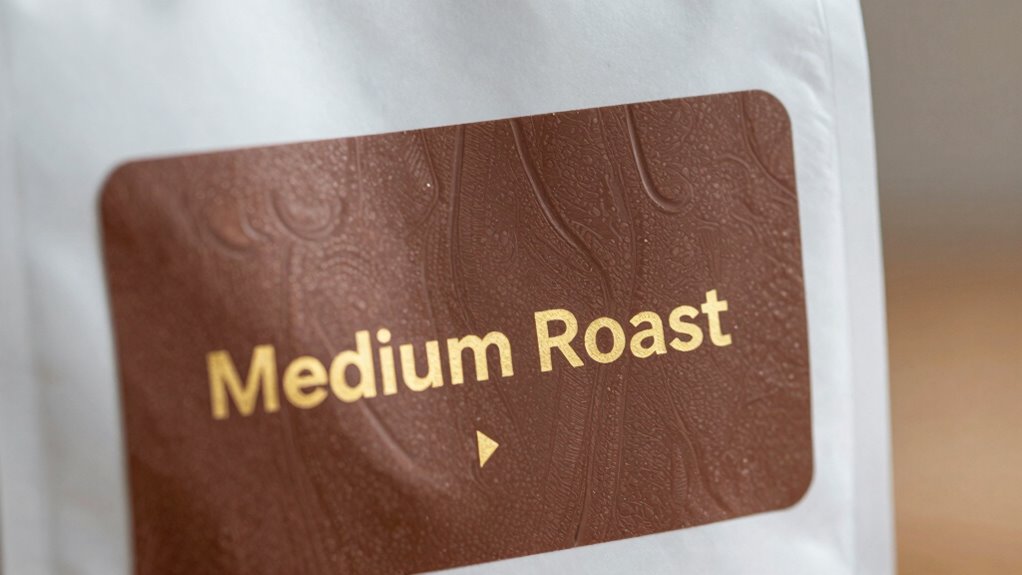
Ever wonder how the roast level impacts the taste of your coffee? Roast terminology helps you understand the flavor profiles you can expect. Light roasts highlight bright, fruity notes and preserve more of the beans’ original flavors. Medium roasts offer a balance, bringing out caramel sweetness and a rounded body. Dark roasts develop bold, smoky, and sometimes bitter flavors, often overshadowing the bean’s natural qualities. Understanding roast levels can also help you troubleshoot brewing issues and refine your taste preferences. Recognizing how emerging trends in digital publishing influence how coffee information is shared can further enhance your knowledge and appreciation. Being aware of these roast level differences allows you to better select beans that match your desired flavor profile and brewing style, making your coffee experience more enjoyable. Additionally, exploring different home brewing techniques can help you fully appreciate the nuances of each roast level and tailor your coffee to your personal taste.
Understanding Coffee Processing Methods: Washed, Natural, and More
Different coffee processing methods profoundly influence the flavor and texture of your brew. If you’re exploring single origin beans, understanding how they’re processed helps you appreciate their unique profiles. Washed processing involves removing the fruit before drying, resulting in a clean, bright cup with pronounced acidity. Natural processing, on the other hand, dries the beans with the fruit intact, producing richer, fruit-forward flavors and fuller body. Some farms also use honey or pulped natural methods, blending characteristics of both. Knowing a coffee’s processing method reveals how it moves from farm to cup, shaping its taste. For example, processing methods can also impact the final aroma and texture of the coffee, offering a more comprehensive understanding of its profile. This knowledge lets you select beans that match your flavor preferences, ensuring a more intentional, satisfying coffee experience. Additionally, understanding the processing techniques can help you identify the environmental impact and sustainability practices of the coffee producers. Recognizing the processing method can also provide insight into the coffee’s overall quality and consistency, which is often linked to the environmental impact of its production.
What Certification Symbols on Coffee Packaging Signify
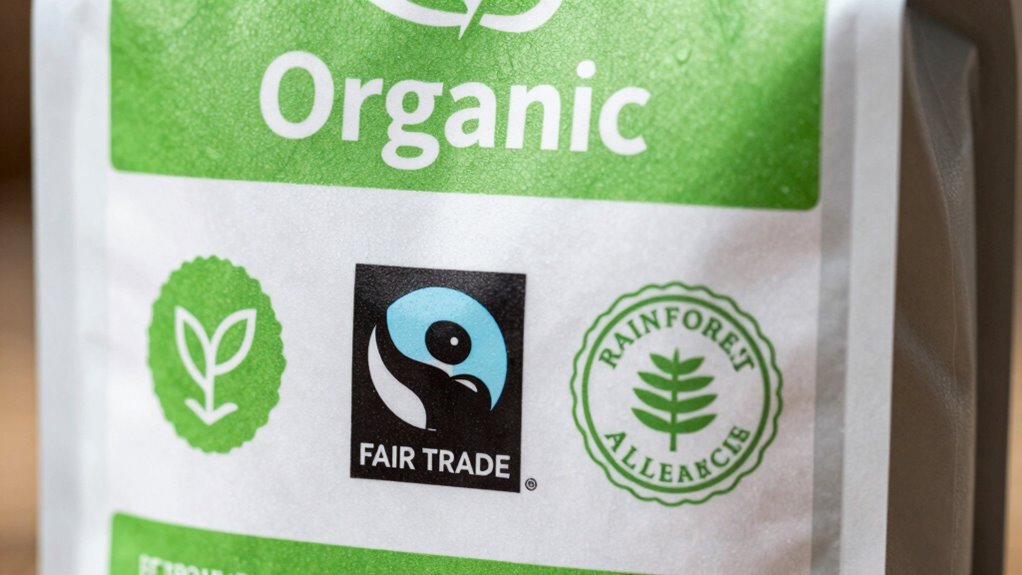
When you look at coffee packaging, the certification symbols displayed can tell you a lot about the coffee’s origin, quality, and ethical standards. These symbols help you identify trustworthy products and support responsible practices. For example, a Fair Trade symbol indicates the coffee was produced under fair working conditions and fair prices for farmers. Organic Certification shows the coffee was grown without synthetic pesticides or fertilizers, promoting healthier farming methods. Recognizing water conservation practices and other sustainable efforts can further inform your choices for environmentally conscious coffee. Understanding the certification symbols can enhance your appreciation for quality standards and sustainable cultivation methods, especially when these symbols reflect adherence to ethical and environmental standards. Being aware of sustainable farming practices can help you make more conscious decisions and support brands committed to environmental stewardship.
Why Grind Size and Packaging Date Matter When Buying Coffee

When choosing coffee, the grind size and packaging date directly affect its freshness and brewing quality. A proper grind guarantees your coffee extracts correctly, while a recent packaging date means you’re getting a fresher product. Paying attention to these details helps you enjoy the best flavor and aroma in every cup. Additionally, understanding solar safety measures can inspire you to apply similar careful planning and attention to detail when selecting and preparing your coffee. Ensuring your coffee beans are stored in airtight containers helps preserve their freshness over time. Proper storage practices, similar to chemical stability, are essential for maintaining coffee quality and preventing spoilage. Regularly monitoring storage conditions also helps mitigate risks like exposure to moisture or air, which can compromise product integrity.
Impact of Grind Size
The grind size of your coffee directly influences the flavor extraction during brewing, making it a crucial factor in achieving your desired taste. If the grind is too fine or coarse, it can lead to over- or under-extraction, affecting flavor and aroma. The right grind size depends on your brewing method:
- French press: Coarse grind for better immersion and less sediment
- Espresso: Fine grind to allow quick extraction with pressure
- Pour-over: Medium grind for balanced extraction and clarity
Choosing the correct grind size guarantees your coffee’s richness and balance. Remember, adjusting grind size can markedly improve your brewing results and overall experience. Pay attention to the recommended grind size for each method to reveal the full potential of your beans. Understanding digital asset analysis can also help you stay informed about the latest trends in coffee equipment and brewing technology.
Significance of Packaging Date
Ever wondered why the packaging date on your coffee matters just as much as the grind size? It’s because freshness directly impacts flavor and aroma. Coffee starts to lose its ideal qualities soon after roasting, so proper coffee storage becomes essential. A recent packaging date guarantees you’re buying fresh beans, which means better flavor and aroma retention. Using older coffee might require adjustments in brewing temperature to extract maximum flavors, but it can’t fully compensate for staleness. Freshly packed coffee also stores better, preventing exposure to air, light, and moisture. Knowing the packaging date helps you choose the freshest batch, guaranteeing you enjoy your coffee at its peak. Additionally, storage conditions play a crucial role in maintaining coffee freshness over time. Proper storage techniques can significantly extend the shelf life of your coffee, preserving its quality longer. Remember, fresh coffee combined with the right brewing temperature ensures a richer, more satisfying cup, and understanding the packaging date can help you make more informed purchasing decisions.
How to Read Price and Brand Labels to Choose Better Coffee

When you look at coffee labels, understanding how to read price tags helps you spot quality and value. Recognizing brand indicators can guide you toward trusted names and consistent quality. By paying attention to these details, you can make smarter choices and enjoy better coffee. Additionally, being aware of affiliate relationships on some labels can inform you about potential endorsements or sponsored products.
Deciphering Price Tags
- Higher prices may indicate specialty beans with complex flavor profiles
- Lower prices could mean mass-produced blends with consistent caffeine levels
- Price differences often relate to processing methods, affecting taste and caffeine strength
Knowing how to interpret these price cues helps you find coffee that matches your brewing preferences and caffeine needs. Additionally, understanding auditory processing can enhance your overall sensory awareness, helping you better appreciate subtle flavor nuances and aroma profiles in different coffee varieties.
Recognizing Brand Indicators
Have you ever noticed how brand labels can reveal a lot about the coffee inside? Recognizing brand indicators helps you understand the coffee’s quality and flavor profiles before brewing. Look for brand names known for specific coffee types, such as espresso blends or single-origin beans. Many brands highlight their specialty focus, which can guide your coffee brewing choices. Labels often include symbols or certifications indicating quality standards, like organic or fair trade. Paying attention to these details helps you select coffees that match your preferred flavor profiles, whether it’s fruity, nutty, or chocolatey notes. By understanding brand indicators, you can make more informed decisions and enjoy a better coffee experience with each brew. Additionally, understanding coffee terminology can further refine your ability to choose the perfect blend. Recognizing brand labels and their associated indicators can help you quickly identify the qualities you value most in your coffee.
Common Coffee Label Terms Every Enthusiast Should Know

Understanding common coffee label terms can considerably enhance your brewing experience and help you choose the right beans for your taste. Knowing these terms clarifies flavor profiles and brewing techniques, making your coffee selection more intentional. For example, “Single Origin” indicates beans from one location, offering unique flavors, while “Blend” combines beans from different regions for balanced taste. “Dark Roast” usually results in bold, smoky flavor profiles, suited for specific brewing techniques like espresso. Other helpful terms include “Acidity,” which affects brightness, and “Body,” describing the coffee’s weight on your palate. Familiarity with these terms allows you to customize your brewing process and better understand what to expect from each bag of beans. Picking the right label terms helps you craft your perfect cup every time.
Frequently Asked Questions
How Does Altitude Influence Coffee Flavor Profiles?
Altitude influence markedly impacts coffee flavor profiles by affecting flavor development and bean maturity. In higher growing regions, cooler temperatures slow maturation, allowing beans to develop complex flavors and acidity. You’ll notice brighter, more vibrant notes in high-altitude coffees. Conversely, lower altitudes produce beans with bolder, earthier flavors. Understanding altitude’s role helps you choose coffees with specific taste profiles, making your brewing experience more intentional and enjoyable.
What Are the Environmental Impacts of Different Coffee Certifications?
You’ll notice that different coffee certifications promote sustainable farming practices, which reduce environmental impacts like deforestation and water pollution. Certifications such as Rainforest Alliance or Fair Trade encourage eco-friendly methods that protect ecosystems and support local communities. By choosing certified coffees, you’re also encouraging eco-friendly packaging solutions, which further minimizes waste. Overall, these certifications help you enjoy your coffee while actively supporting environmentally responsible agriculture.
How Can I Identify Single-Origin Versus Blended Coffees on Labels?
You can identify single-origin versus blended coffees by examining the label for transparency about the Coffee farm. Single-origin coffees typically specify the exact region, farm, or country, showing label transparency about their source. Blends often mention a mix of beans from different farms or regions and may lack detailed origin info. Look for clear details about where the coffee comes from, which helps you determine if it’s single-origin or a blend.
Do Packaging Materials Affect Coffee Freshness and Taste?
Did you know packaging materials profoundly impact coffee freshness and taste? Packaging innovations like nitrogen flushing and airtight seals help preserve flavor. Preservation techniques such as foil bags or valves prevent oxygen exposure, maintaining aroma longer. When you choose packaging with these features, you’re ensuring your coffee stays fresh and flavorful, enhancing every cup. So, always look for advanced packaging that prioritizes freshness for the best tasting experience.
What Are the Signs of Authentic Specialty Coffee Labels?
You can recognize authentic specialty coffee labels by their clear, professional label design, often including detailed information about coffee origin, roast date, and certifications. Genuine specialty coffees usually highlight specific coffee roasting details, emphasizing freshness and quality. Look for labels that provide transparent, consistent details, showing a commitment to quality. These signs assure you’re purchasing a product that’s carefully sourced and roasted, reflecting the true essence of specialty coffee.
Conclusion
Think of coffee labels as a map guiding your journey to the perfect brew. Each detail, from origin to processing method, acts as a waypoint leading you closer to flavor nirvana. By understanding these symbols and signs, you become the captain of your coffee experience, steering clear of pitfalls and discovering treasures. Embrace the labels—they’re your compass in the vast, flavorful sea of coffee choices, helping you find the true essence behind every cup.
Halloween Picks
halloween
As an affiliate, we earn on qualifying purchases.